




Frame Season: The Last Week of November Is When Buyers Order the Gazebo Frame, Not the Tent
Why the gazebo frame underneath the fabric decides who is ready for Dubai 7s, Miami Art Week and the first market morning of December
Ask anyone who runs outdoor events what they order in the last week of November and most people will guess a tent, never the folding tent frame underneath it. The professionals order a pop-up gazebo frame. The fabric gets the compliments, but the gazebo frame is the part that stands in the wind, takes the load, survives the loading dock and comes back next season still straight - the working definition of a good tent frame. This is the week the buying calendar compresses: the Emirates Dubai 7s opens its gates on Friday 27 November, the Miami Beach Polo World Cup has already left the sand with its gazebo frame rows, Miami Art Week builds out from Monday 30 November, and the Atlantic hurricane season formally closes on 30 November and the gazebo frame audits happen that same weekend with a fleet-inspection ritual that every tent frame rental house in Florida knows by heart. Four very different events, one shared decision: how much gazebo frame is under the cover, and whether that tent frame was graded for the surface it will stand on.
There is a quiet economics lesson in that gazebo frame decision, in what a tent frame costs against what it returns. A printed canopy is a consumable - it fades, it tears at the grommet, it gets re-branded when the sponsor changes, while the gazebo frame keeps standing. The gazebo frame is an asset. Buyers who understood that three seasons ago are now ordering a folding tent frame on its own, pairing the tent frame with graphics they already own, and cutting their cost per event roughly in half, because the canopy frame under the graphic is already paid for. Buyers who always bought complete kits are the ones scrambling in late November, replacing whole shelters because one bent leg wrote off a package deal that a tent frame bought on its own would have survived.
This week we walked through our gazebo frame workshop in Foshan - past a wall of folded scissor gazebo frames stacked to the rafters, each gazebo frame bundle wrapped and footed - and pulled together what buyers actually ask, check and get wrong when they order a gazebo frame without the tent. If your season starts in the desert, on the sand or on the bay, and the gazebo frame decision has not been made yet, the next fifteen hundred words are the folding tent frame checklist.
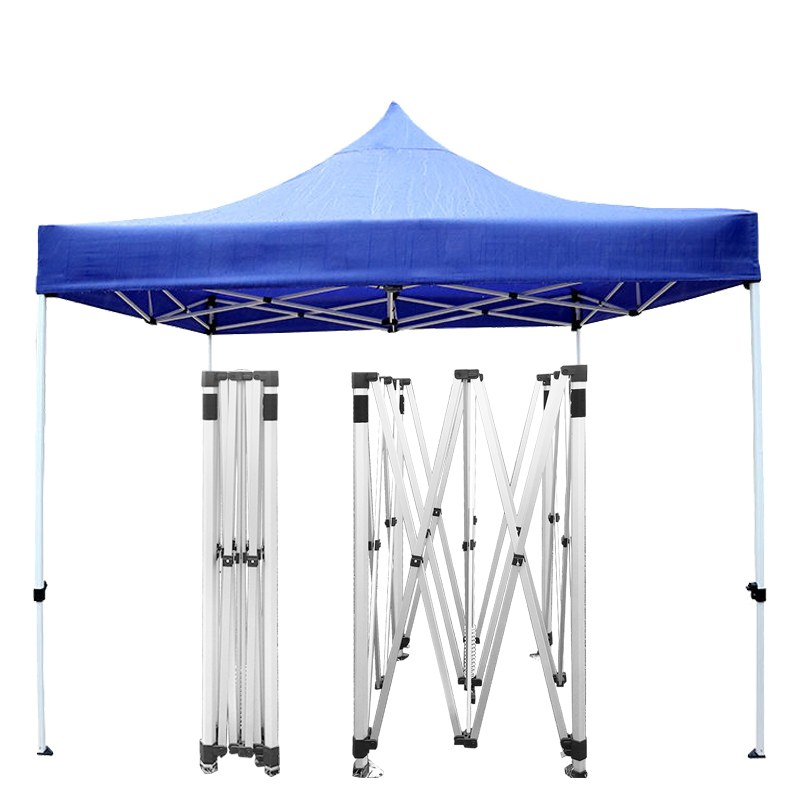
One gazebo frame, three states: folded bundle, half-open scissor truss, and a standing gazebo frame under a finished canopy. The fold is what makes a pop-up gazebo frame a logistics product rather than a building.
Friday 27 November: the desert opens with the Emirates Dubai 7s
The first weekend of the 2026-27 HSBC SVNS series lands at The Sevens Stadium outside Dubai from Friday 27 to Sunday 29 November, and it is the biggest party in the UAE sporting calendar - and the biggest fortnight for gazebo frame logistics in the Gulf - around 100,000 fans across three days, six sports, four music stages and a Rugby Village that is essentially a small city of hospitality structures, most of them standing on a repeated pop-up gazebo frame module. South Africa arrive as defending men's champions, New Zealand as defending women's champions, and the Friday programme is deliberately family-facing: local and invitational tournaments, a fitness competition, a kids' zone, and free entry for under-15s - plus a vendor village where every canopy frame is checked against the desert wind before it is dressed. Ticket prices have been frozen for a third consecutive year - from AED 75 on Friday, AED 455 for a Saturday or Sunday day pass, AED 595 for the weekend - because the organiser wants the village full, not the till - and a full village is a procurement problem measured in gazebo frames.
Now look at that village the way an event contractor does, gazebo frame by gazebo frame. Between the main stadium and the music stages sit dozens of sponsor activations on every tent frame size we ship, plus food stalls, shade terraces and VIP terraces, food stalls, shade terraces and VIP terraces, most of them built on repeating modules of the same pop-up canopy frame. The desert adds its own specification sheet: hard sun that cooks cheap fabric, dust that chews exposed rivets and tests every joint on a tent frame, and evening wind funnelling across open ground that punishes any lightweight tent frame without ballast. Contractors who work the Gulf circuit order heavy duty gazebo frame stock with powder-coated steel legs and galvanised joints, then hang whatever fabric the sponsor paid for on a tent frame that was bought to outlast them all. When the sponsor changes - and at a rugby festival the sponsor changes every year - only the canopy is re-printed. The pop-up gazebo frame stays in the contractor's warehouse, straight and ready, which is exactly why the gazebo frame was specified in November in the first place.
One gazebo frame detail Dubai buyers always confirm in writing: the foot. A steel gazebo frame with a wide, drilled footplate spreads the load on soft ground and accepts a ground stake or bolt, while the sharp, narrow feet common on budget gazebo frame kits sink, rust and stain paving. It is a five-centimetre detail at the foot of the tent frame that decides whether the tent frame passes the venue's safety walk on Thursday and trades on Friday.
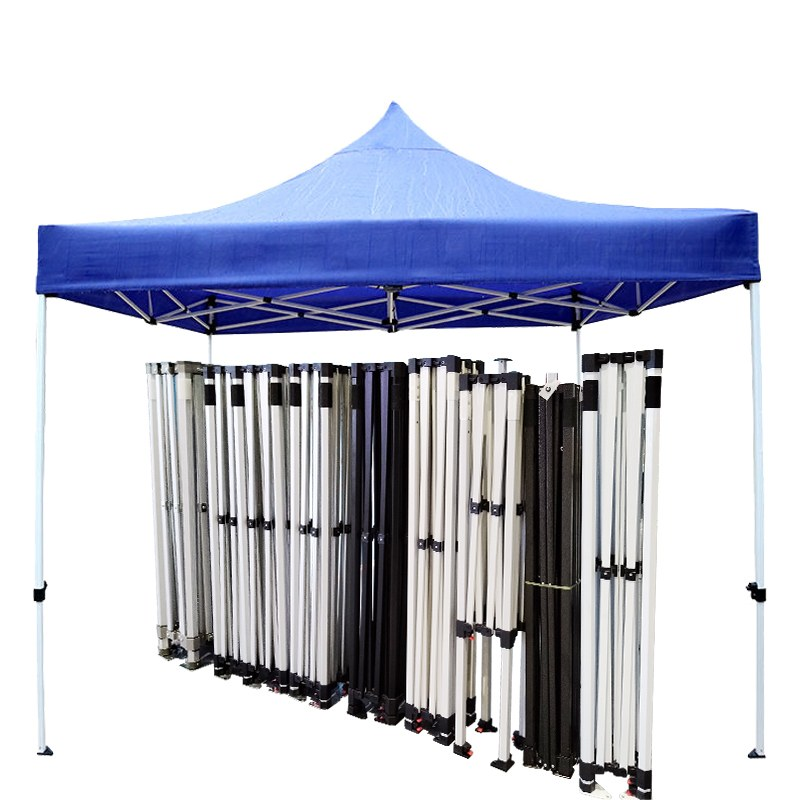
The workshop wall: folding tent frame bundles stacked for dispatch. Volume freight, not weight freight - a full container of tent frame bundles nests like books.
What a folding tent frame actually is - the anatomy that decides its life
Strip the fabric off a quality pop-up canopy frame and you are looking at the scissor truss that makes a folding tent frame possible: four vertical gazebo frame legs, telescoping at the top, connected by folding struts that close the tent frame into a single bundle. Everything that matters about the durability of a folding tent frame lives in five places, and a buyer who checks these five things can predict the lifespan of a canopy frame more accurately than any brochure.
● The leg profile. Ours is a hexagonal, thickened-wall extrusion, not a round tube - flats resist torsion, and a leg that cannot twist is a leg that keeps a gazebo frame true for years. This is the single biggest difference between an aluminum gazebo frame that survives five seasons and one that wobbles after one.
● The truss joints. Each crossing point of the canopy frame should carry its strut in a moulded bracket, not on a naked through-bolt. Brackets spread the load and stop the scissor action sawing the tent frame holes oval.
● The sliders. Height adjustment and the final snap to full height run on internal push-button sliders. Smooth, gloved-button sliders let one person set a 10x10 gazebo frame alone in under five minutes; sticky sliders turn a one-person gazebo frame setup into a two-person argument.
● The anti-pinch geometry. Folding struts are where fingers go to get hurt. Proper anti-pinch buttons and shrouded joints are not a luxury on any tent frame, least of all on a site where casual staff assemble the gazebo frame at 7 a.m.
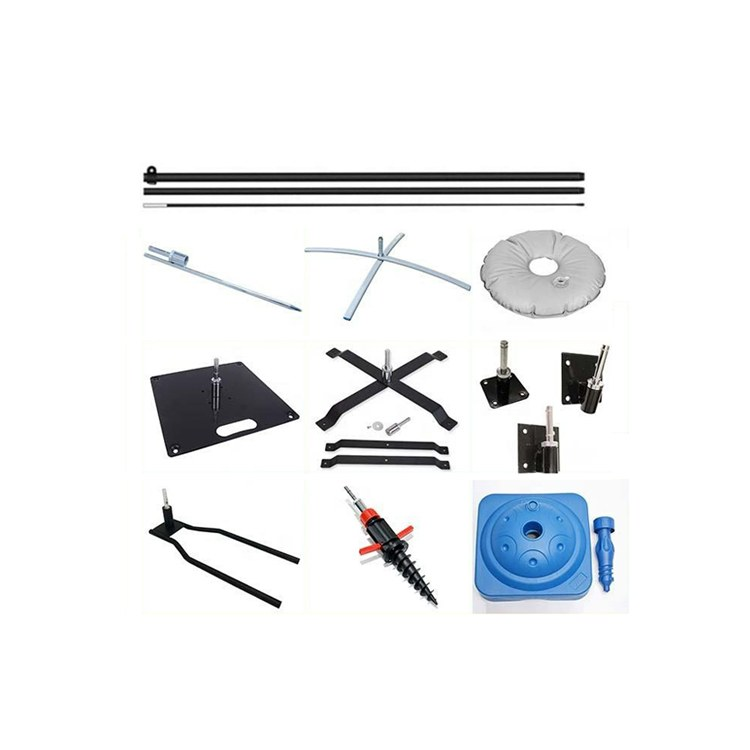
● The foot of a gazebo frame, and the velcro. A solid, drilled footboard on every gazebo frame leg, and - easy to forget - the fabric attachment. A super-sticky velcro strip along the eaves lets the canopy grip the gazebo frame in wind; a tired strip lets the cover lift off the gazebo frame and flog itself to death.
Buyers sometimes ask why we keep showing the underside of every folding tent frame we quote. The answer is that the top of any gazebo frame looks the same in a photo. The underside of a tent frame is where the difference is hiding.
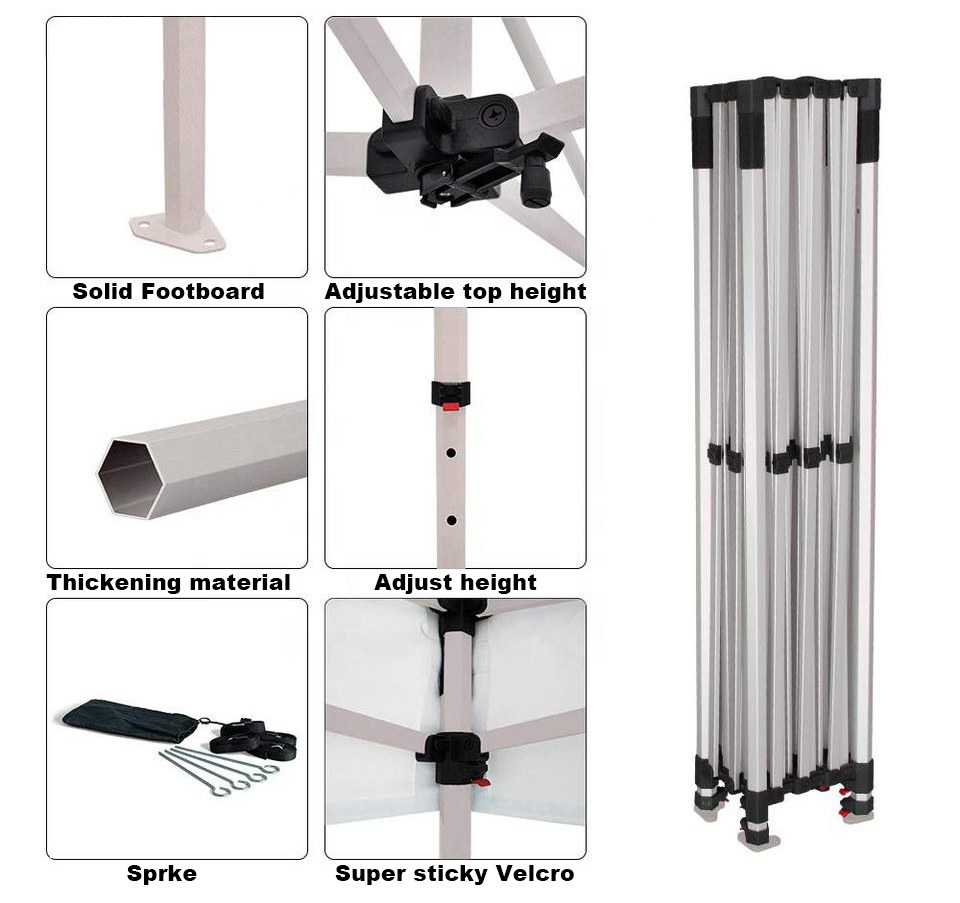
The white-frame callout sheet: drilled solid footboard, hexagonal thickened leg, height-adjust holes, top slider, spike kit and eave velcro - the five checkpoints in one image.
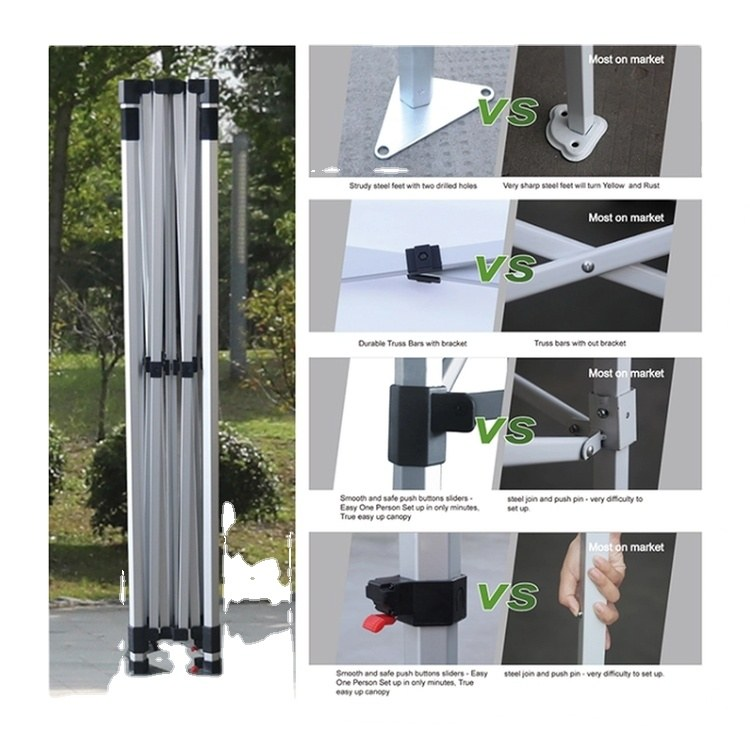
Side by side with the market norm: drilled steel feet that stay flat and rust-free, bracketed truss bars, and push-button sliders that make a folding tent frame a true one-person setup.
The weight ladder: how much gazebo frame is enough?
Every gazebo frame is sold by grade, and the grade is honestly expressed in kilograms. Our current steel and aluminum tent frame ladder looks like this, and it maps almost perfectly onto wind exposure and years of service:
● 2x2 m (5x5 ft): 10 / 12 / 13 / 14.5 kg - market stalls, doorway cover, a tent frame for brand ambushing a queue.
● 3x3 m (10x10 ft): 11.8 / 15 / 17 / 18 kg - the universal unit; the 15 kg pop-up canopy frame grade is the workhorse of rental fleets.
● 5 m (10x15 ft): 15.5 / 19 / 22 / 25 kg - the tent frame for food stalls and two-table activations.
● 3x6 m (10x20 ft): 21.5 / 26 / 31.5 / 37 kg - the heavy duty gazebo frame that stands all weekend unattended in coastal wind.
The rule of thumb gazebo frame buyers converge on: indoor and calm-day use can run the light grade of pop-up canopy frame; anything that sleeps outside overnight moves the gazebo frame up at least one grade; anything facing coastal or desert wind takes the top grade of heavy duty gazebo frame plus ballast, every time, no exceptions. A rental house in Cape Town put it well: the weight you skip in the gazebo frame, you pay back in bent legs and event-day apologies, all traced back to the tent frame decision.
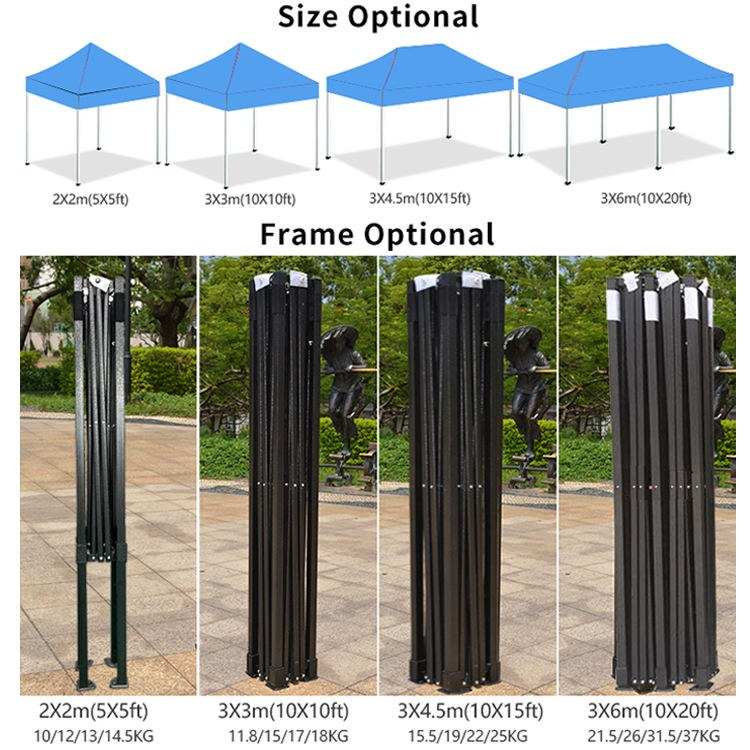
Size optional, gazebo frame optional: five sizes from 2x2 m to 3x6 m and the full weight ladder from 10 kg to 37 kg. Pick the gazebo frame grade before the graphic.
Buying a gazebo frame only: the measuring ritual
The fastest-growing order type in our November gazebo frame book is not a complete tent. It is a replacement gazebo frame ordered against canopies the buyer already owns - either because the original gazebo frame failed, or because the buyer is standardising a mixed fleet of brands onto one hardware platform. A replacement gazebo frame is a precision order, and the measuring ritual takes ten minutes with a tape:
● Measure the canopy diagonally, corner pocket to corner pocket, and the leg pocket depth. Canopies are cut to gazebo frame families; a 3x3 m cover from brand A will not seat on every 10x10 gazebo frame.
● Count and photograph the corner fittings and the eave attachment on the canopy frame you already own. Photos sell the fit faster than dimensions.
● Measure the folded tent frame bundle length and the doorway it must exit through. A 3x6 m folding tent frame folds to a bundle you can carry on a shoulder - but only if the tent frame bundle length clears the storeroom door.
● State the target grade in kilograms, not adjectives. "Strong" means nothing on a gazebo frame purchase order; 26 kg does.
Done properly, the ritual ends with a gazebo frame that drops the existing canopy straight on, velcro to eave, first time. Done casually, it ends with a very well-built aluminum gazebo frame that is 4 centimetres too tall for someone else's fabric - and a very short email to the tent frame supplier.
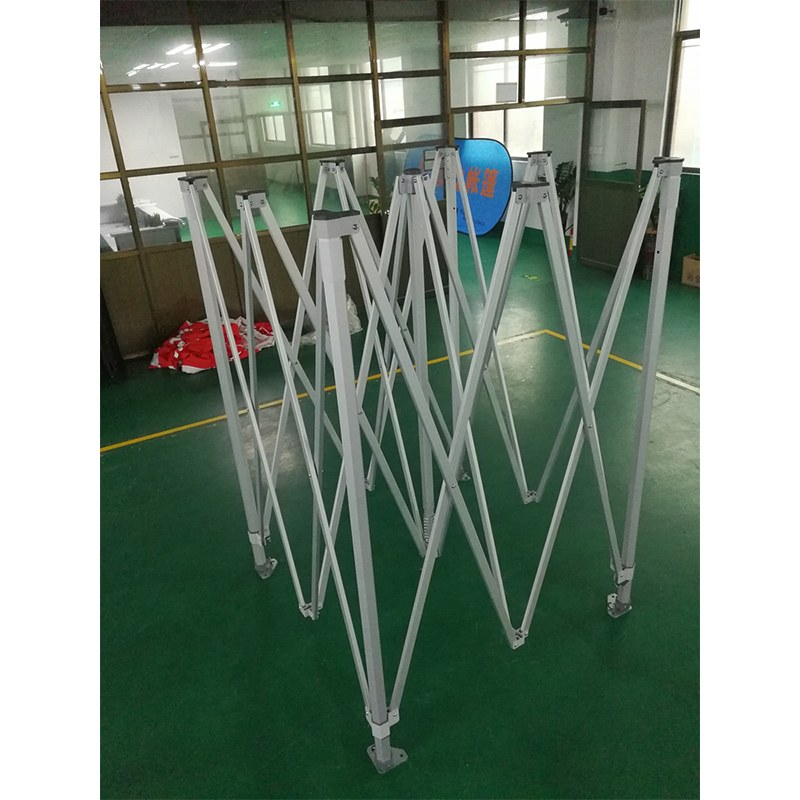
Frame-only, standing, bare: the scissor truss of a 10x10 gazebo frame at full height, ready to receive any canopy the customer already owns.
Miami Art Week: white frames on Biscayne Bay, 30 November to 6 December
While Dubai builds a village in the desert, Miami builds a village on the bay. Miami Art Week opens with the satellite fairs on Monday 30 November - Art Miami and CONTEXT at their Herald Plaza pavilion from 1-6 December, Aqua Art Miami on Collins Avenue from 2-6 December - and climaxes with Art Basel Miami Beach at the Miami Beach Convention Center, public days 4-6 December after the invited previews on 2-3 December. Around 280 leading galleries from more than 40 countries show inside the hall, and the gazebo frames do the hosting beyond its doors. Outside it, in the parking lots, on the plazas and along the bay, the brands fight for attention with pop-up pavilions, coffee bars, talk stages and VIP gardens, each a canopy frame dressed in a different skin - and the backbone of most of them is the same white pop-up gazebo frame, repeated in ranks, dressed in everything from sailcloth to solid walls.
The Miami gazebo frame conversation has three recurring themes. First, colour: white and light-grey aluminum gazebo frame stock is ordered months ahead because art-week brands want the hardware invisible under minimal graphics. Second, sea breeze: Biscayne Bay after noon is a steady 15-20 knots, so every bayfront gazebo frame is a ballast calculation before it is a design exercise. Third, changeover speed: satellite fairs run six days, and a tent frame that one person can fold and walk to the next courtyard is worth more than one that looks 5 per cent more premium but needs a crew.
The Miami Beach Polo World Cup, which ran 12-15 November on the sand between the beach and the ocean, is the same story with sand instead of paving, and the same gazebo frame lesson: hospitality boxes, sponsor lounges and shade rows on a 10x10 gazebo frame module, every tent frame among them specified for wind on soft ground and all of them ordered because the gazebo frame, not the fabric, was the part that failed the previous year.
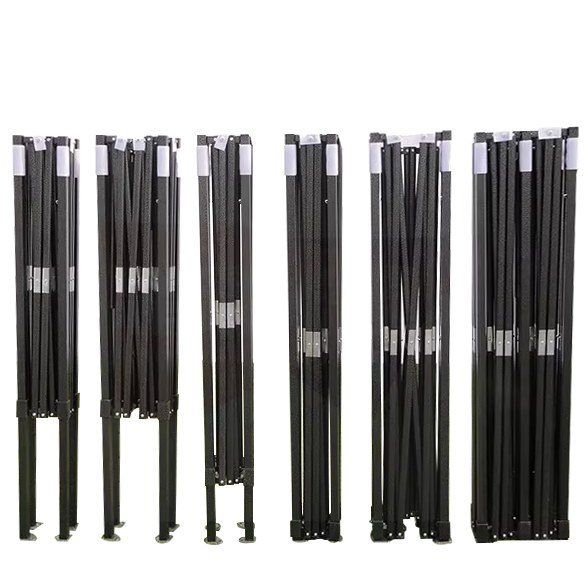
The dark side of the ladder: black steel gazebo frame bundles in six folding states. Powder-coated steel is the gazebo frame grade for permanent weight-bearing and desert or coastal wind.
30 November: the audit date nobody circles - and everybody should
The Atlantic hurricane season officially ends on Monday 30 November, and for rental fleets from Florida to the Carolinas it is the natural close of the financial year for tent frame hardware. The ritual is simple and brutally honest: every canopy frame comes out of the trailer, is stood up once in the yard the way every gazebo frame should be before winter, and is judged on three questions. Is it straight? Does it snap to height without sticking? Do all the gazebo frame feet touch the ground at once? Frames that pass go back into service as tent frame stock with a re-printed cover for the spring season. Frames that fail are replaced - as a replacement gazebo frame, ordered that week, because gazebo frame lead times in December are consumed by holidays on both sides of the Pacific.
The audit is also when the fleet maths gets done. A 3x3 m complete kit replaced end-to-end every time something fails costs roughly twice what a gazebo frame fleet with re-printed fabric costs, because the fabric was usually the only thing that actually died. Rental operators who keep a stock of bare folding tent frame units - typically 10-15 per cent of fleet size - report that their cost per rental drops every year after the first, for the boring reason that the asset part of the system - the tent frame - stays in the system.
For buyers on the event side rather than the rental side, the same tent frame logic applies with a different deadline: whatever gazebo frame stock is needed for December markets, January boat shows and the spring festival season has to be in the order book this week, tent frame stock included. The factories that stamp, weld and powder-coat every tent frame run at full tilt through December for other people's Christmas - the buyers who ordered a pop-up canopy frame in late November are the ones whose pallets land in the first week of January.
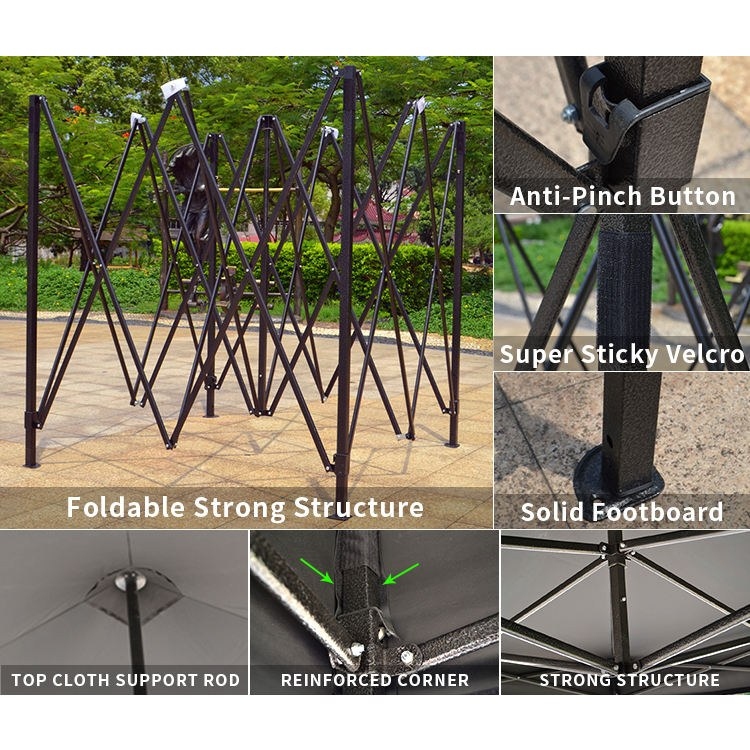
The heavy grade at full height: anti-pinch buttons, reinforced corners, top cloth support rod and solid footboards - the specification that lets a steel gazebo frame sleep outside.
The 10-point gazebo frame inspection we teach every buyer
Whether you are auditing an existing fleet or inspecting a gazebo frame sample on arrival, these ten checks take twenty minutes and catch ninety per cent of future gazebo frame failures:
● Stand the pop-up gazebo frame and sight down each leg - a bowed leg is a bent tent frame leg waiting to happen.
● Cycle the height sliders five times on every leg of the folding tent frame; grit or lag shows up immediately.
● Press every anti-pinch button on the tent frame; it must spring back fully, not half.
● Wiggle every truss joint of the tent frame by hand; movement inside a bracket means a worn rivet.
● Check the top plates and the centre hub of the canopy frame for hairline cracks around the fixings.
● Look at the gazebo frame feet: flat, drilled, un-rusted - and all four (or six) touching the ground together.
● Tug the eave velcro strip; if it lets go under hand pressure the gazebo frame will not hold a canopy in wind.
● Fold the gazebo frame fully and measure the tent frame bundle length against your storage and vehicle openings.
● Weigh one tent frame unit. If the sample is 3 kg under the quoted grade of the pop-up canopy frame, the whole shipment is the lighter grade.
● Photograph everything and keep it against the purchase order - gazebo frames are warranted, but only against evidence.
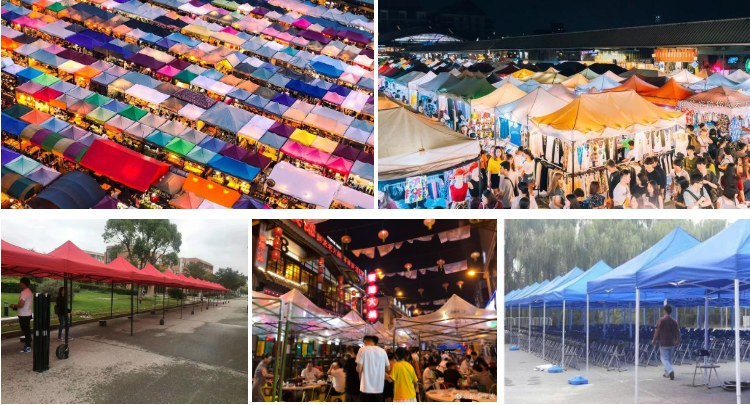
Where the gazebo frames end up: night markets, food streets, resort rows and mall forecourts - the same tent frame modules, re-dressed, year after year.
Eight questions to ask before you place the order
● What is the wall thickness of the gazebo frame leg extrusion, in millimetres, per grade? ("Thickened" is not a number.)
● Are the truss joints of the gazebo frame bracketed or bare-bolted, and what is the rivet spec?
● Which parts - feet, sliders, buttons, hub caps - are sold as tent frame spares, and at what price?
● What is the exact folded tent frame bundle length and carton size for the grade I am ordering?
● Is the velcro eave strip on the canopy frame replaceable without tools?
● What is the powder-coat and galvanising process, and how is the underside of a steel gazebo frame protected where water pools?
● Can you match the canopy I already own - send me the pocket template so the tent frame is checked before production?
● What is the container yield - how many folded tent frame bundles per 20-foot and 40-foot box?
Three mistakes buyers make with a gazebo frame
Mistake one: buying the fabric first. The graphic decides nothing about the survival of a gazebo frame. A stunning canopy on an under-specified gazebo frame is a future scrap order; a plain cover on an aluminum gazebo frame of the right grade trades for years and takes new graphics every season.
Mistake two: quoting wind ratings at the canopy, not the tent frame system. The gazebo frame does not fail alone and the fabric does not fail alone; they fail as a system with its ballast. The correct question is what wind the tent frame assembly stands with what ballast on what surface - and the honest answer comes in a range, not a single heroic number.
Mistake three: treating spares as an afterthought. The cheapest uptime ever bought is a box of feet, sliders, buttons and velcro strips ordered with the pop-up gazebo frame itself. Every operator who skipped that gazebo frame box has a story about a Friday-night repair improvisation; the story is never as cheap as the tent frame box.
Steel or aluminum: the material decision, honestly
The two gazebo frame materials in this category are not rivals; they are tools for different jobs, and the buyers who get this right order both. A steel gazebo frame is the weight-bearer: denser, more rigid per dollar, happier to sleep outside, and the natural choice for a 3x6 m folding tent frame that will stand all season in coastal wind. Powder-coated properly, with drainage consideration at every joint, a steel gazebo frame shrugs off the kind of weather that makes event managers check their phones at 5 a.m. The trade is freight and handling: a steel gazebo frame costs you at the scale and on the shoulder.
An aluminum gazebo frame is the traveller: roughly a third lighter than a steel gazebo frame at the same size, immune to the red rust that eventually finds untreated steel, and the grade that coffee brands, galleries and market traders choose when the tent frame moves every week. The hexagonal thickened extrusion closes most of the rigidity gap on a folding tent frame, and for a 10x10 gazebo frame that is pitched and struck daily, aluminum is simply the better tool. The trade is price per kilo of strength - the top heavy duty gazebo frame grades are still steel, because at 37 kg the arithmetic favours the darker metal.
The honest rule: if the tent frame moves every day, order the aluminum gazebo frame; if it stands all season and only folds at Christmas, order the steel gazebo frame; if your fleet does both, standardise on mid-grade steel for the big sizes and aluminum for the daily movers, and keep every foot, slider and velcro strip common across both so the canopy frame spares box is one box.
Container maths: why fleets standardise on one gazebo frame
There is a reason the workshop wall in the photo below looks like a library of identical books. A folded pop-up gazebo frame is a rectangular block with almost no wasted air, and blocks nest. When a rental house standardises its whole fleet on one gazebo frame platform - say the 3x3 m and 3x6 m sizes in one grade - every folded tent frame bundle stacks against every other bundle, the container yield is predictable, and the warehouse of tent frame bundles stops being a puzzle. Buyers who mix brands discover quickly that no two folded tent frame bundles share a height, and their storage costs rise by a third for no reason they can invoice.
The same logic runs in reverse at the venue. A crew that has struck and folded the same pop-up canopy frame fifty times does it in four minutes; a crew facing six different folding tent frame designs folds six different ways, and somewhere in the sixth one a pinched finger or a cracked hub cap appears. Standardisation is not a procurement preference. It is a tent frame safety policy that happens to save money.
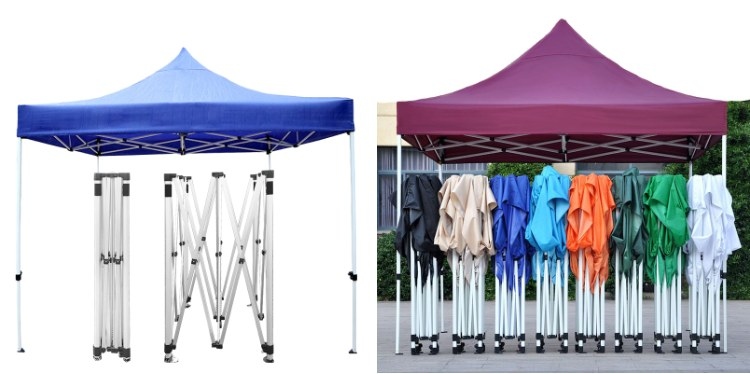
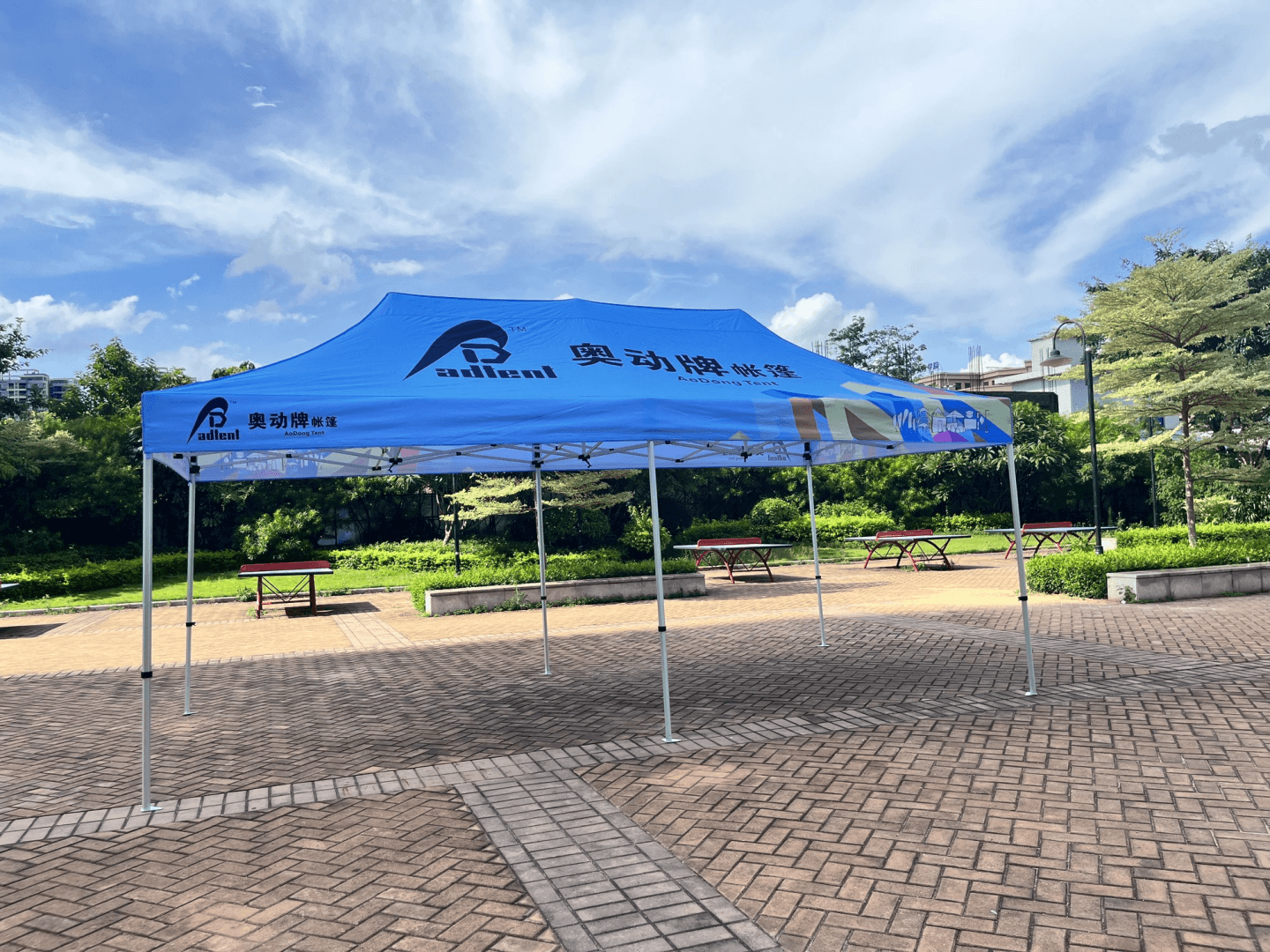
One platform, many skins: the same pop-up gazebo frame under a blue canopy, beside a rank of gazebo frames each dressed in a different colour. The gazebo frame stays; only the fabric rotates.
A buyer's story: eleven market mornings in Doha
A food-market operator we work with in Qatar runs a weekend market that trades eleven mornings a month, October to April. Two seasons ago the operation was built on complete kits, none of them sharing a tent frame platform; every time a gazebo frame failed, a whole branded package went to scrap, and the market looked patchy - four different canopy designs on four different pop-up gazebo frame platforms, none of them stacking in the storeroom. Last October the operator re-based the entire market on a single 10x10 gazebo frame module in the 15 kg grade, ordered as replacement gazebo frame units frame-only, and had every stall's fabric re-printed to fit.
The numbers the operator now reports: set-up per stall dropped from twenty minutes to under eight because one person handles a 10x10 gazebo frame with push-button sliders; the tent frame spares box - feet, sliders, buttons, velcro - covers ninety per cent of morning failures without a workshop visit; and when a sponsor changes, only the fabric changes. The folding tent frame fleet is now in its second season, straight, and the operator's only regret is not standardising a season earlier. It is the same story we hear from the polo hospitality crews on Miami Beach and the village contractors at the Dubai 7s: the buyers who treat the gazebo frame as the asset are the ones still smiling in March.
Ballast arithmetic: the other half of the frame decision
No gazebo frame stands in wind on ballast alone; no ballast saves a gazebo frame that is under-specified. The two halves of the gazebo frame decision have to be made together. As a planning baseline: a 3x3 m pop-up canopy frame in open wind wants roughly 20-25 kg of ballast per leg, a 3x6 m wants 30 kg plus, and soft ground changes the answer - a stake through the drilled footplate of a steel gazebo frame beats any weight bag on grass. What the ballast arithmetic really decides is which grade to buy: if your site rules ban stakes and your winter is windy, buy the top-grade heavy duty gazebo frame and let the hardware, not the weights you forgot, carry the margin.
Desert wind at the Dubai 7s and bay breeze at Miami Art Week are different problems with the same shape: a steady, warm, deceptively persistent load on every tent frame rather than gusts. The tent frames that fail are always the light ones. The structures that trade all day are the ones where the buyer spent the extra on the gazebo frame grade and kept the fabric identical.
Seven days: how a gazebo frame order actually moves
For buyers planning the last week of November, here is how a typical pop-up gazebo frame order moves through our Foshan workshop. Monday: the buyer sends the size, the grade in kilograms and - for a replacement gazebo frame - the canopy pocket measurements, and the drawing desk returns an e-proof of the folding tent frame with every fitting called out before a single cut is made. Tuesday to Wednesday: the grade is confirmed against the site, a 10x10 gazebo frame sample is pulled for courier if the fleet decision is big, and the powder-coat line is booked for the gazebo frame batch. Thursday to Friday: the tent frame is welded, trued and coated, and the velcro, feet and slider boxes are picked alongside it. Saturday: a folded gazebo frame bundle in every ordered size is stood up once, photographed against the purchase order and folded again, as a tent frame should be before it travels. Sunday: the container loading plan goes out - tent frame bundles nested like books, heavy duty gazebo frame grades floored, aluminum grades above them - and the bill of lading follows on Monday. Seven days from enquiry to a departing box is the honest November number; from January onwards, book three weeks, because the spring festival buyers are ahead of you.
Gazebo frame FAQ: the questions that arrive every November
Q: Can I buy a gazebo frame without a canopy? A: Yes - roughly a third of our November orders are a replacement gazebo frame ordered frame-only against fabric the buyer already owns. Send the canopy's corner-pocket measurements and we confirm the fit of the folding tent frame before production, not after it.
Q: Which pop-up canopy frame grade should I order for wind? A: Match the tent frame grade to the site, not the price list. Calm indoor use runs the light grade; overnight outdoor use moves up a grade; coastal or desert wind takes the top heavy duty gazebo frame grade plus ballast. If your venue bans stakes, the weight budget belongs in the gazebo frame order, not in a promise.
Q: Will my existing canopy fit a new folding tent frame? A: Almost always, if the measuring ritual is followed - corner pocket to corner pocket, leg pocket depth, eave attachment style. The common failure is buying a gazebo frame that is right in footprint and wrong in height; the height-adjust holes on the gazebo frame legs exist precisely to close that gap.
Q: How many gazebo frames fit in a 40-foot container? A: Enough that freight is rarely the deciding cost. A folded 10x10 gazebo frame is a slim block that nests, so the container yield of pop-up canopy frame bundles is measured in hundreds, not tens. Ask for the exact yield against your size mix before you compare quotes - it changes the landed cost of a gazebo frame more than the unit price does.
Q: Steel gazebo frame or aluminum gazebo frame for a beach event? A: Both appear on the sand. The steel gazebo frame wins where the structure stands all weekend and carries walls; the aluminum gazebo frame wins where crews move the tent frame twice a day. On soft sand, either way, the drilled footplate plus stake or ballast does more for tent frame survival than the metal choice.
Q: What spare parts should ship with every tent frame order? A: Feet, sliders, anti-pinch buttons, hub caps and a roll of eave velcro. A canopy frame is only as available as its spares box; the parts cost a fraction of the unit and keep a gazebo frame fleet trading through the exact season it was bought for.
Q: How long does a canopy frame actually last? A: With the right grade for the site, a folding tent frame returns three to five seasons of weekend work; the fabric on top is typically replaced two or three times in that span. That ratio - one gazebo frame, several canopies - is the whole economic case for buying the hardware well.
Q: Do you supply a 10x10 gazebo frame as a single sample? A: Yes. Minimum order is one piece in every size and grade, an e-proof of the tent frame and fittings goes out in 1-3 working days, and a physical sample follows by courier - the cheapest way to test the tent frame sliders, the velcro and the feet before a fleet decision.
Q: Is a gazebo frame and a tent frame the same thing? A: In practice the words are used interchangeably for the same scissor truss hardware; a folding tent frame is simply the more common trade term in Australia and the UK, while gazebo frame dominates in the US and the Gulf. The hardware, the grades and the measuring ritual are identical.
Q: Can one person really set up a 10x10 gazebo frame alone? A: With the push-button slider system, yes - the contract between the sliders and the leg geometry does the lifting, and the pop-up canopy frame snaps to height without a second pair of hands. On the 3x6 m heavy duty gazebo frame grades, the honest answer is two people, mostly because of the tent frame bundle length, not the weight.
Q: Do you print canopies, or only supply the folding tent frame? A: Both, separately. Buyers can order a bare replacement gazebo frame, a printed canopy to fit a gazebo frame they own, or a complete kit - and because the canopy frame interfaces are documented, mixing the three across seasons is routine rather than an exception.
Q: How is a pop-up canopy frame packed for export? A: Each folded tent frame bundle is wrapped, footed and strapped to a slim carton; feet, sliders, buttons and velcro ride in a parts box per order. Because a folded gazebo frame bundle is volume freight, the packing sheet matters as much as the price sheet - ask for it with the quotation.
Ordering, freight and lead times for a gazebo frame
We supply the full ladder - 2x2 m to 3x6 m folding tent frame units in steel and aluminum, four weight grades per size, frame-only or complete with printed canopies. Minimum order is one piece; a photo e-proof of the gazebo frame and fittings goes out in 1-3 working days, and a physical sample can follow by express courier. Shipping is EXW or FOB from Guangzhou, Shenzhen or Foshan, and because a folded tent frame bundle is volume freight rather than weight freight, a 40-foot container absorbs a surprising number of 3x3 m tent frame bundles - which is why fleets are standardised on one gazebo frame platform and re-dressed, rather than replaced, season after season.
The last week of November is when the professionals quietly load their January. Dubai is packing its village this weekend, tent frame by tent frame. Miami is printing its bay-front plans. The Atlantic season is closing its books on the 30th. Under every one of those decisions is the same purchase order for a tent frame, for the part nobody photographs: the pop-up gazebo frame.