


Fashion Week Meets Trade-Show Season: The Portable Build Behind September's Biggest Stages
The first full week of September is when the events industry stops planning and starts building. On one side of the Atlantic, New York Fashion Week is preparing to stage its Spring/Summer 2027 season; on the other, Berlin, Frankfurt and Paris are opening the autumn exhibition calendar. The audiences could not be more different — front-row editors and buyers on one side, procurement teams and distributors on the other — but both face exactly the same problem. A room that looks like nothing on Monday has to look unmistakably like a brand by Thursday morning.
The Council of Fashion Designers of America has now confirmed its preliminary official schedule: seventy runway shows and designer presentations running from Thursday, September 10 through Tuesday, September 15. The week opens with Diane von Furstenberg, marking Henry Zankov's debut as the house's artistic director, and closes with Thom Browne. Ralph Lauren, Coach and Rachel Comey — the latter celebrating twenty-five years — show on the eve of the week, September 9. Ten names join the official calendar for the first time, among them Sabyasachi, Magda Butrym and Conner Ives, and the season also brings the CFDA's fur-free policy into effect for every brand on the schedule. Out of respect for the twenty-fifth anniversary of the September 11 attacks, Friday's programme begins at 10:00 a.m.
Half a world away, the exhibition halls fill just as fast. IFA Berlin runs September 4 to 8, its 2026 edition adding the ICC Berlin as a venue for the first time and organising the floor around five theme worlds spanning artificial intelligence, retail, marketing, sustainable living and culture. Automechanika Frankfurt follows from September 8 to 12, covering the entire automotive aftermarket chain. Maison & Objet opens in Paris on September 10, Chicago's IMTS — the largest manufacturing-technology show in the Americas — runs September 14 to 19, and PRINTING United Expo closes the month in Las Vegas from September 23 to 25. It is, in short, the densest exhibition month of the year.
What links a Manhattan showroom to a Frankfurt hall is the build. Neither space was designed to carry an identity; both have to acquire one in a matter of hours and then vanish without a trace. That constraint has quietly rewritten what organisers specify. Permanent fit-out is out. Modular, tool-free hardware that packs into a case is in — and the kit list now looks remarkably similar whether the guest list says Vogue or Messe Berlin: a canopy tent at the door, a tension fabric display behind the camera position, an advertising wall around the meeting corner and a roll-up banner wherever a visitor hesitates.
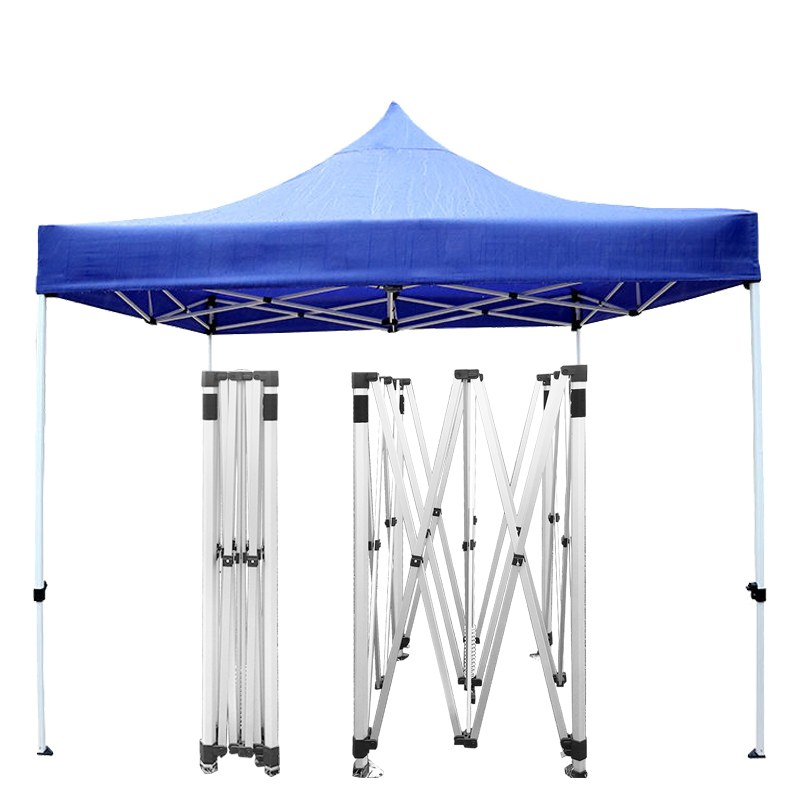
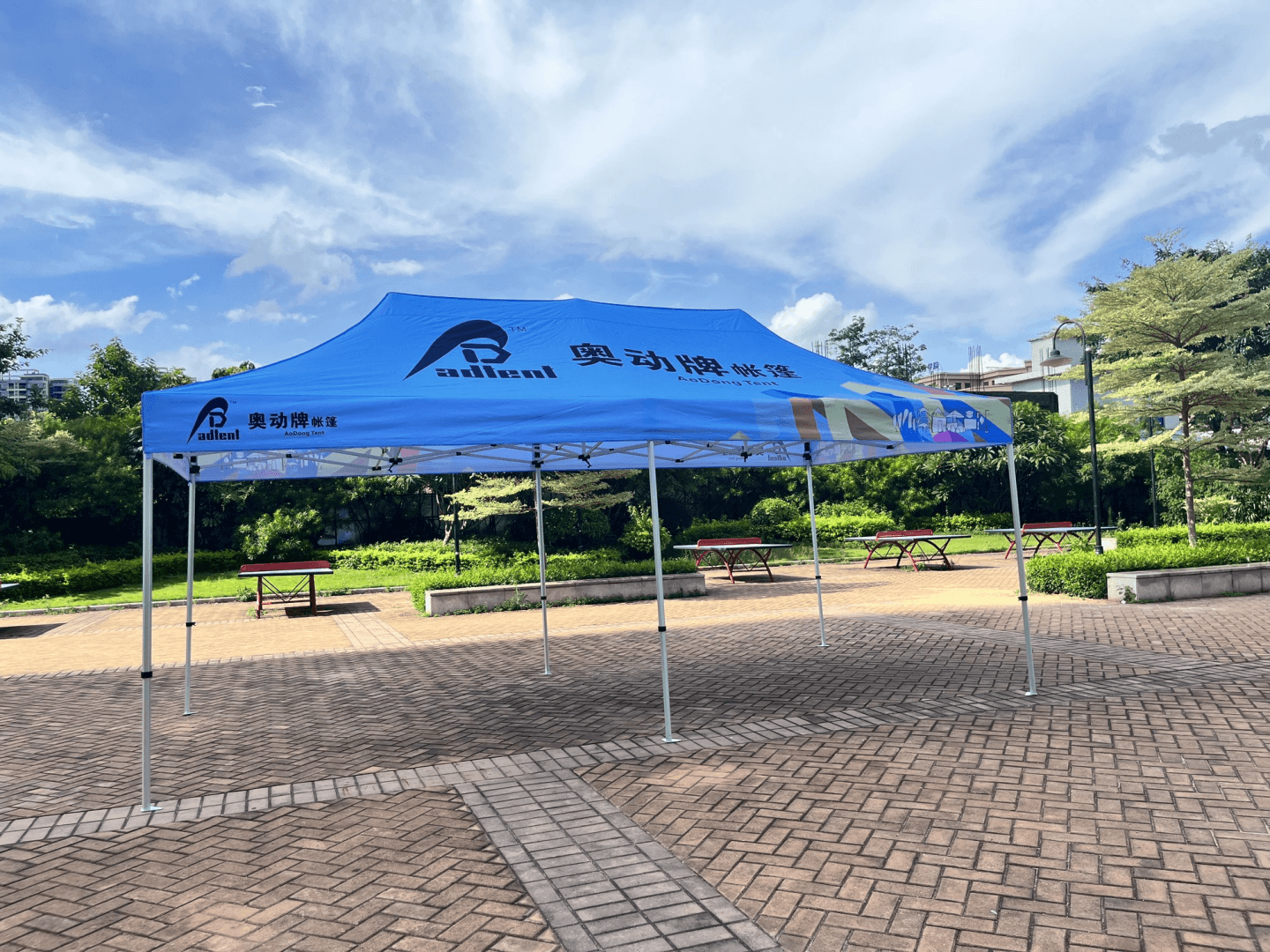
It starts at the door. At most fashion-week venues the entrance is a sidewalk, and the sidewalk is where the queue forms, where the photographers wait and where the first impression is made. A heavy-duty canopy tent turned into a covered check-in point solves three problems at once: it shelters the accreditation desk, it creates a visible threshold on a plain street, and it gives security a defined place to stand. A second canopy tent behind it usually hides the coat check and the coffee urn. Crews favour aluminium frames with interchangeable graphic panels, because a single structure can be re-skinned between a morning presentation and an evening show.
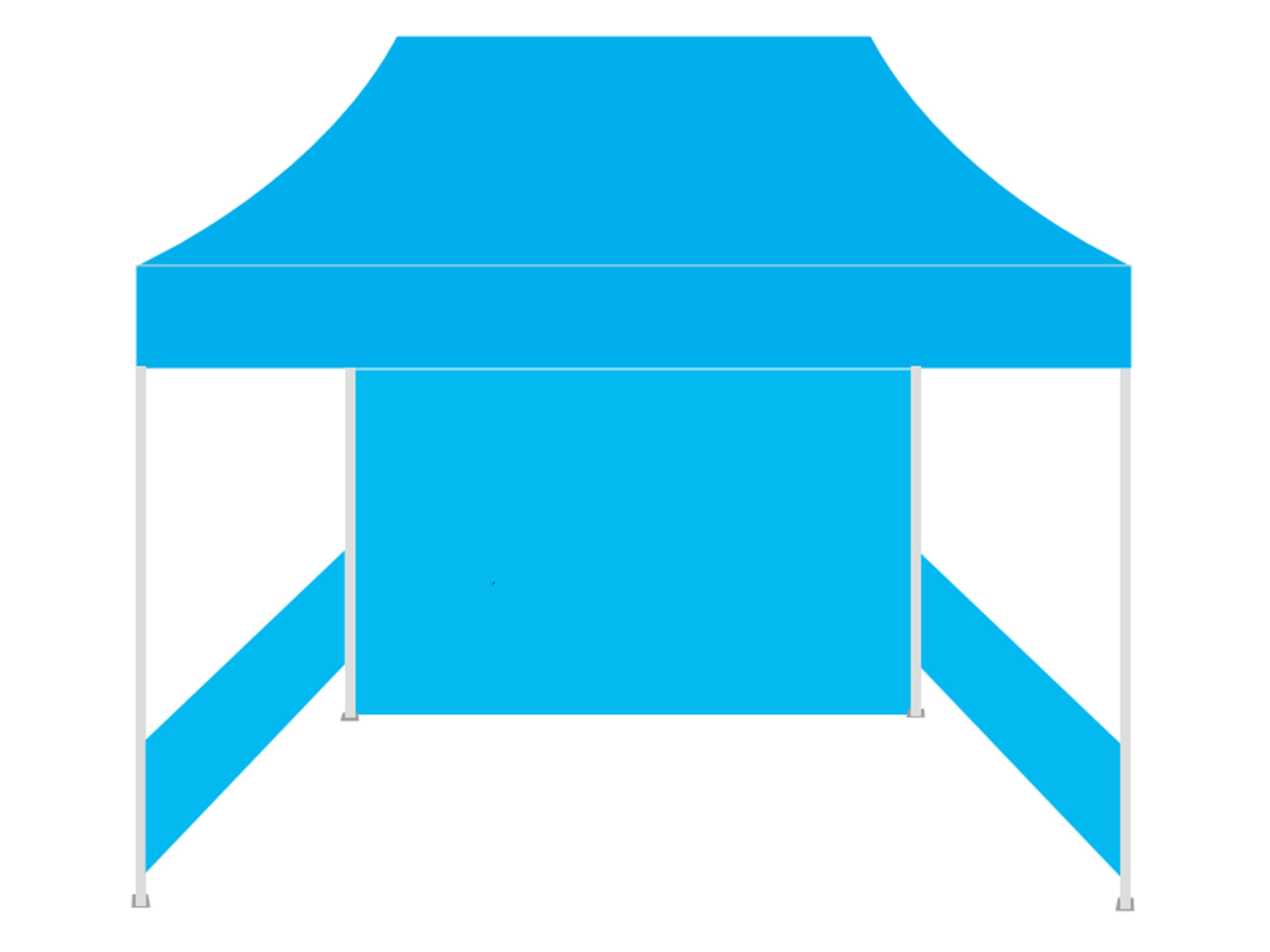 Caption: A pop-up canopy tent becomes a covered accreditation point at a fashion-week entrance.
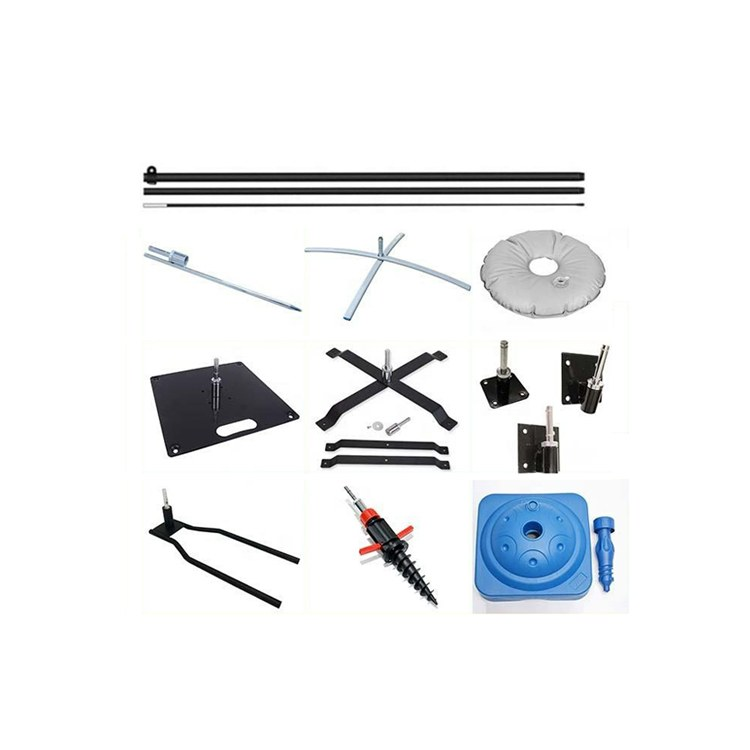
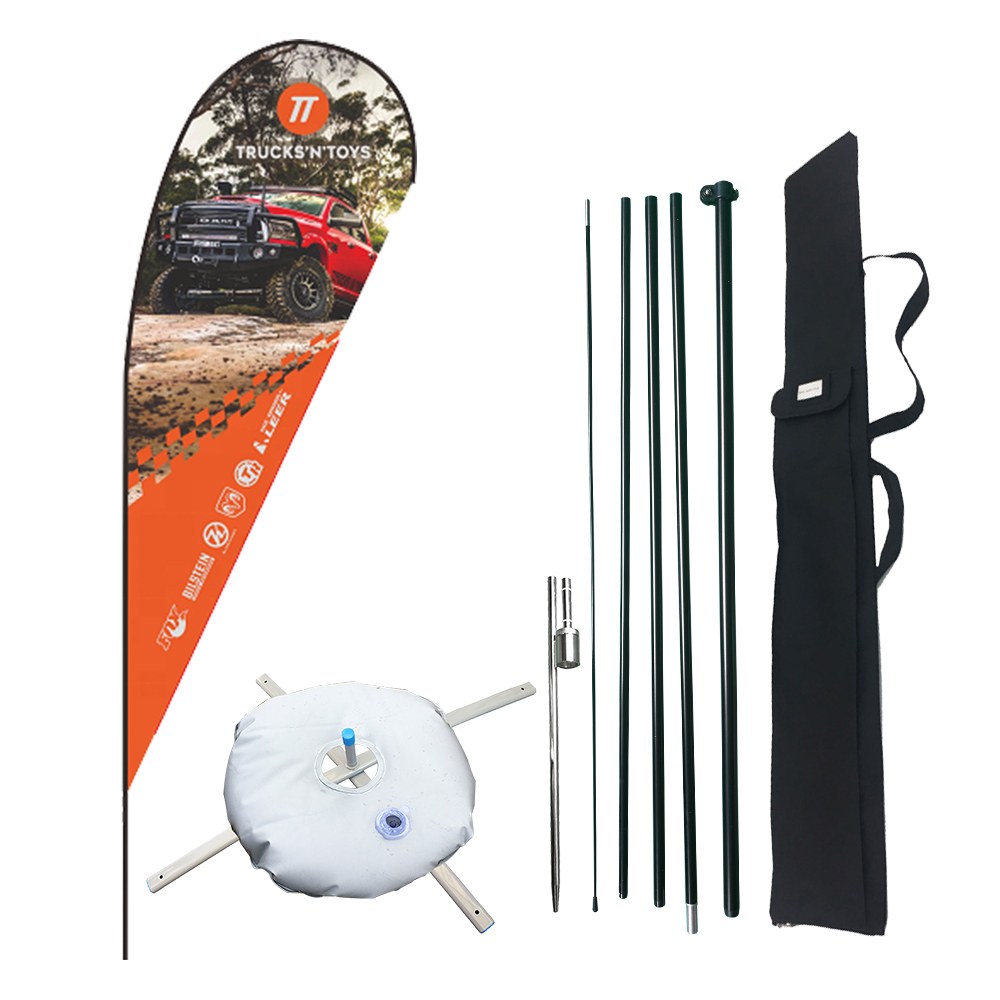
Sightlines come next. A venue hidden half a block down a side street is a venue nobody finds, which is why a tall flagpole planted at the kerb remains one of the cheapest pieces of advertising in the industry. Two or three in a row turn an anonymous doorway into an approach, and because the hardware is sectioned and weighted rather than concreted in, it comes down as fast as it goes up — a requirement when a space is hired by the hour. One well-placed flagpole at the kerb can do the work of a sandwich board and a paid sign combined, at a fraction of the weekly cost.
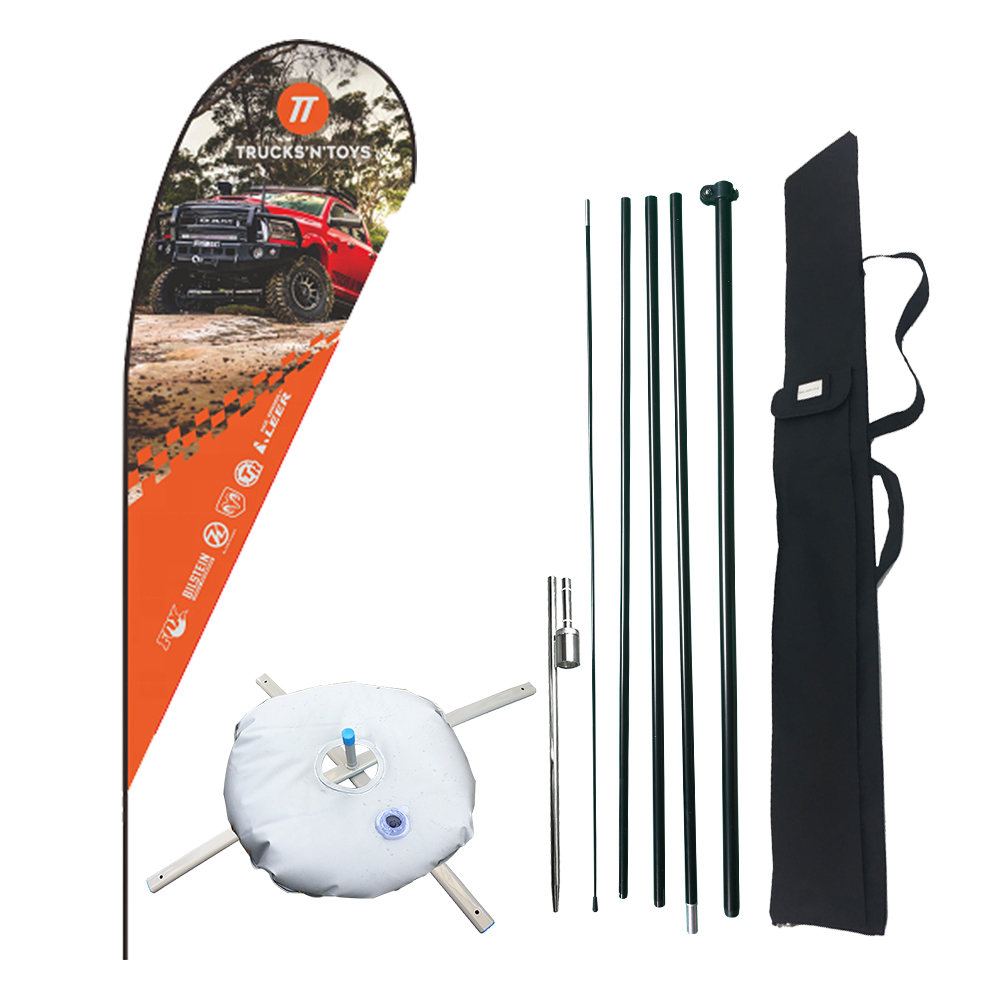 Caption: Tall flagpoles give an unmarked street entrance a clear approach and long sightlines.
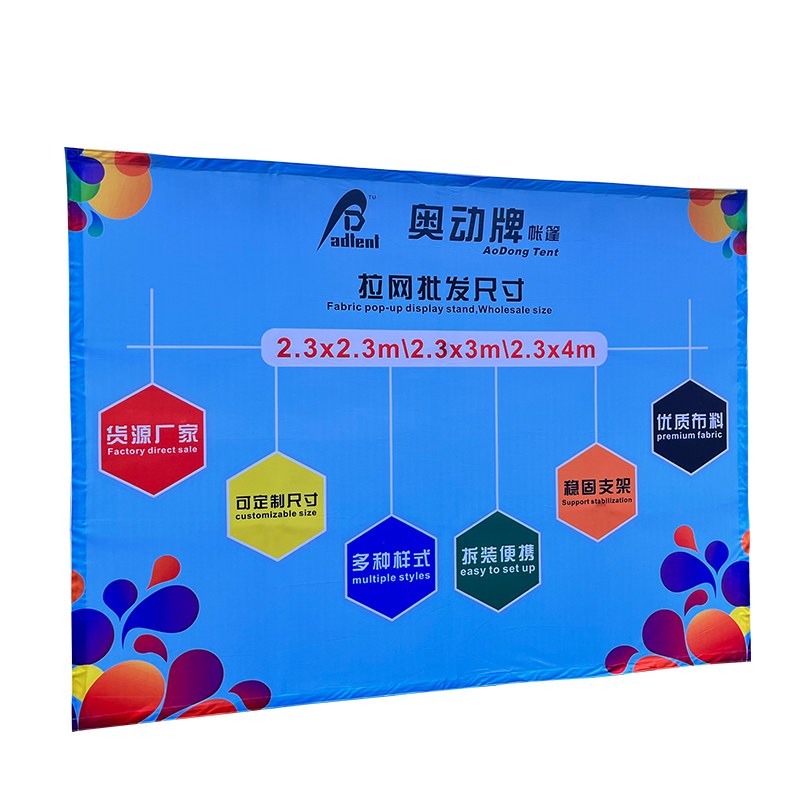
Inside, the single most photographed surface is the backdrop. The step-and-repeat is where every arriving guest stops, and it is where a sponsor's name will be reproduced across hundreds of social posts before lunch. A tension fabric display stretched across an aluminium frame is the standard answer: the dye-sublimated graphic pulls taut with no seams, no glare and no visible hardware, and the entire system folds into a soft bag that one person can carry. The same tension fabric display that backs a runway exit on Friday can become a press-interview wall in a Paris showroom the following week.
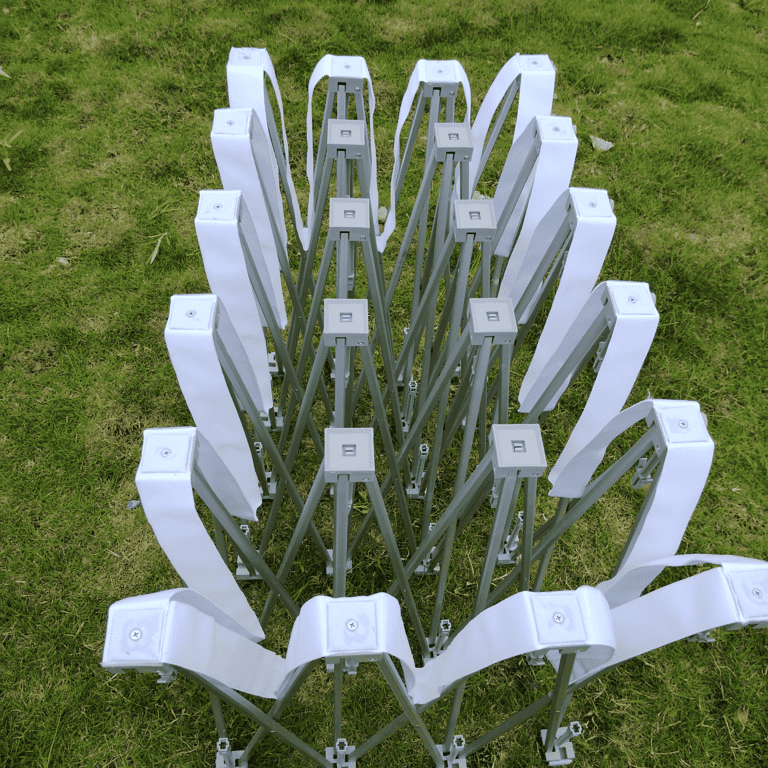 Caption: A tension fabric display forms a seamless step-and-repeat backdrop for arriving guests.
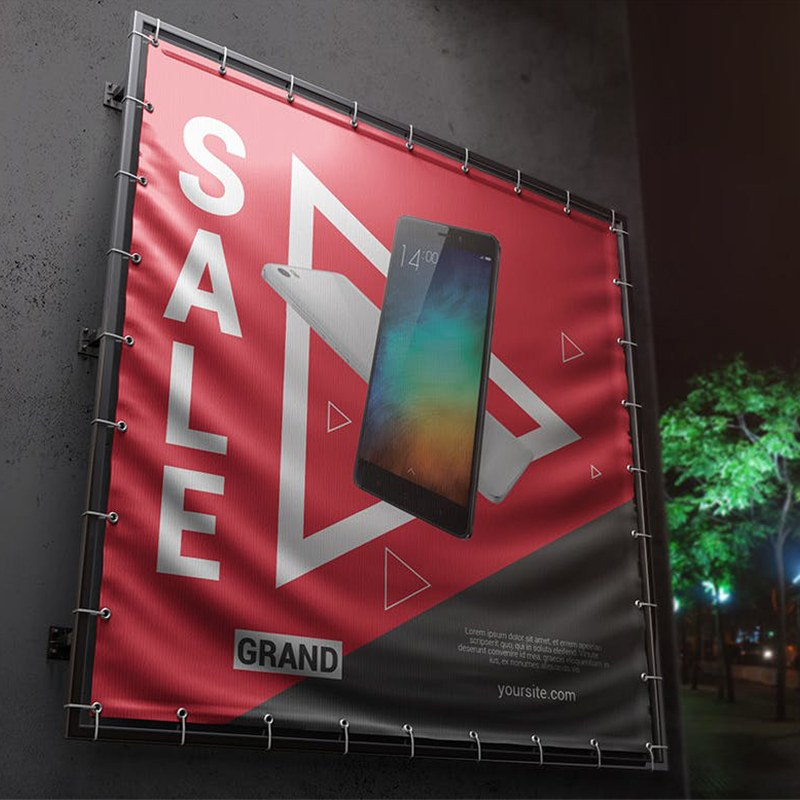
For exhibitors, the booth shell has changed just as much. Where a decade ago stands were built from timber and spent two days in assembly, the modern shell is a system of fabric-covered frames that two technicians raise before lunch. An advertising wall serves as the rear structure, hiding stock, cabling and the coffee machine while carrying the brand at eye level; add a second advertising wall at ninety degrees and the corner becomes a semi-private meeting room without a single screw. The result reads as architecture but behaves like luggage.
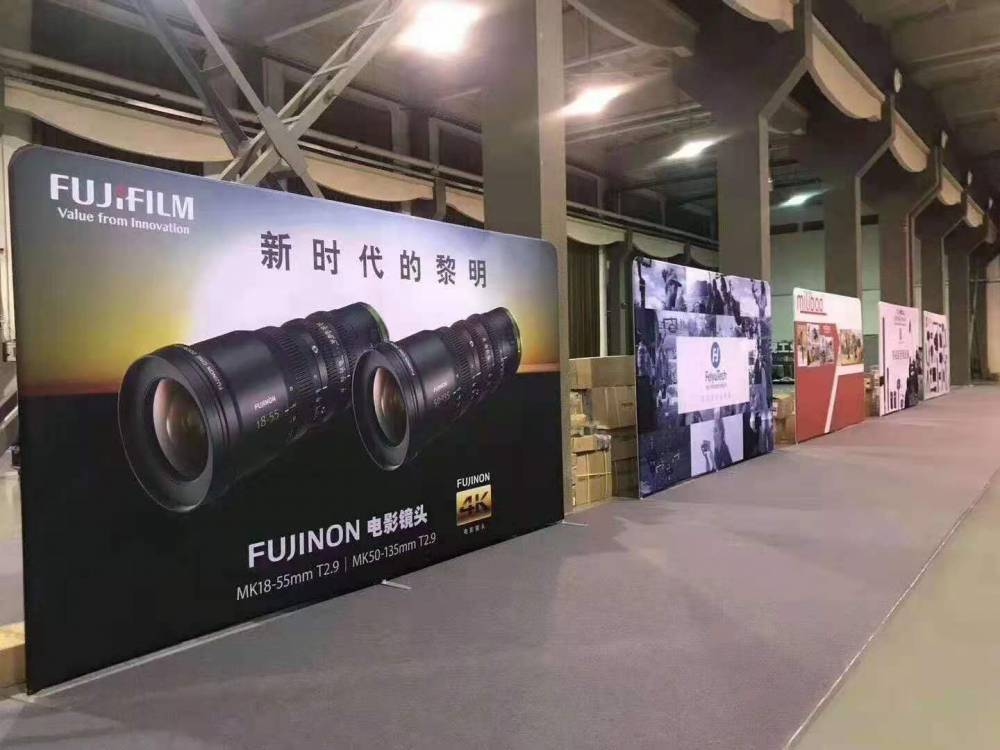 Caption: An advertising wall builds a clean booth shell and hides stock and cabling behind it.
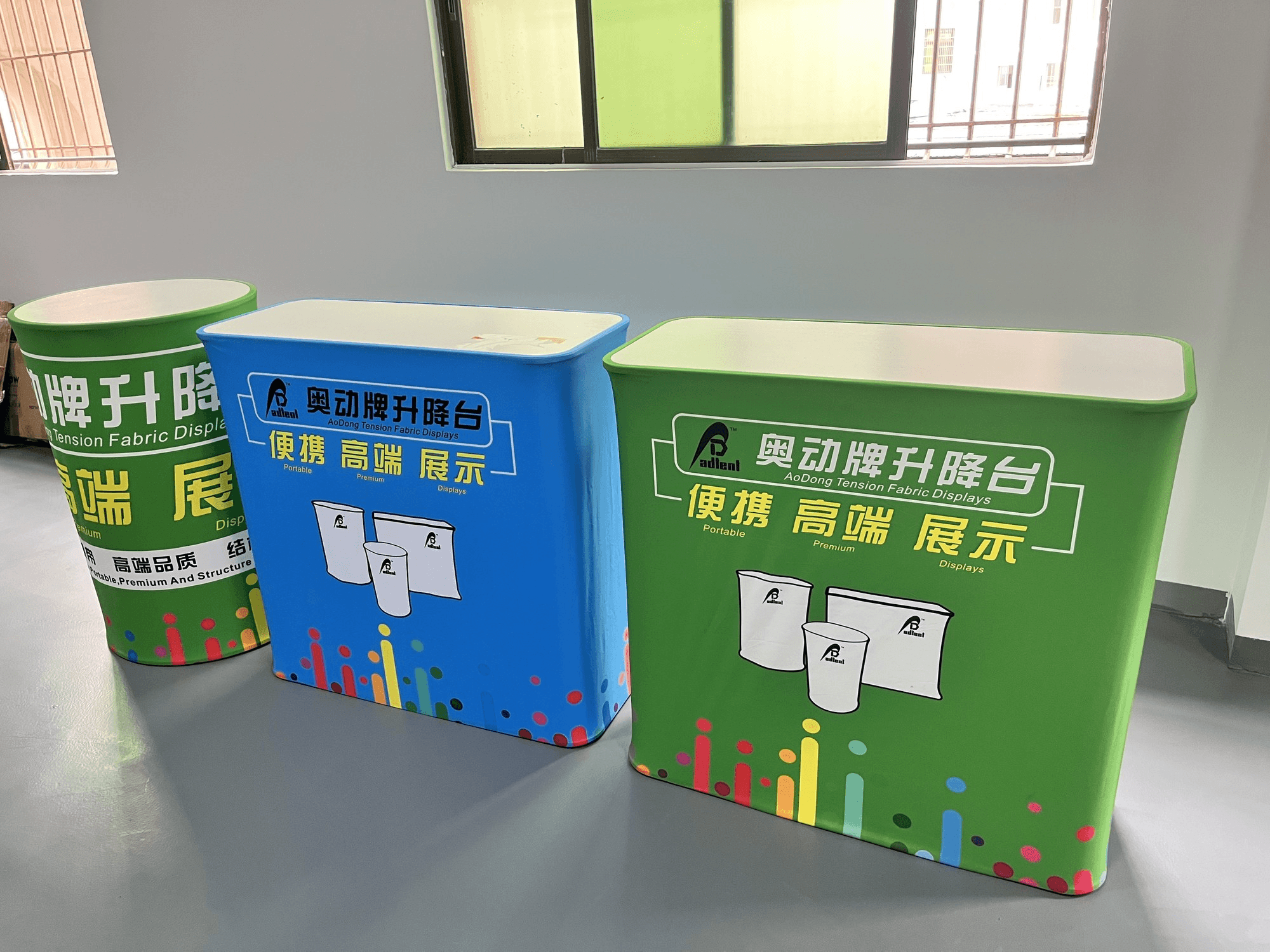
The smallest surfaces do the quietest work. A registration desk is where a visitor decides whether an exhibitor looks established or improvised, and a branded tablecloth over a plain trestle table is the lowest-cost upgrade on the floor. Dye-sublimated fabric drops to the ground on all four sides, hides the boxes underneath and can be swapped between shows in seconds — a different branded tablecloth for a distributor day than for a press day, without buying a second table.
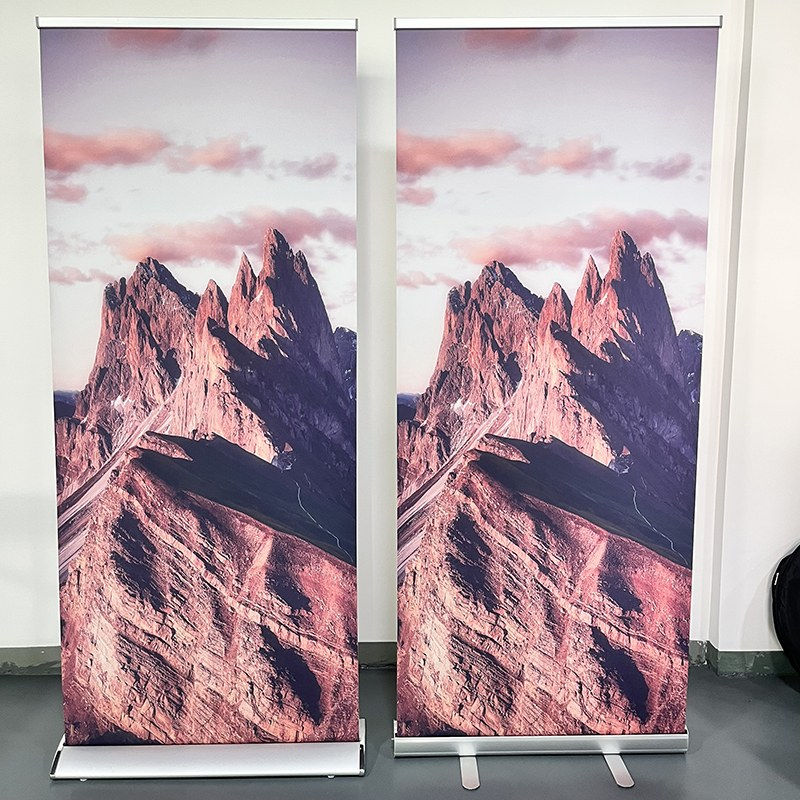
Wayfinding has become its own discipline. A hall the size of Messe Berlin holds thousands of visitors who all arrived with the same question: which way now. A roll-up banner at each junction answers it, and because the cassette mechanism retracts the graphic into its own base, units can be moved as traffic patterns change over a five-day show. Exhibitors order them in sets so that the message at the aisle, the message at the booth and the message at the exit all read as one campaign rather than three unrelated signs. A single roll-up banner placed back-to-back with another can even serve two languages in one footprint.
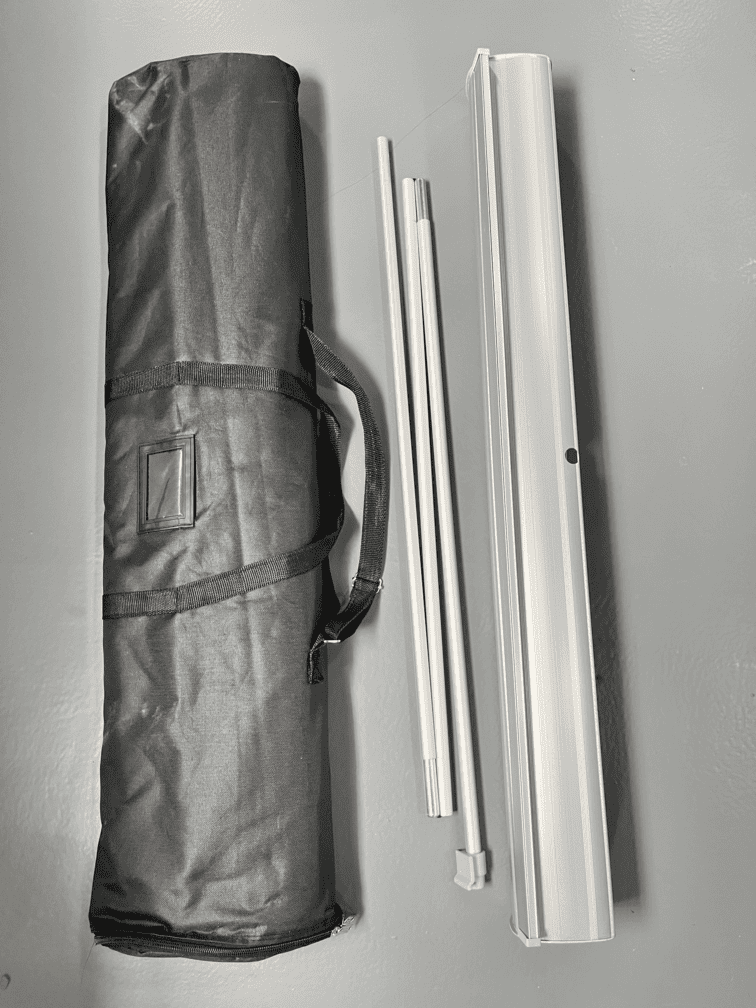 Caption: A roll-up banner guides visitors between halls and can be moved as traffic shifts.
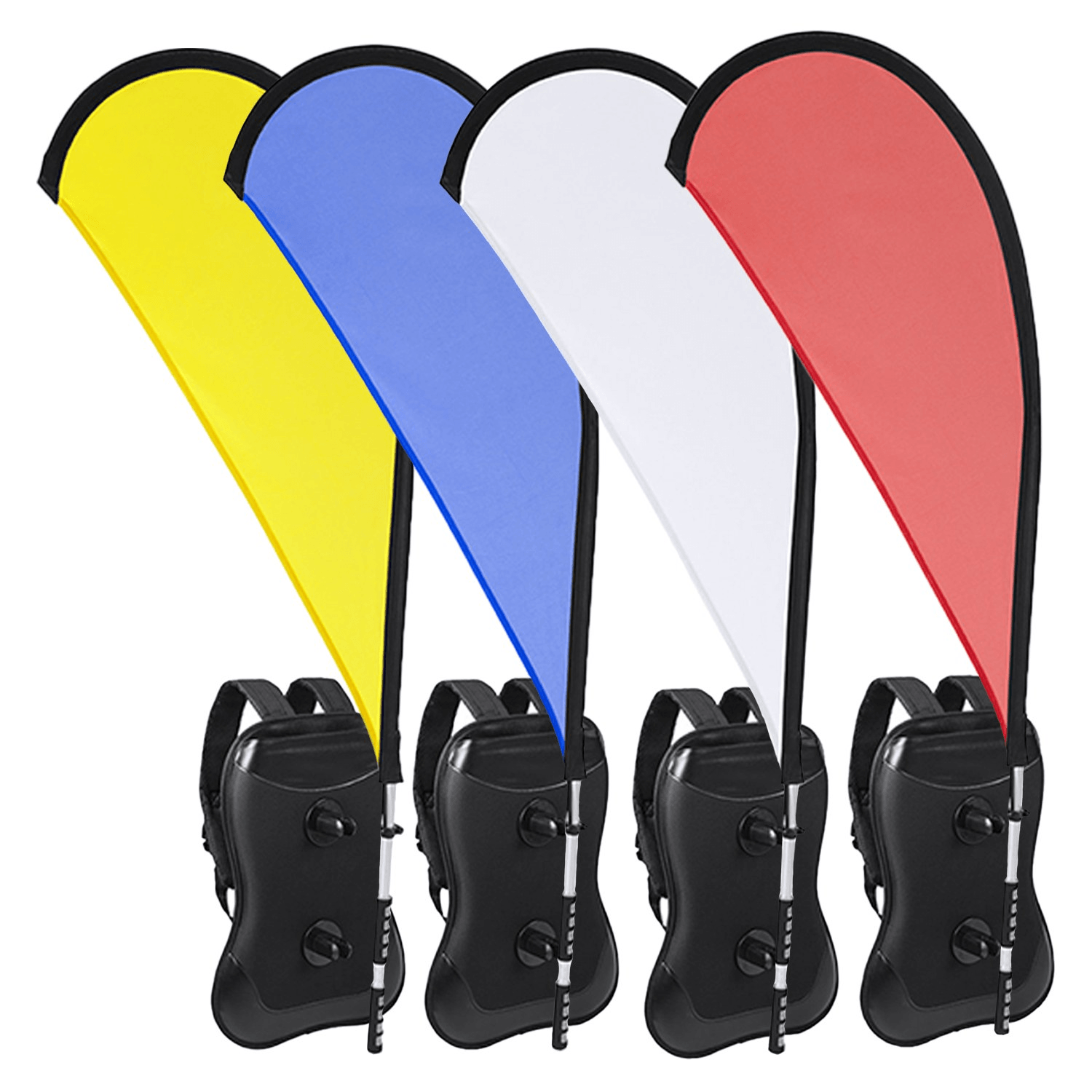
Outside the hall, foot traffic is won on the pavement. Street teams handing out show guides, sample bags or queue passes need to be visible in a crowd and mobile enough to follow it. A worn backpack flag does exactly that: the wearer's hands stay free, the graphic rides above head height, and the whole unit weighs little enough to work a ten-hour day. A backpack flag also photographs well from across a street, which is the distance at which most decisions about where to walk are actually made. During fashion week they appear outside show venues and at shuttle stops; during a trade show they work the walk between halls and the hotel shuttle queue.
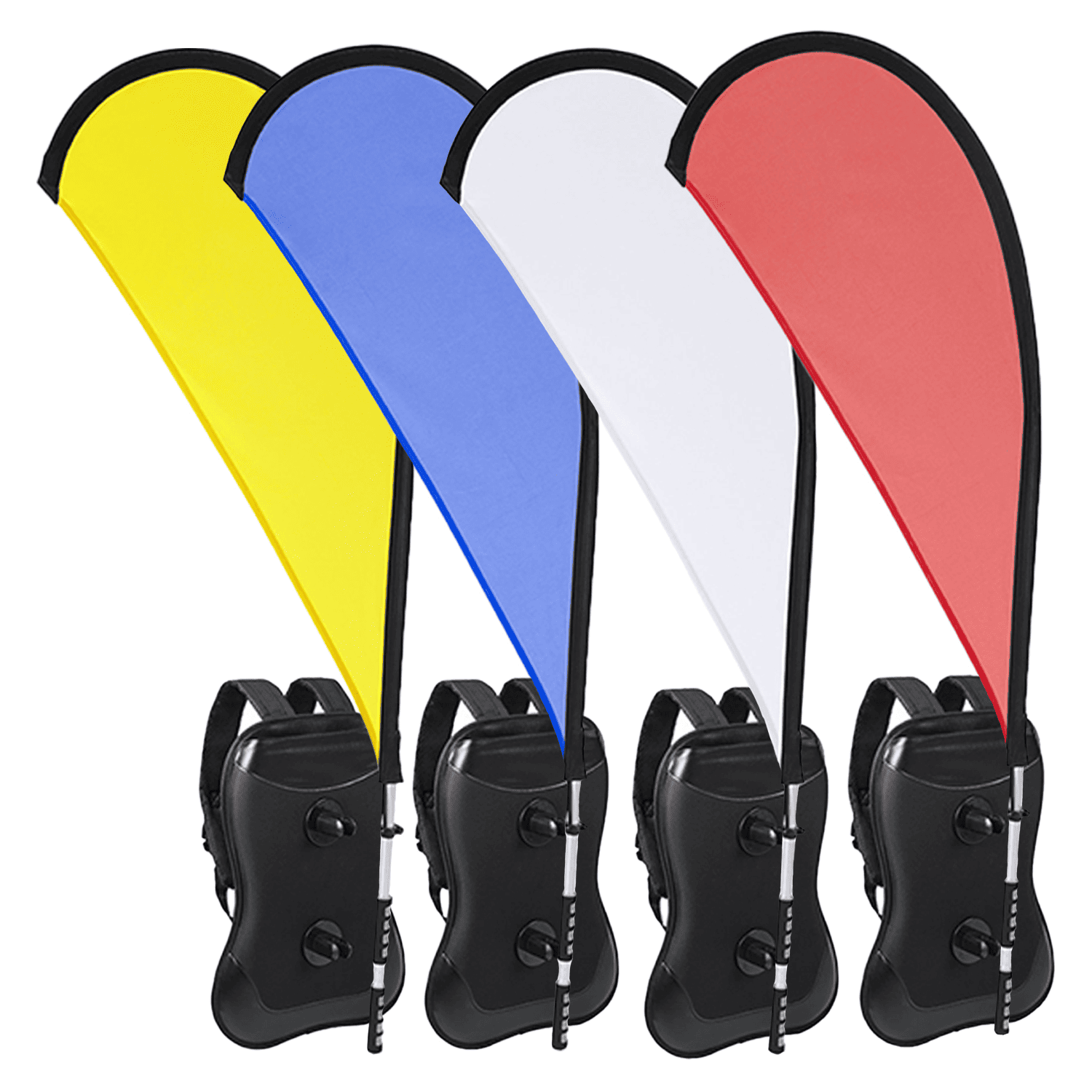 Caption: A backpack flag keeps a street team visible above head height with hands free.
Hospitality is the last piece. Every serious exhibitor and every fashion house running a showroom wants a space that is not the sales floor — somewhere to sit a buyer down with a coffee and a line sheet. A hexagonal tent answers neatly: the six-sided footprint feels deliberate rather than borrowed, the peaked roof gives interior height for lighting and hanging samples, and side panels can be opened on a warm afternoon or closed when the weather turns. Set up beside a hall entrance, a hexagonal tent becomes a private lounge in a car park.
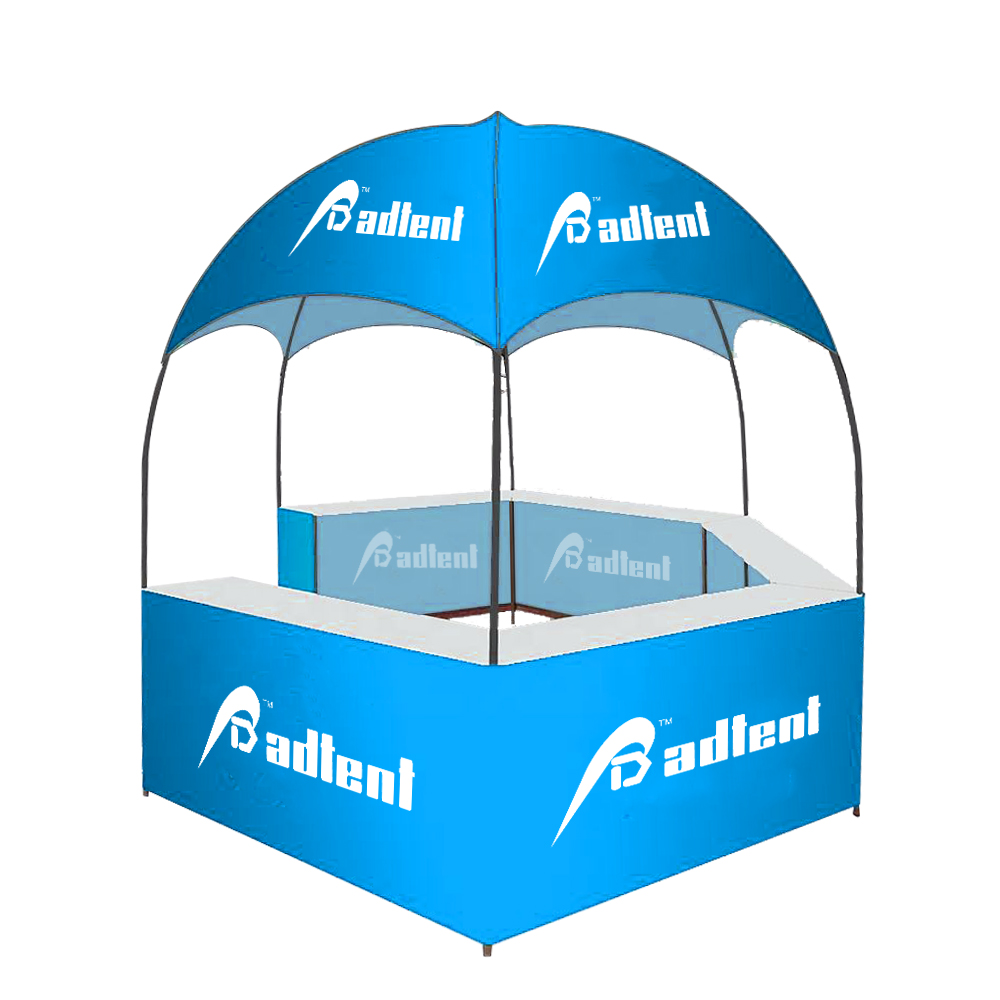 Caption: A hexagonal tent serves as a private hospitality lounge beside the hall entrance.
The economics explain the shift. A brand that works four shows in a month cannot afford a bespoke build each time, and the reusable alternative has quietly become the industry standard. One canopy tent covers accreditation in New York and product demonstrations in Berlin; a set of flagpoles frames a Paris entrance and then a Chicago aisle; a tension fabric display and an advertising wall re-skin from one campaign to the next in an afternoon. A hexagonal tent that hosts buyers in Frankfurt reappears as a VIP lounge in Las Vegas, the branded tablecloth that dressed a Berlin registration desk ships on to Paris in the same case, and even the roll-up banner from a September aisle is still legible in November. The backpack flag handed out on a Berlin pavement turns up again at a Las Vegas shuttle stop. What used to be a capital expense per event is now a library of graphics sitting on a shelf of reusable frames.
For the suppliers who serve this market, the lesson of September 2026 is that the value has moved from the structure to the graphic. The frames — the canopy tent frame, the flagpole sections, the tension fabric display hardware — are bought once; the skins are bought every season. That is why the brief arriving at display factories this month is rarely for a new frame. It is for a new branded tablecloth, a fresh roll-up banner, another backpack flag for the street team, a spare canopy tent for a second city, or one more advertising wall panel to close an open corner. September is when the calendar crowds in, and the brands that move fastest are the ones whose stage already fits in a case.
Note: Product names in this article refer to standard display-and-promotion equipment used at fashion weeks, trade shows and exhibition venues. Event dates are drawn from publicly announced 2026 schedules published by the CFDA, IFA Berlin, Messe Frankfurt and other organisers.