


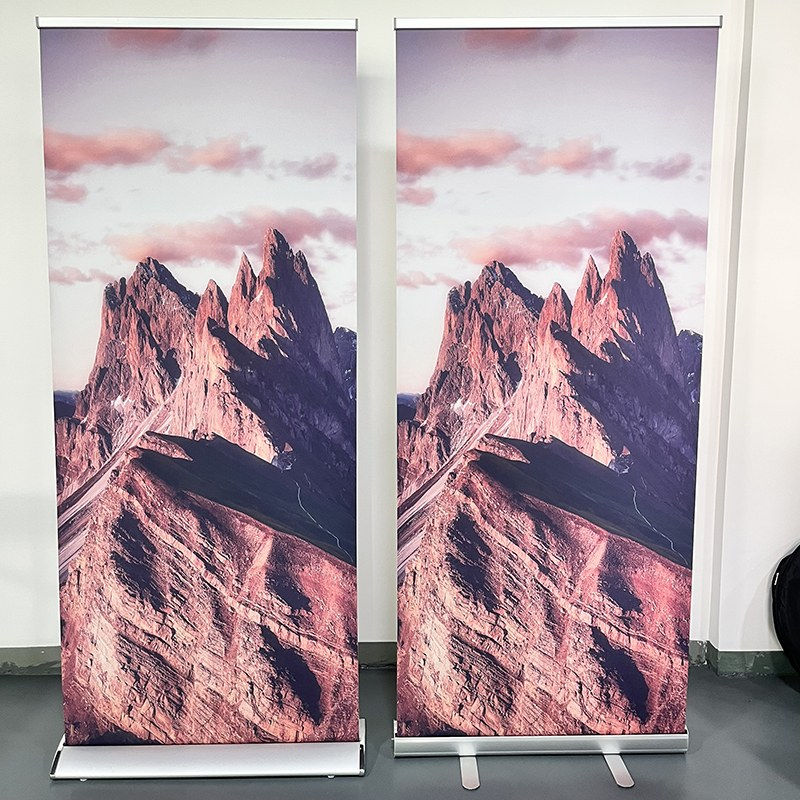
Base Season: November Stands the Flag on Every Surface on Earth - the Flag Base Decides Who Is Still Standing in December
Why the hardware under the fabric - ground spike, cross base, water bag, water tank, metal plate, wall mount, car foot or ground screw - is the real flag base buying decision of the holiday season
Ask a buyer what they order for the holiday season and they will say flags. Ask what actually keeps the flags trading through December and the honest answer is the flag base. The fabric gets photographed; the flag base is the part that argues with the ground, surface by surface, gust by gust. And this November the ground could not be more varied: London lays on the oldest civic procession in the world over wet paving stones on Saturday 14 November, with every route flag standing on a cross base, the German Christmas markets open on cobblestones from Cologne to Nuremberg, the Rockefeller Center Christmas tree arrives in Manhattan on 7 November ahead of its 2 December lighting, and Black Friday on 27 November fills American tree lots and forecourts with staff flags standing on cross base hardware planted on everything from asphalt to gravel. Five surfaces, five weathers, one question: which flag base is under the pole?
There is an uncomfortable pattern in our after-sales file. Flags almost never fail. Flag bases fail - or rather, the wrong flag base was chosen for the surface, the wind got underneath the fabric, and the whole kit lay in the gutter by Sunday. The flag was blamed in every complaint email; the flag base was responsible in nearly every case. That is why this article is not about flags at all, but about the flag base underneath them. It is about the nine flag bases in our catalogue, what each one weighs, what each one grips, and how buyers from market traders to rental houses match a feather flag base to a surface before the order - a cross base to a cobblestone, a ground spike to turf, a ground screw to rainlogged grass, not after the incident.
We walked our flag base workshop in Foshan for this piece - past racks of powder-coated cross base arms, wall mount brackets and car foot steel, a pallet of blue 15 kg water tanks built as water tank base stock, and a bench where chrome ground spikes get their rotating collars pressed - the same collar that makes a ground spike a weathervaning beach flag base - and wrote down what buyers actually ask, check and get wrong. If your season starts on cobblestones, asphalt, wet grass or a showroom floor, the next four thousand words are the checklist.
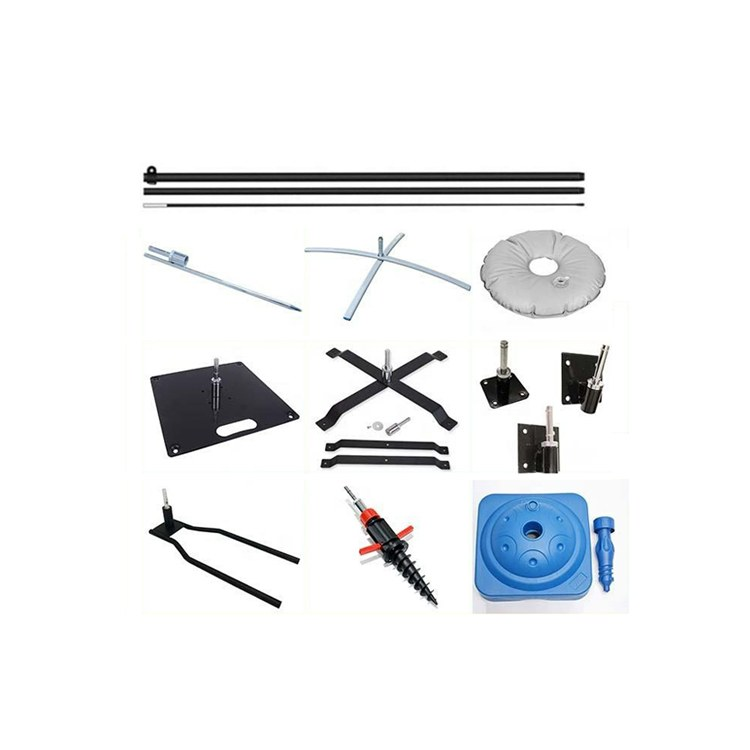
The family portrait: ground spike, cross base, water bag, metal plate, heavy cross base, wall mount, car foot, ground screw auger and 15 kg water tank - nine flag base answers to one question: what is the surface?
Saturday 14 November: London proves that every surface is different - in one square mile
The Lord Mayor's Show dates back to 1215, making it the world's oldest civic procession, and the 2026 edition on Saturday 14 November is a fitting showcase: around 6,500 participants, 70 floats and 20 military and civilian bands walking a 2.86-mile route from Mansion House to the Royal Courts of Justice via Cheapside and St Paul's Cathedral, returning along the Embankment. The 698th Lord Mayor, Bronek Masojada, travels to the start by ceremonial barge on the Thames - the flotilla returns for the first time since 2017 - before the procession steps off at 11 am, live on BBC One in the broadcaster's centenary year of covering the Show. More than 350,000 spectators are expected to line the route, past every flag pole base the contractors could hire.
Now look at that route the way an event contractor does. It crosses City pavement, historic paving stones, Embankment walkways and temporary pedestrian zones - and along every metre of it sit hospitality stands, charity collection points, broadcast positions and branded flags for the livery companies and sponsors. Not one of those flags can use a ground spike or a ground screw, because you cannot drive steel into paving that has stood since the seventeenth century, and the City of London would have something to say about it anyway. Every flag base on that route is a cross base carrying weight - a water bag slid over the pole, or plates loaded with ballast - because on hard surfaces, weight is the only grip you can buy, which is why the water bag and the metal plate base were invented.
Contractors who work London's civic calendar order cross base stock in bulk precisely for this reason, because a spike-free flag pole base is the only kind the City permits: the arms fold flat for van transport, the centre collar of the flag pole base takes the pole, and the pre-drilled feet accept either ground stakes on grass sections or bolt-down on permitted hard standings. One hardware platform, two anchoring methods, zero holes drilled in listed stonework.
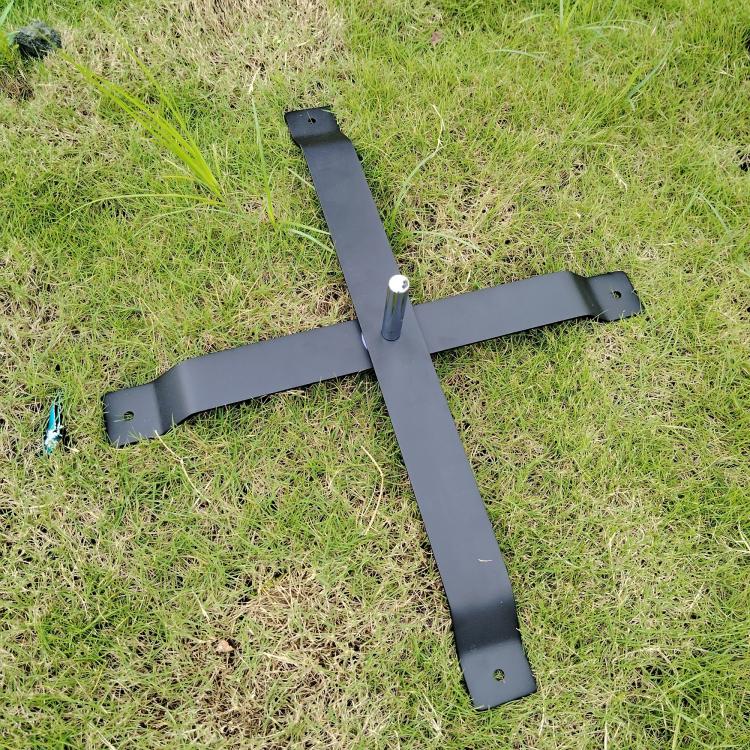
The cross base on grass: four powder-coated steel arms, a centre collar with the pole pin, and pre-drilled feet that accept stakes or bolts. On paving, the same flag base carries water bags or plates instead.
Nine bases, one pin: what the flag base family actually is
Every flag base in the family shares the same logic at the top - a socket that accepts the flag pole's pin or bottom section, usually with a rotating collar or bearing so the fabric weathervanes with the wind instead of fighting it. Below that socket, each flag base is a different answer to a different surface. Learn the family once and you can quote any venue in one email:
● Ground spike - the chrome steel spike with a rotating collar, driven into soil, turf or sand. Lightest option, cheapest freight, zero set-up beyond a mallet. The correct beach flag base and the correct park flag base - and the wrong choice for every hard surface that exists.
● Cross base - the X of powder-coated steel that lies flat under the pole. Indoors on tile, outdoors on paving, or on grass with the feet staked. Needs added weight in wind: a water bag, sandbag or plates on the arm ends. The default flag base of market traders and indoor exhibitions, and the anchor half of every water bag pairing.
● Heavy cross base - same geometry, thicker steel arms and a reinforced centre. For larger feathers, coastal wind and rental fleets that get folded and unfolded daily - the heavy duty flag base of the family.
● Water bag - a round PVC donut that slides over the pole and sits on the cross base arms, filled on site with 10-15 litres of water. Ships flat and empty, weighs almost nothing in the carton, and turns a bare cross base into real ballast at the venue.
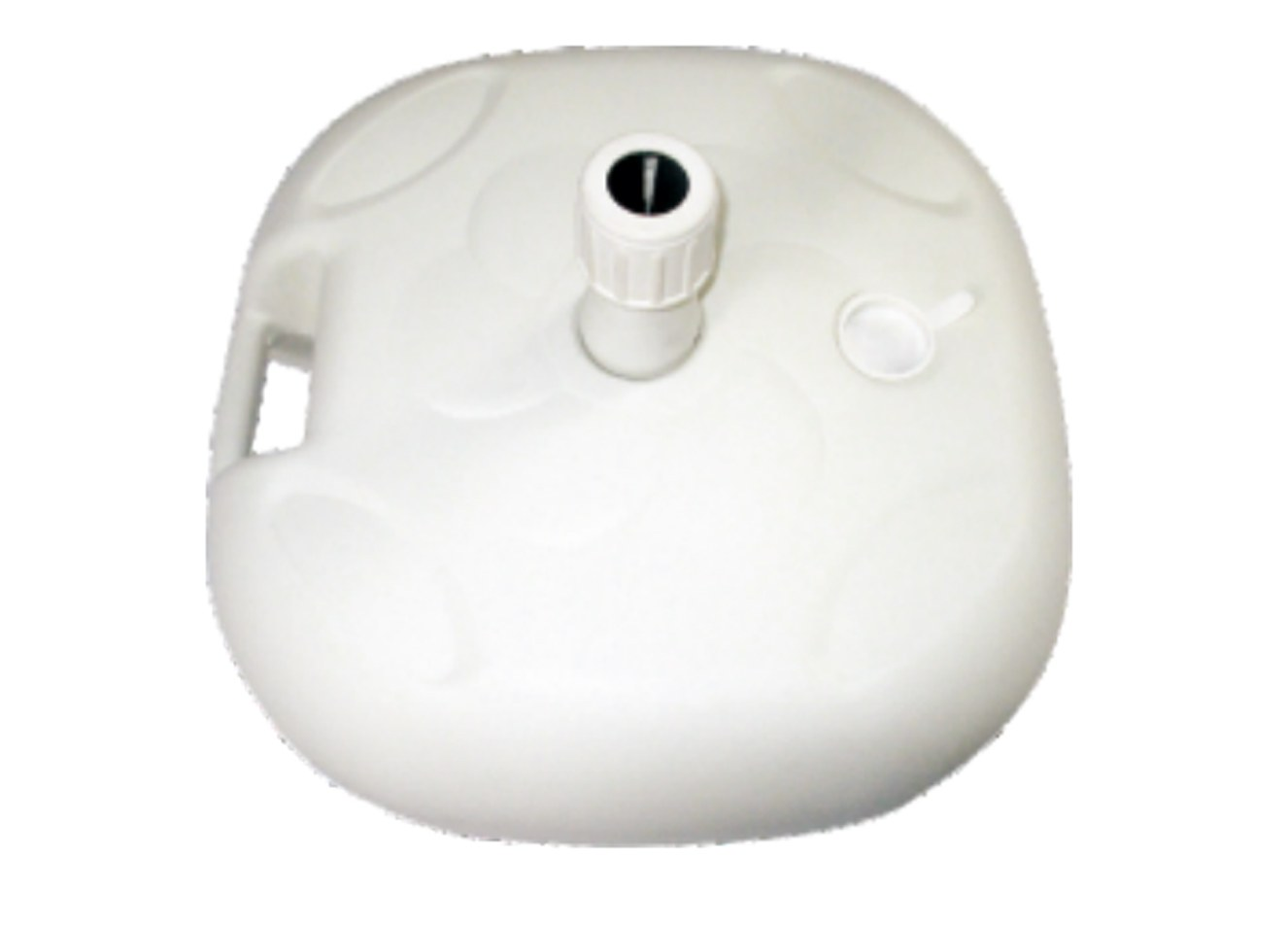
● Water tank 15 kg - a blow-moulded tank filled with water or sand through a screw cap, with moulded sockets for one or several poles. The semi-permanent flag base: forecourts, garden centres, campsite entrances, and tree lots that trade all season.
● Metal plate base - a solid steel plate with an integral carry handle and a welded socket. Dead weight that works indoors and out, floor-friendly and fill-free; the choice when a venue bans water and the floor must stay unmarked.
● Wall mount - a bracket with the same pin socket that turns a wall, column or beam into a flag position. Such a wall mount is perfect for narrow pavement fronts where floor space is worth more than the flag.
● Car foot - a low steel foot designed to sit under a vehicle tyre, turning the forecourt itself into the ballast. Dealerships love it: the stock on display anchors the flags around it, and the car foot never fills, moves or drains.
● Ground screw - a steel auger with a T-handle that screws into turf and soil in under a minute and grips far harder than a spike in soft or rain-soaked ground. The festival crew's favourite flag base for winter grass, and the reliable answer when a ground spike pulls out of rainlogged turf.
One detail every buyer should confirm: the socket diameter. Most feather flag base systems in this family take a standard bottom-pin pole, but diameters vary between 17 and 22 mm across the industry, and a flag base that is half a millimetre off means a pole that wobbles, rattles or needs tape shims in the rain. Send the pole drawing with the feather flag base order, not just the flag size.
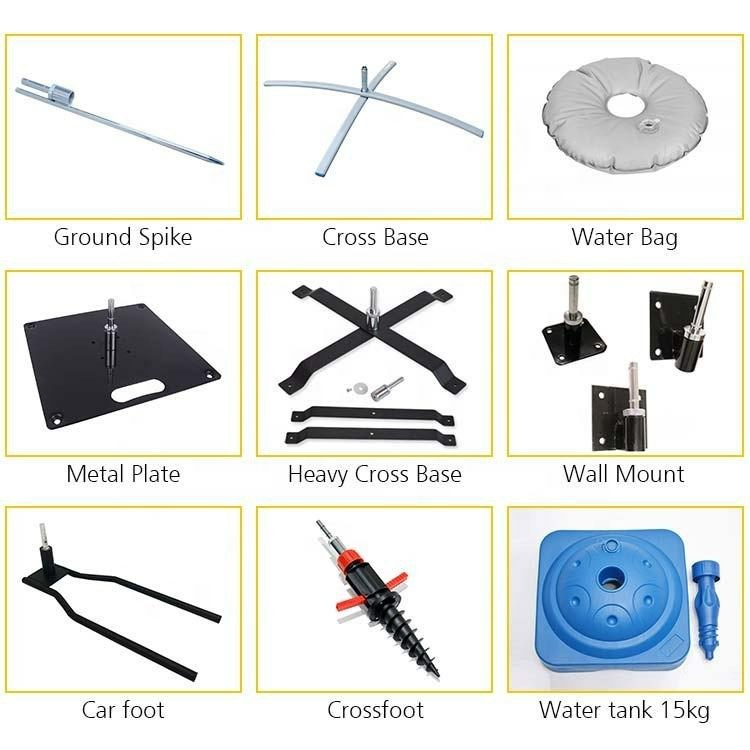
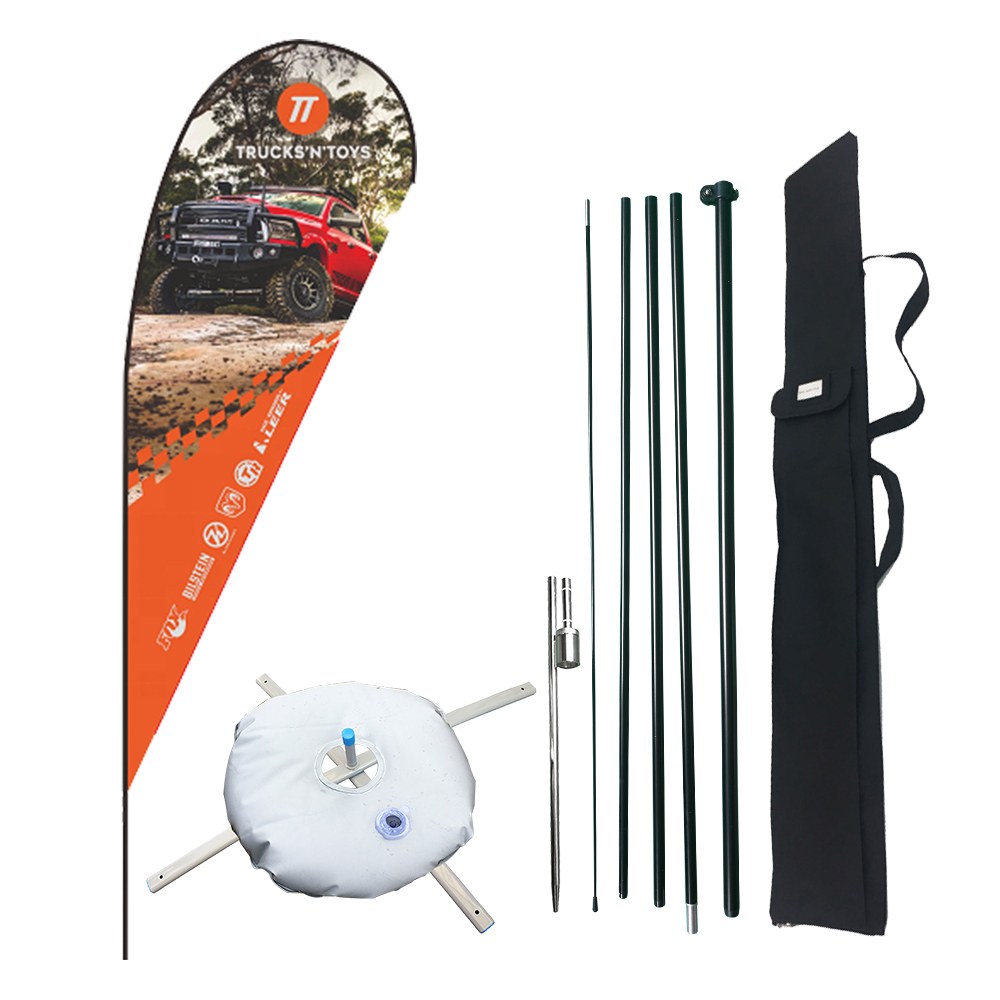
The full kit wall: poles in three sections, and beneath them every flag base in the family - spike, cross base, water bag, metal plate, heavy cross base, wall mounts, car foot, auger and tank. Match the flag base to the ground, then order.
The flag base surface decision matrix - what buyers actually write on the purchase order, one line per ground
After enough November conversations, the flag base decision collapses into a matrix that fits on an email signature. Buyers who quote venue by venue using this table almost never file a wind complaint; buyers who order one flag base for every ground almost always do:
● Grass, soil, sand - a ground spike as the fast answer; a ground screw when the ground is soft, sandy or rainlogged; a cross base with staked feet for larger flags.
● Paving, cobblestones, concrete - cross base plus ballast: a water bag filled on site, or the water tank base if the position is semi-permanent. Nothing gets drilled on the cross base; everything gets weighed, and a filled water bag remains the cheapest weight on the market.
● Indoor floors, showrooms, exhibition halls - metal plate base or heavy cross base, no fill required, no leak risk. A flag base that cannot leak cannot embarrass you in a lobby.
● Walls, columns, narrow fronts - wall mount bracket, the only flag base that consumes zero floor area.
● Forecourts and vehicle displays - car foot under the tyre. The ballast is the inventory.
● Mixed fleets and unknown venues - cross base plus a water bag covers ninety per cent of cases, which is why rental houses buy that pair at a four-to-one ratio over every other flag base.
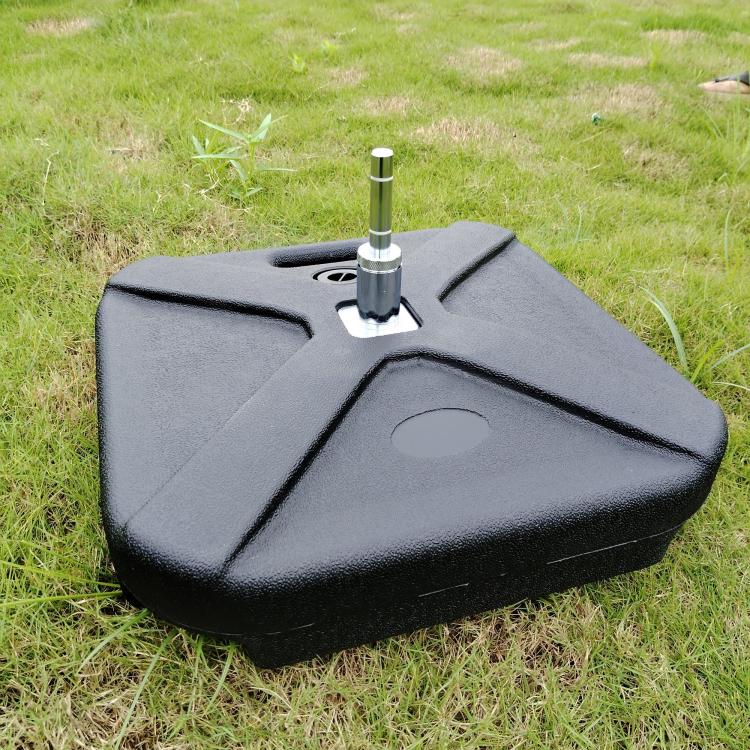
The water-fillable square flag base on grass: blow-moulded PE shell, screw-cap fill port, carry handle and a chrome pin socket. Empty it ships; filled with water or sand it becomes one of the heaviest flag base options per dollar.
Mid-November: the German markets open on cobblestones - and cobblestones have rules
The German Christmas markets - among Europe's oldest and largest - open through the second half of November: Cologne's markets around 16 November, Munich's around 20 November, Frankfurt's on 23 November, and Nuremberg's Christkindlesmarkt from 27 November to 24 December, with Dresden's Striezelmarkt - Germany's oldest, in its 592nd edition - opening in late November. Market traders set up in historic squares paved in cobblestone and stone slabs, exactly the surface profile of the Lord Mayor's Show route: hard, uneven, heritage-protected, and completely indifferent to spikes.
A trader we supply in Bavaria described the arithmetic simply: the stall gets two flags at the front corners, each on a cross base with a filled water bag, because the market office fines anyone whose flag base damages the paving and closes the square before the first Gluhwein is poured if a flag goes over in a gust. The cross base arms sit flat between the cobbles, the water bag adds 12 kilograms at the flag base collar where it matters - at the bottom of the pole - and at close of trade the bag drains into the gutter in thirty seconds and the whole kit folds into a crate. A heavier water tank base would survive more wind than the cross base, but it would also occupy selling space at a rate of roughly one mulled-wine cup per square metre per hour, and the trader did the maths before we did.
The winter lesson from the markets is about drainage, not just weight. Water bags filled in the evening can freeze overnight in a German December; traders either add a splash of salt to the water bag, top up with lukewarm water at set-up, or switch to the water tank base filled with dry sand. Buyers in Alpine and inland continental regions now spec sand-fill as standard - the tank does not care about the temperature, and sand does not need to be carried anywhere: it is already at the venue.
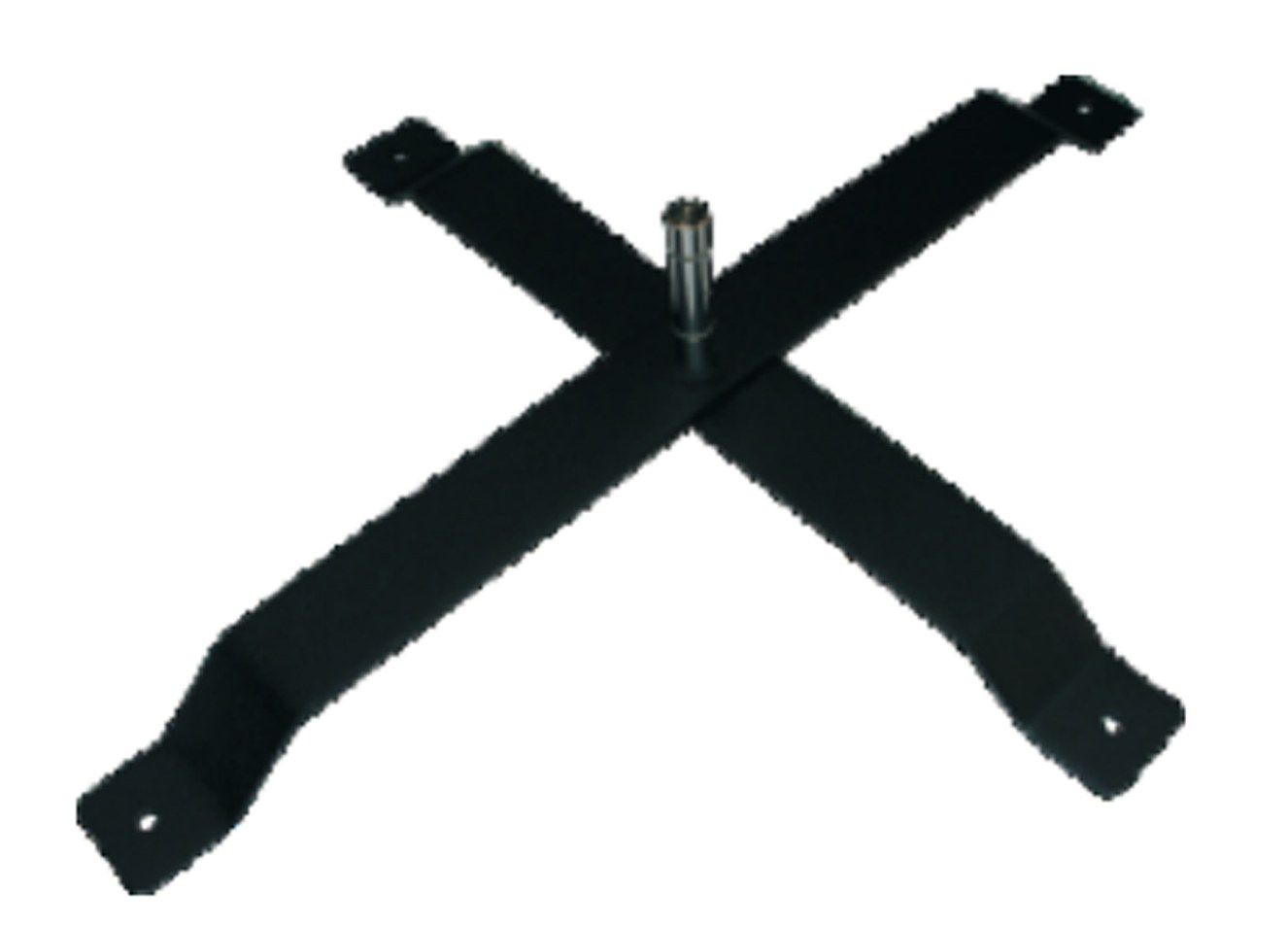
Heavy cross base: thicker arms, reinforced centre collar. The flag base grade for big feathers, coastal towns and rental fleets that fold and unfold daily from November to January.
The wind arithmetic - how much flag base weight is enough?
Every experienced buyer eventually asks for the number: how many kilograms does a feather flag base need on my surface in my wind? There is no single answer, but there is a defensible ladder, and it is worth printing on the inside of the warehouse door. The fabric area of a flag is a sail; the flag base is the anchor; the gap between them is filled with weight, and the flag base weight requirement climbs with the flag's size and the site's exposure:
● Small feather or teardrop (2.5-3 m) in sheltered urban positions: a filled water bag (10-12 kg) on a cross base is the working minimum on hard ground; a ground spike holds in firm turf and a ground screw in soft ground.
● Standard feather (3-4 m) on open paving: 15-20 kg of ballast - a water bag plus a plate on the cross base arm, or one 15 kg water tank base per position.
● Large feather (4-5.5 m) or anything coastal, rooftop or promenade: 30 kg and up of flag base weight - doubled plates or twin tanks, and honestly consider whether that position wants a flag at all in a gale.
● Indoor and mall positions: the metal plate base weight is chosen for stability and appearance rather than wind - 8-12 kg of dead steel does the job and never marks the floor.
Buyers who skipped this ladder are the source of most of the after-sales file. A garden centre in the Netherlands ordered light cross bases for four-metre feathers at an exposed entrance because the photo looked fine; the first North Sea blow in December laid all six flags flat within an hour. The re-order was for the heavy duty flag base grade plus a water tank base at every entrance, and the difference in unit price was smaller than the cost of one weekend without flags at a garden centre's busiest month.
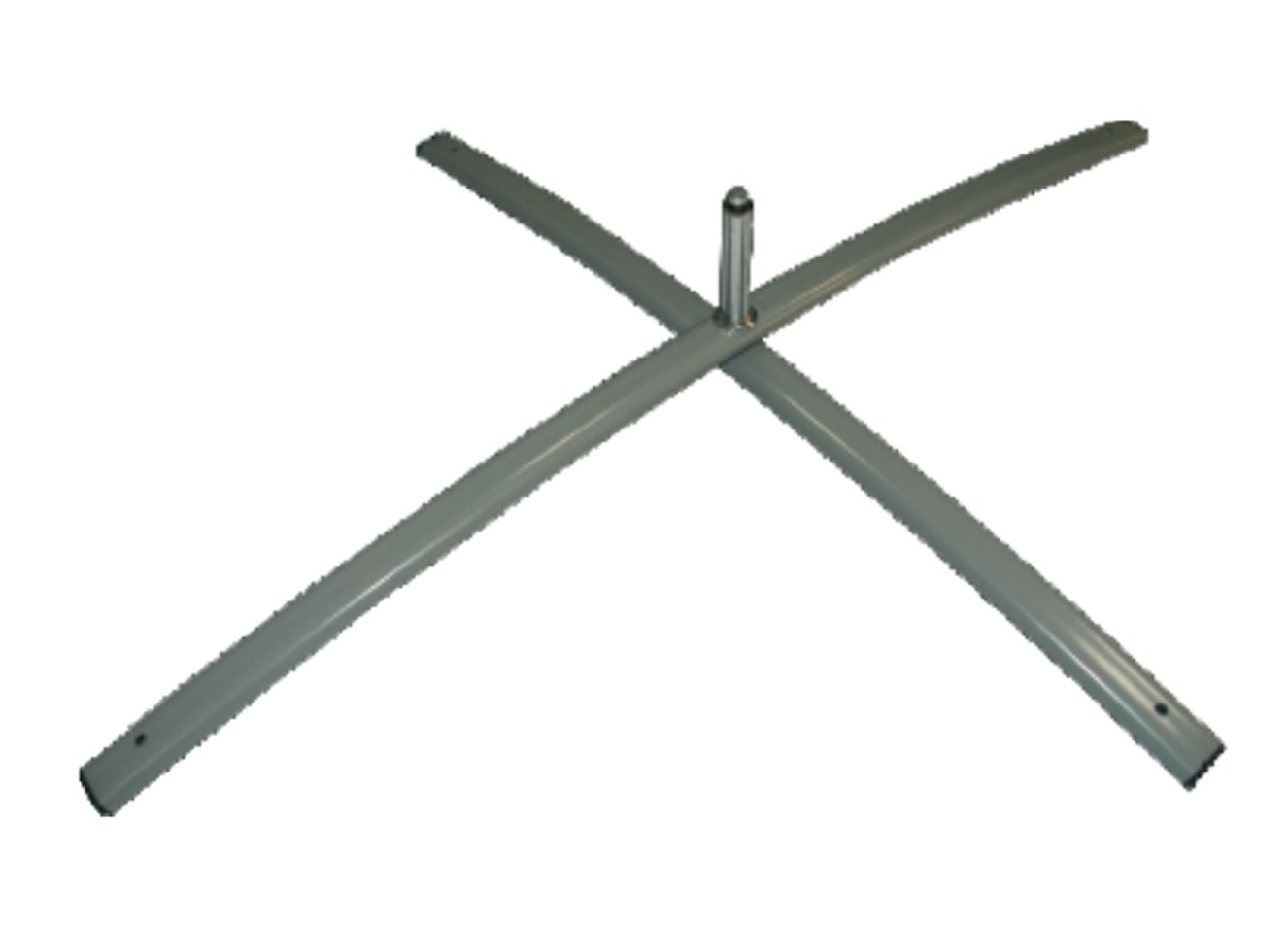
The aluminium cross base: lighter arms for indoor exhibitions and daily-carry kits, with the same pin socket as every other flag base in the family.
7 November: the tree arrives in Manhattan - and the holiday retail season opens with it
The Rockefeller Center Christmas tree - this year a 76-foot Norway spruce from West Edmeston, New York - arrives at the Plaza on Saturday 7 November, is lit on Wednesday 2 December in a ceremony broadcast live by NBC, decorated with more than 50,000 multicoloured LED lights under the Swarovski star, and stays on display until mid-January before being milled into lumber for Habitat for Humanity. The tradition dates to 1933, and around it the whole of Midtown turns into a five-week outdoor retail event where a feather flag base on every frontage is part of the dress code: fifth-avenue frontages, pop-up holiday markets, skating-rink hospitality and a street crowd measured in millions over the season.
For American buyers, the tree arrival is the deadline that matters, because the six weeks from late November to early January are when seasonal retail - tree lots, gift markets, charity collections, holiday photo experiences - trades its entire year, and the flag pole base order is the first line of that budget. A tree lot is a masterclass in flag base surface problems: asphalt and gravel lots where a ground spike is useless, muddy perimeter grass where only a ground screw holds through six weeks of weather, and a lane of staff flags marking the pay tent that must survive six weeks of wind without a single reset. The lots that get it right standardise on a heavy duty flag base, the water tank base filled with sand, for the entrance pair and cross base plus water bag for the lane - anchored by the only flag base that cannot blow over, because it weighs what the venue already owns.
Black Friday on 27 November and Small Business Saturday on 28 November compress that logic into one weekend. Pop-up sellers in malls run metal plate base kits where water is banned by the landlord; roadside sellers run tanks on gravel; and the storefront with three metres of pavement runs the flag on a wall mount bracket, because the pavement rent in November is the highest it will be all year.
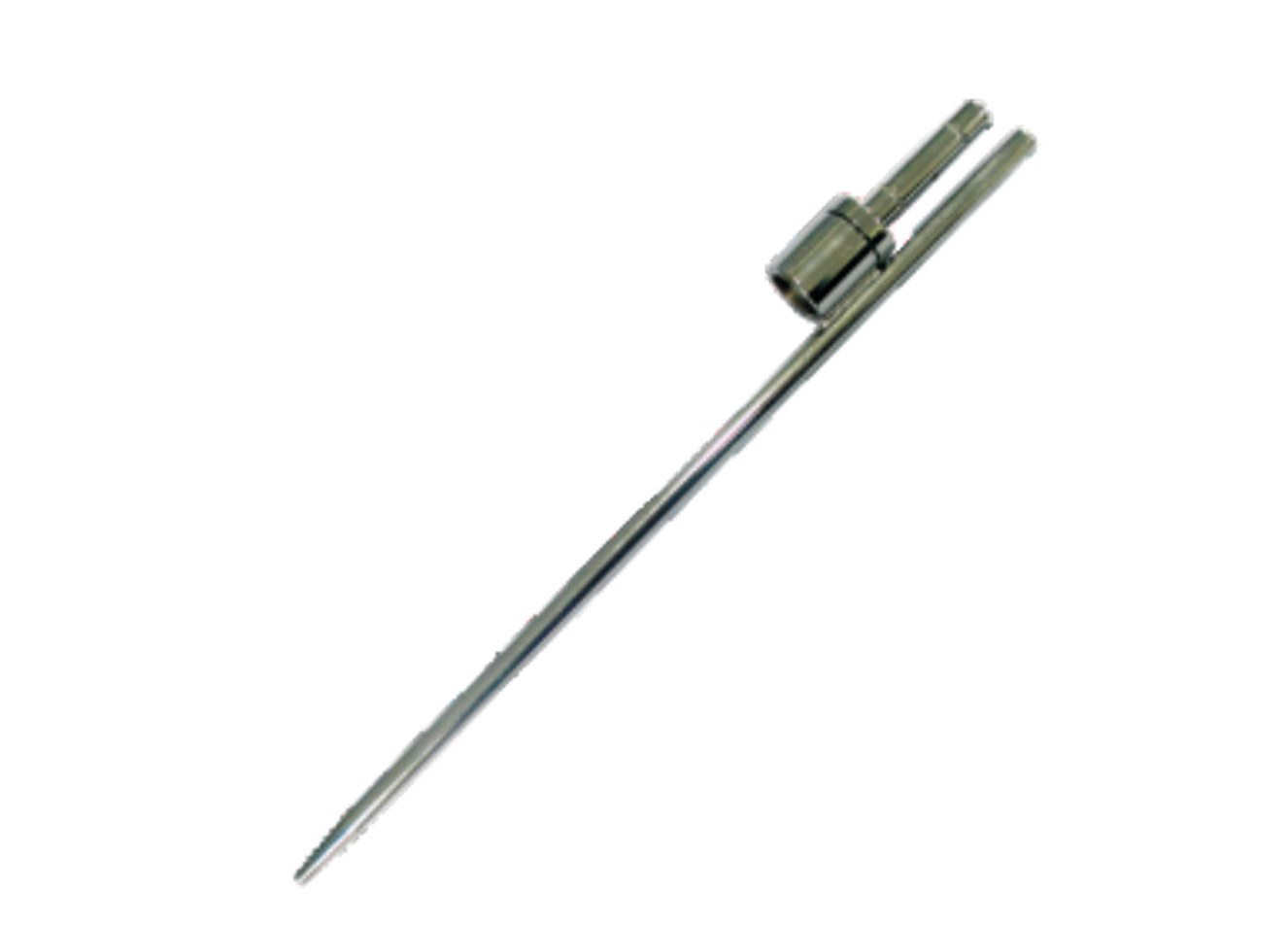
Chrome ground spike with rotating collar: the beach flag base and park flag base in one part. The collar lets the fabric weathervane, which is what keeps a spike-planted flag standing at all.
Buyer stories: three orders, three surfaces, three flag base decisions
A rental house in the Midlands running corporate winter events taught us the fleet lesson. They used to carry every flag base type in the van and gamble on the venue; now they carry cross base frames, water bags and two ground screws per position, and quote every client from the same kit. Their words: the flag base is not a product choice, it is a surface choice, and surfaces come in three kinds - grass, hard, and indoors - so we stopped buying everything else. Their breakage rate fell by roughly half in one season, mostly because the crew stopped improvising with whatever was at the bottom of the van.
A car dealership group in the Sun Belt gave us the forecourt lesson. They wanted giant feather flags at the road frontage but their ground was limestone gravel over concrete, undrillable. The solution was not more flag base weight at all - it was the car foot: a low steel foot positioned under the wheel of each display vehicle, anchoring a flag per car for free, with zero footprint in the sales line and no ballast to fill, move or drain. The dealership now treats the display row as the flag row, and the service department has not been asked to epoxy a socket since.
A Christmas market organiser in Alsace gave us the compliance lesson. Her market office mandates that every trader flag be either bolted to the stall frame or weighted to a stated minimum, with the ballast method written on the stall plan. The organisers stopped buying flags as loose items and started buying kits: pole, feather flag base, and the ballast method chosen per pitch, photographed at set-up for the safety file. Insurance premiums fell - the ballast method became part of the safety binder. The moral for exporters is uncomfortable but useful: in Europe, increasingly, the flag base is a compliance item before it is a marketing item, and paperwork-ready buyers order documented weight, not painted promises.
The ground screw auger with T-handle: sixty seconds into turf and it grips wet winter grass where a spike pulls out. The festival crew's flag base for the muddy months.
The 10-point flag base inspection we teach every buyer
Whether the buyer is checking a sample on arrival or auditing a fleet before the season, the same ten checks catch the failures that matter:
● Spin the collar or bearing on every flag base socket. A gritty collar wears the pole finish and seizes in cold weather; it should rotate with one finger.
● Check the socket bore against the actual pole pin with the real parts, not the drawings. Half a millimetre decides whether the kit is a pleasure or an argument.
● Weigh the empty flag base and calculate the filled weight honestly. A water bag holds what it says only if the seams hold what they say.
● On cross bases, flex each arm at the fold. Fatigue cracks start at the fold radius, and a hairline today is a snapped arm in a January storm.
● Look at the cross base feet: pre-drilled holes clean and deburred, arm ends flat. Feet that rock on paving shift the load to the collar, which is not designed for it.
● On water tanks and the square fillable flag base, check the fill cap gasket and the drain. A stripped cap thread writes off the ballast concept entirely.
● On wall mount brackets, verify the fixing holes are slotted or oversized; a bracket that demands perfect bolt placement fails at installation, not in wind.
● On ground screws, check the auger tip is hardened and the T-handle welded, not pinned. Soil is abrasive; soft tips wear smooth in one rocky site.
● On the car foot, check the wheel-channel width against the actual vehicle tyres on site - a foot sized for a city car slides under a pickup like a coaster.
● Confirm the finish: powder coat on every steel arm, not paint. Salt, de-icing grit and wet cobblestone take paint off a flag base in one weekend.
Eight questions that separate a flag base supplier from a flag base vendor
● What is the filled weight of each flag base, measured, not estimated, with water and with dry sand?
● Which socket diameters are stocked, and can one order mix 17 mm and 22 mm collars?
● What is the maximum flag size each flag base is rated for, and at what wind on what ballast?
● How do the cross base arms fold, and how many fold cycles has the sample survived?
● Are spare collars, caps and gaskets for the flag base sold separately, and at what price?
● What is the carton size and packed weight per flag base type, and how many units nest per standard carton?
● Can the water tank base be branded - moulded or sleeved - at what quantity?
● What documentation is supplied for venues that require stated ballast weights per flag base?
Three mistakes buyers make with flag bases
● Ordering the flag base after the flags. The flag size and the flag base grade have to be decided together, because the wind load the fabric generates is the load the flag base must carry. Half of all re-orders begin with a buyer who picked the pretty part first.
● Quoting one flag base for every surface. The Lord Mayor's Show route, a Nuremberg pitch, a Manhattan tree lot and a Sun Belt forecourt do not share a surface, and no single flag base serves them all. Buy the matrix, not the monoculture.
● Ignoring freight physics. Cross bases and plates are steel - heavy, flat and nestable; tanks and bags ship empty and fill on site. Buyers who air-freight filled-weight flag base hardware pay twice for water they can get free at the venue.
Freight maths: why the flag base ships the way it ships
Nobody ships a holiday-season flag base the way they ship the flags, and buyers who understand the split pay noticeably less per landed kit. Cross base arms and metal plate base stock are steel: heavy, flat and nestable, which makes them predictable volume freight that stacks to the roof of a carton. Water bags and water tank base shells ship empty - a tank that weighs 15 kilograms on site weighs under two in the carton - and fill at the venue with water that costs nothing to freight. Ground spikes and ground screws are dense but small, and a wall mount bracket is barely a parcel. The result is that a complete flag base set for one market pitch - cross base, water bag, spike and screw - ships in less cube than the flag it carries.
The mistake to avoid is mixing the physics. Buyers who air-freight steel flag base hardware pay aviation rates for kilograms the venue could have supplied as water or sand, and buyers who ask the factory to pre-fill or pre-assemble ballast pay twice for handling. The industry consensus, learned the expensive way: flat steel ships, empty plastic flies or sails, and the fill happens at the last metre, on site, in November rain, by whoever is holding the mallet.
Ordering, freight and lead times
The family ships from our Foshan works with a minimum order quantity of one piece per variant, e-proofs and samples in one to three working days, and ex-works or FOB terms via Guangzhou, Shenzhen or Foshan ports. Cross bases and metal plate bases nest flat, so a pallet carries serious quantity; water bags and tanks ship empty and collapse flat, which is why a mixed flag base pallet can serve an entire market season from one carton cube. November production is the tight window before the December demand spike on water tank base and cross base lines - orders confirmed this week land the powder-coat line this month, and the buyers who will not be chasing their freight forwarder in the second week of December are the ones whose purchase orders are already in the queue.
The last word belongs to the surface, as always. Flags are chosen for the crowd; the crowd never sees the flag base. But every flag still standing on the last Saturday before Christmas - on cobbles in Nuremberg, asphalt in Manhattan, wet grass in the Midlands - is standing on a flag base decision somebody made in November, in kilograms, on paper, before the wind ever arrived. Choose the flag base the way the ground will treat it: by weight, by surface, seriously.