


As Europe's late-August festival weekend nears, brands race to build recognizable spaces before the crowds arrive
From All Points East in London to Reading & Leeds and Rock en Seine outside Paris, the season's biggest outdoor weekends double as branding stages — and the same modular display kit keeps turning up.
— LONDON / PARIS —
The last and largest wave of Europe's summer festival season arrives this week. All Points East opens in London's Victoria Park on 22 and 23 August before a second weekend on 28–30 August; Reading & Leeds takes over Bramham Park and Richfield Avenue across the UK August Bank Holiday on 27–30 August; and Rock en Seine fills the Domaine de Saint-Cloud on the western edge of Paris from 26 to 30 August, with Electric Picnic drawing crowds to Stradbally Hall in Ireland on 28–30 August. Edinburgh's festival run is still winding down — the Fringe runs to 31 August and the Edinburgh Summer Sessions stage shows run 24–29 August — so for a fortnight the continent's parks, showgrounds and city squares become one long, moving outdoor stage. Right behind the festivals, university welcome weeks and freshers' fairs begin, turning the same campuses and quads into branding spaces of their own.
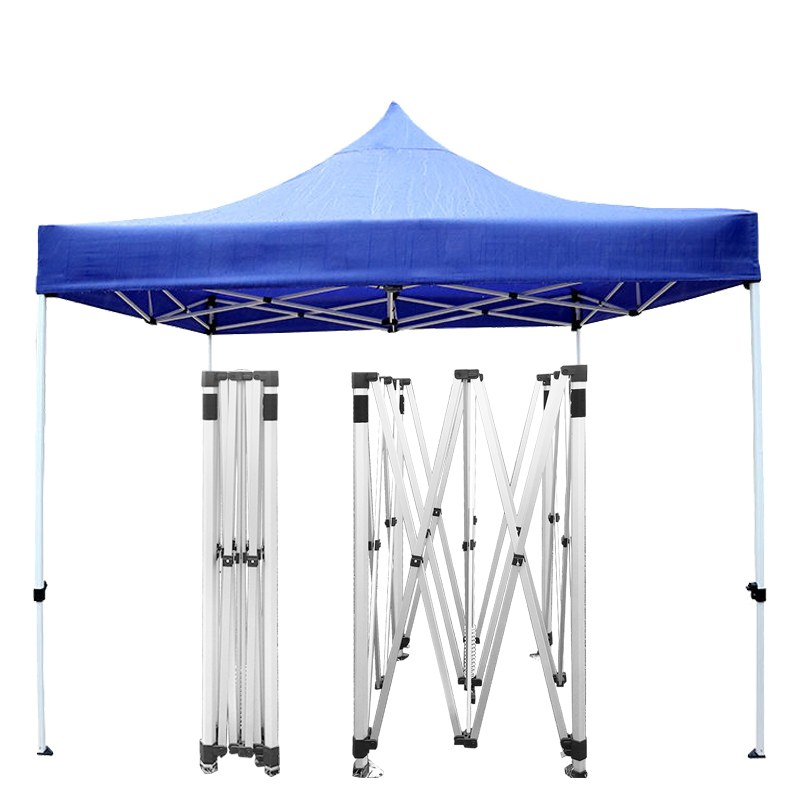
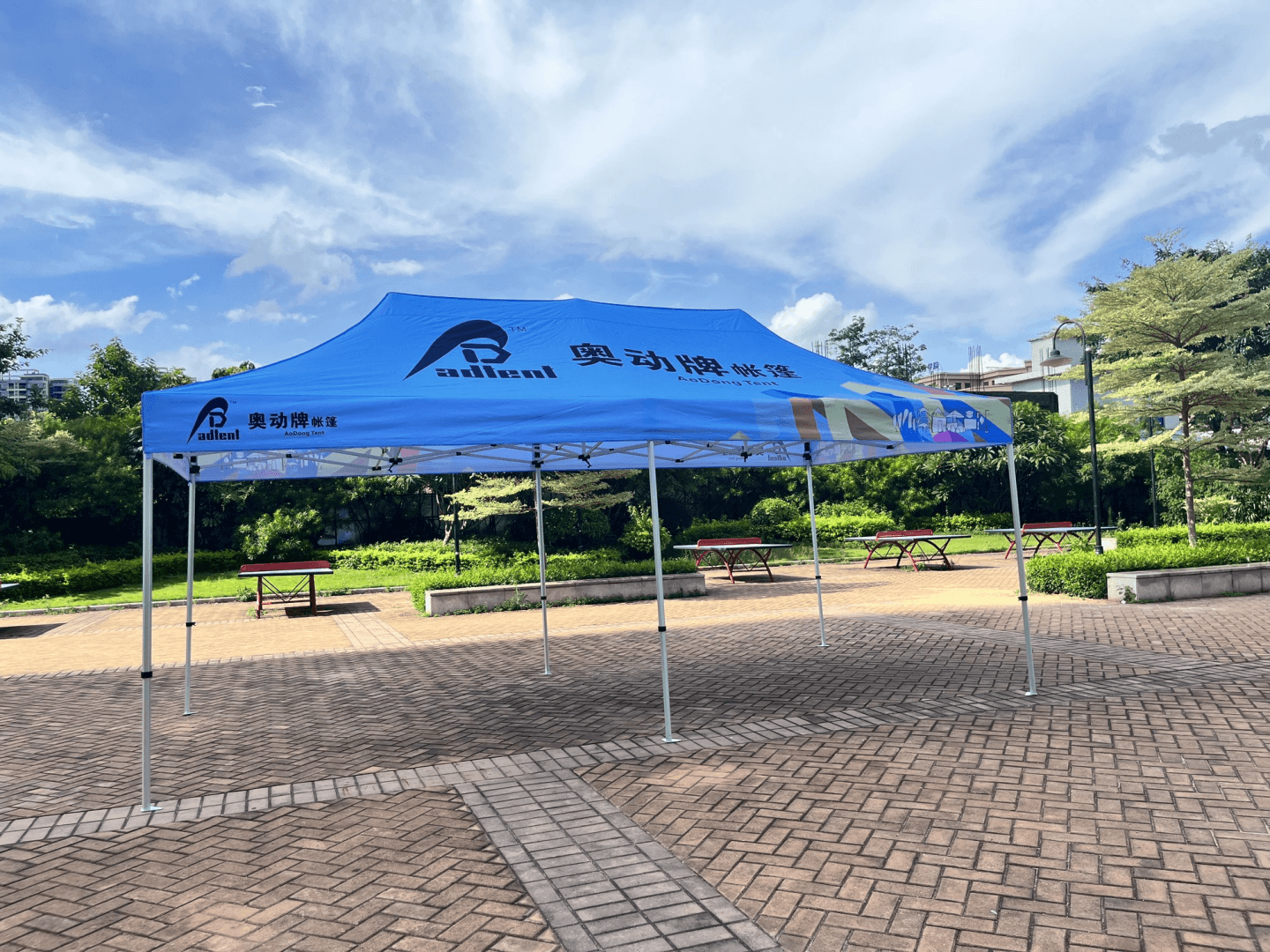
On the festival field, the anchor is the canopy tent. A canopy tent gives a drinks brand, a streaming partner or a local retailer a shaded, weather-ready footprint that pops up in well under an hour and folds into a transit van. Sponsors reuse the same tent from the main arena to the side stage, which keeps the look identical from the front gate to the back of house and spares the cost of hiring outside builders for every city on the tour.
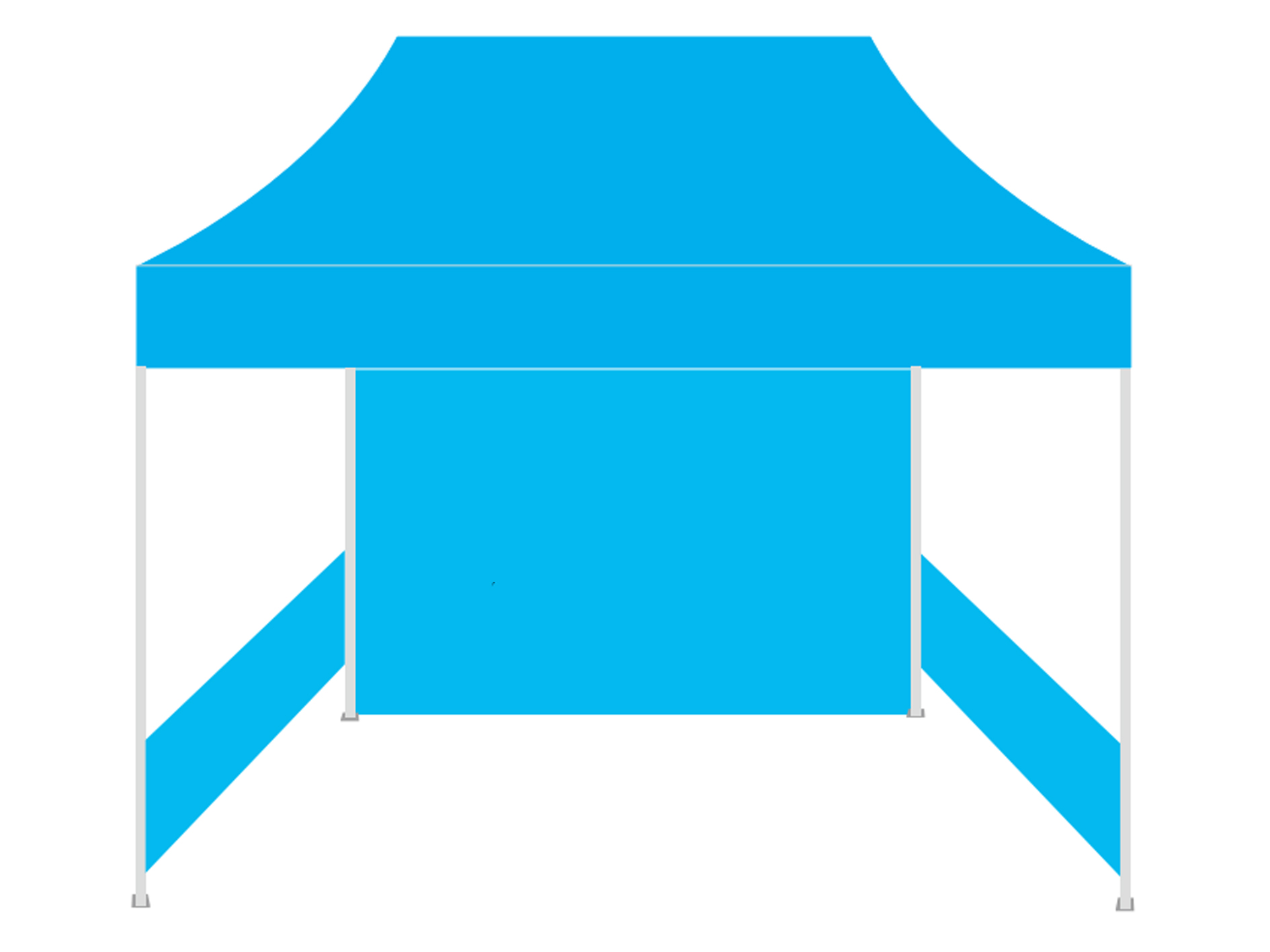
Figure: A canopy tent anchors a sponsor activation on the festival field.
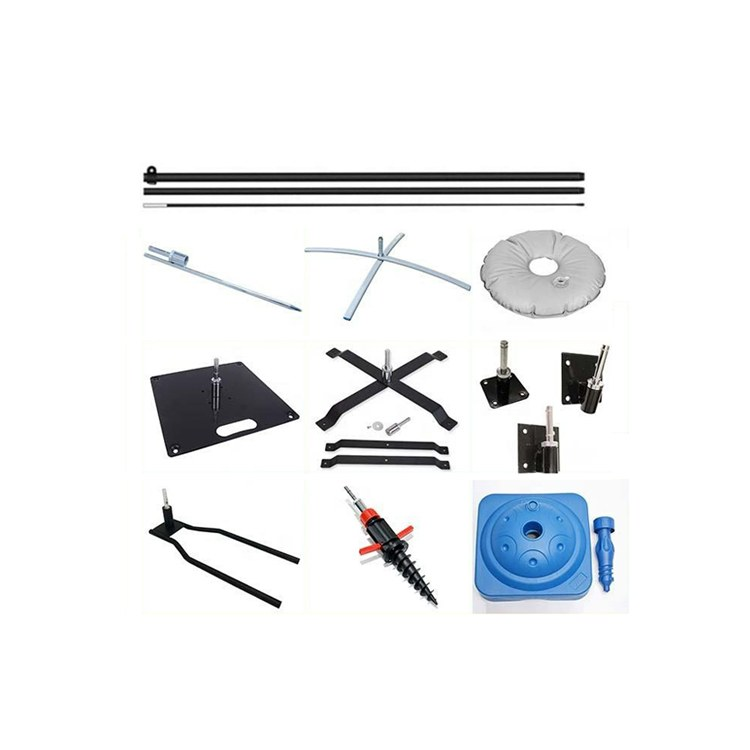
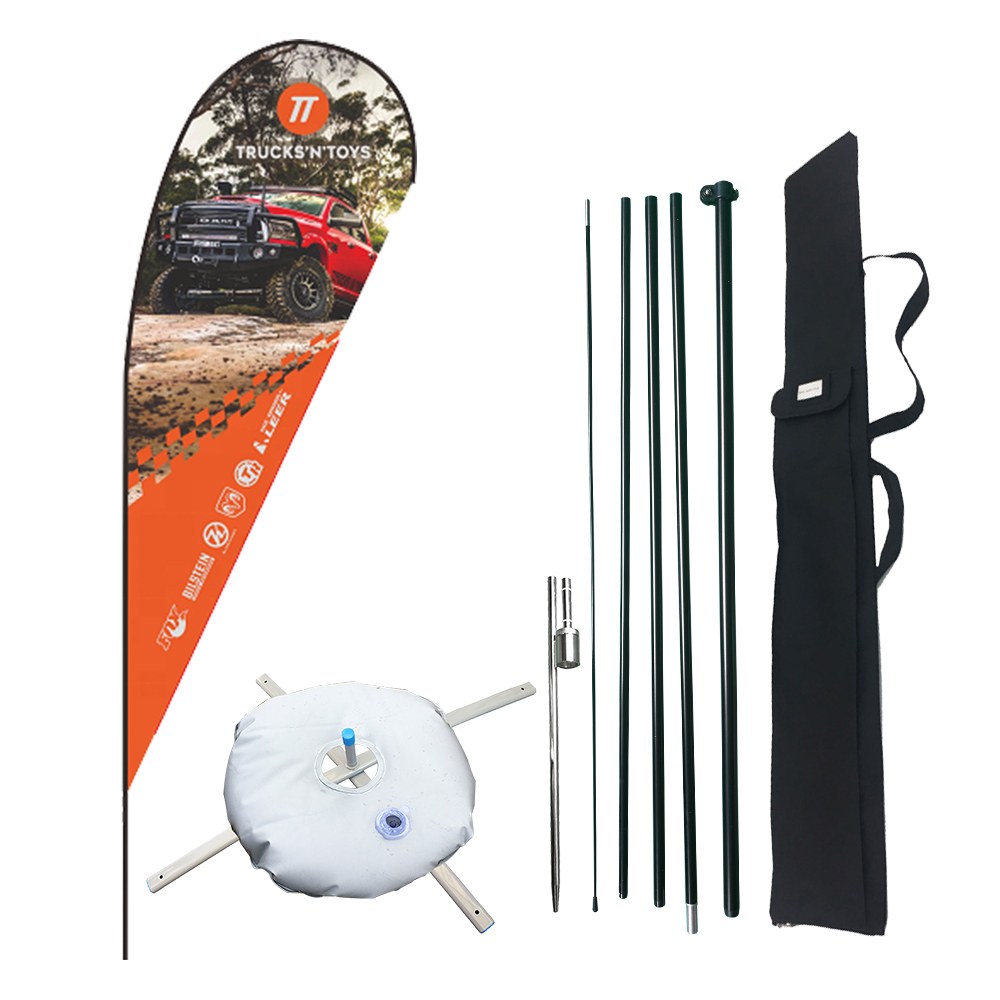
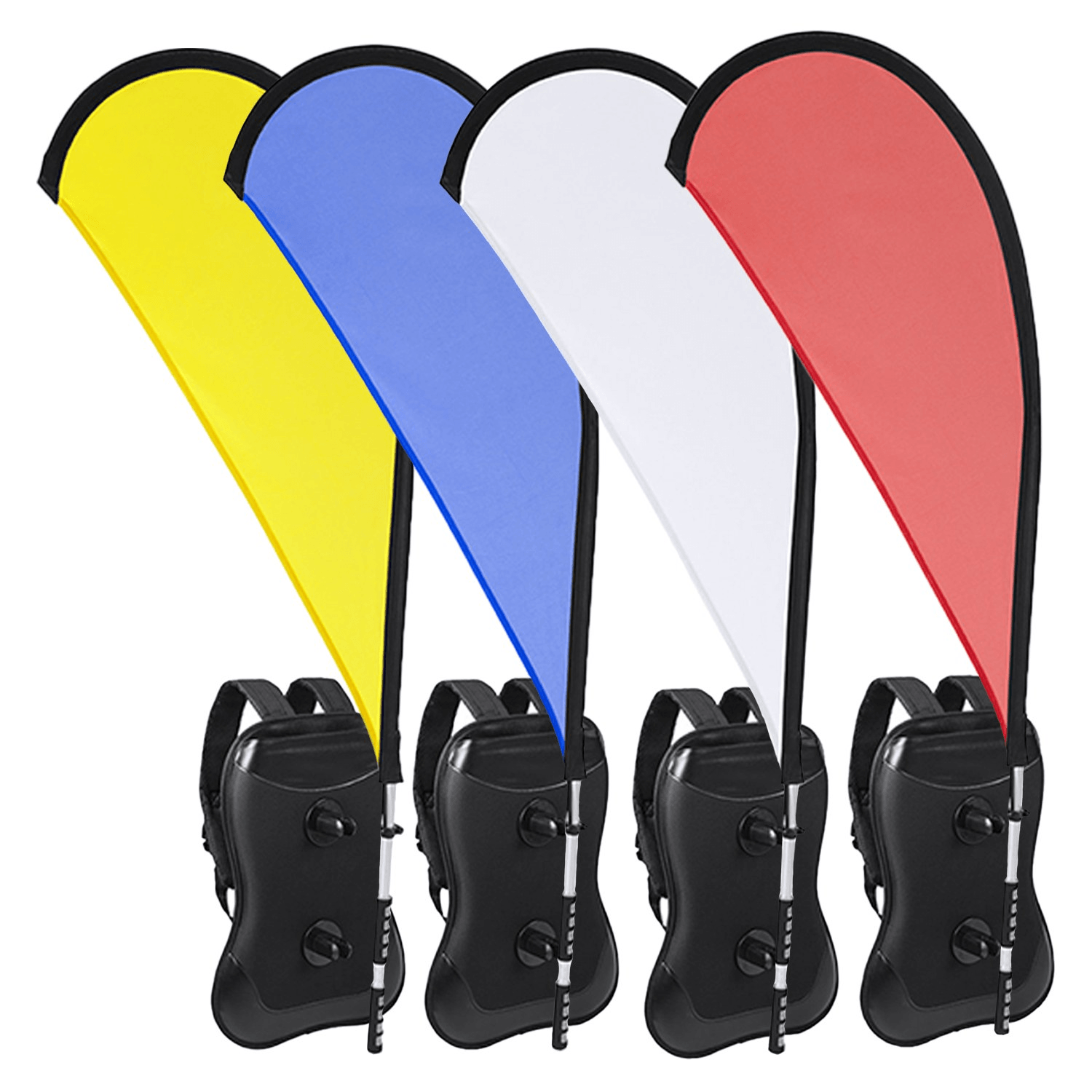
The cheapest vertical colour on site is the flagpole. From the entrance plaza to the camping lane, a flagpole carrying a sponsor flag is the fastest way to add brand height above a dense crowd. The trick is holding it there: a flag base — a water-filled or weighted foot — keeps the flagpole upright through a weekend of wind off the open field, so the sponsor colour stays in frame for photos and broadcast without a crew constantly resetting it.
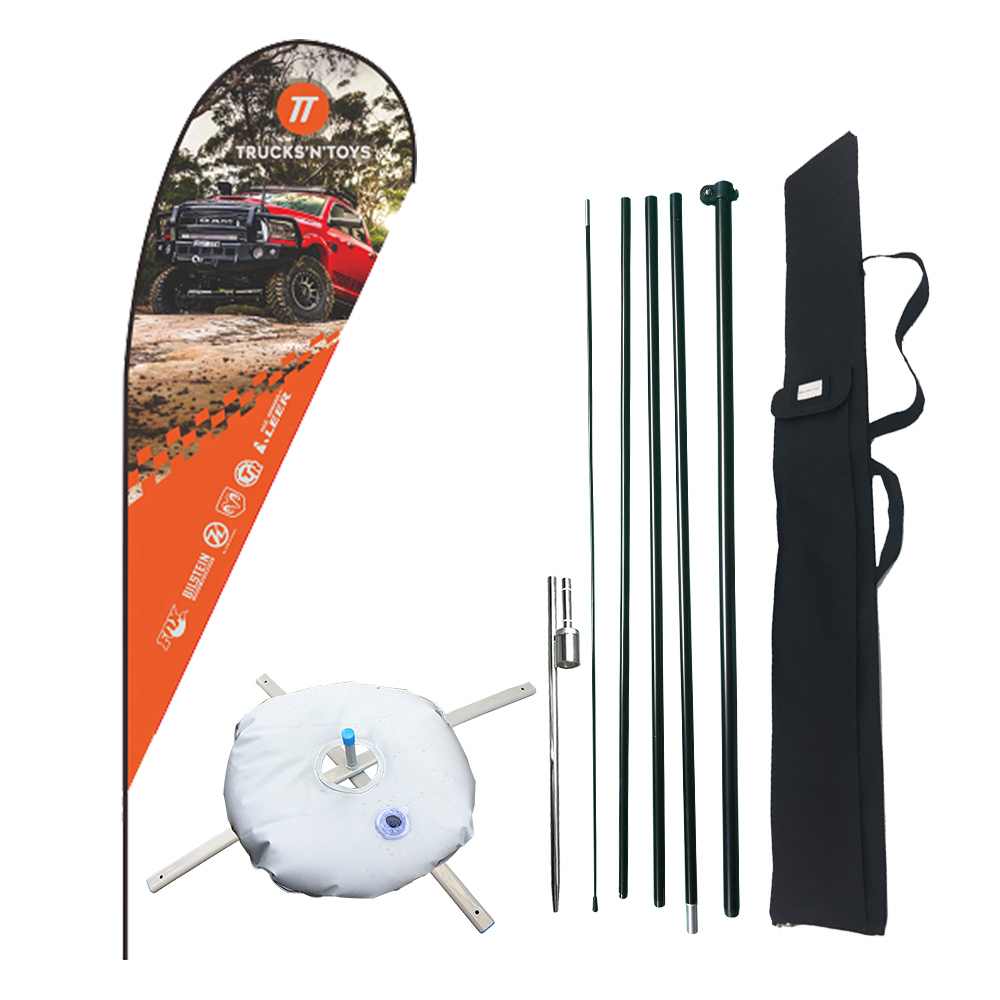
Figure: A flagpole carries brand colour above the crowd along the arena approach.
Where the message has to move with the crowd, the handheld flag does the work a fixed sign cannot. Volunteers, ushers and performing fans wave a flag along the concours, at the barrier and through the campsite, turning people into moving brand touchpoints that read clearly in a packed field. A handheld flag is light, cheap to print in batches and easy to hand out by the hundred — which is exactly why meet-and-greet teams and stage managers keep a stack of them on hand.
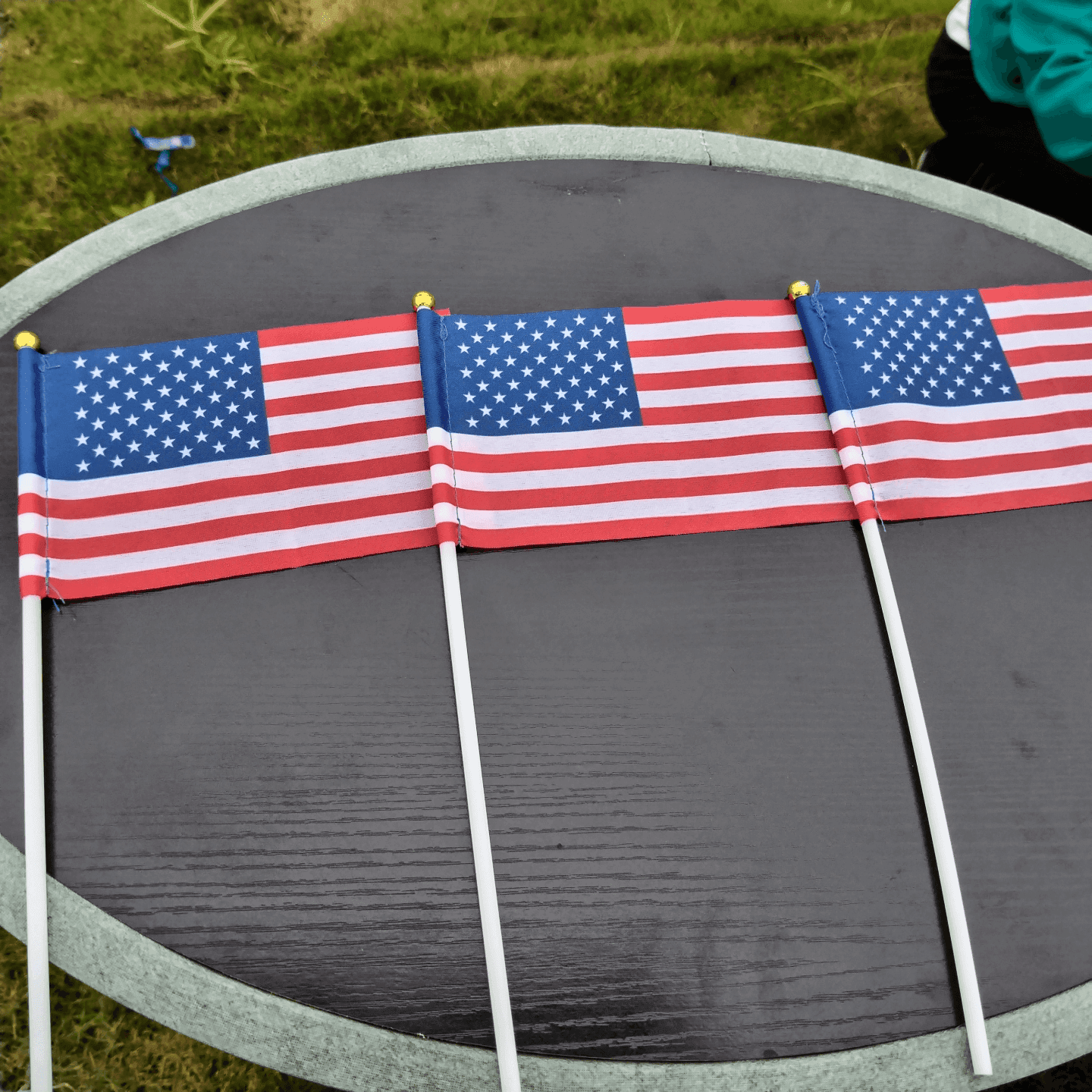
Figure: A handheld flag turns volunteers and fans into moving brand touchpoints.
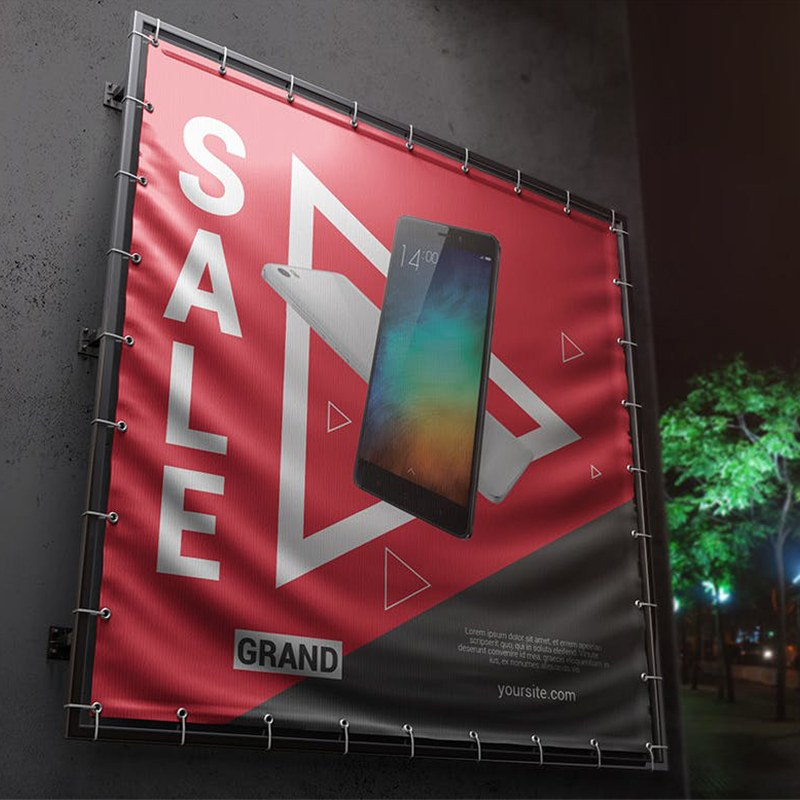
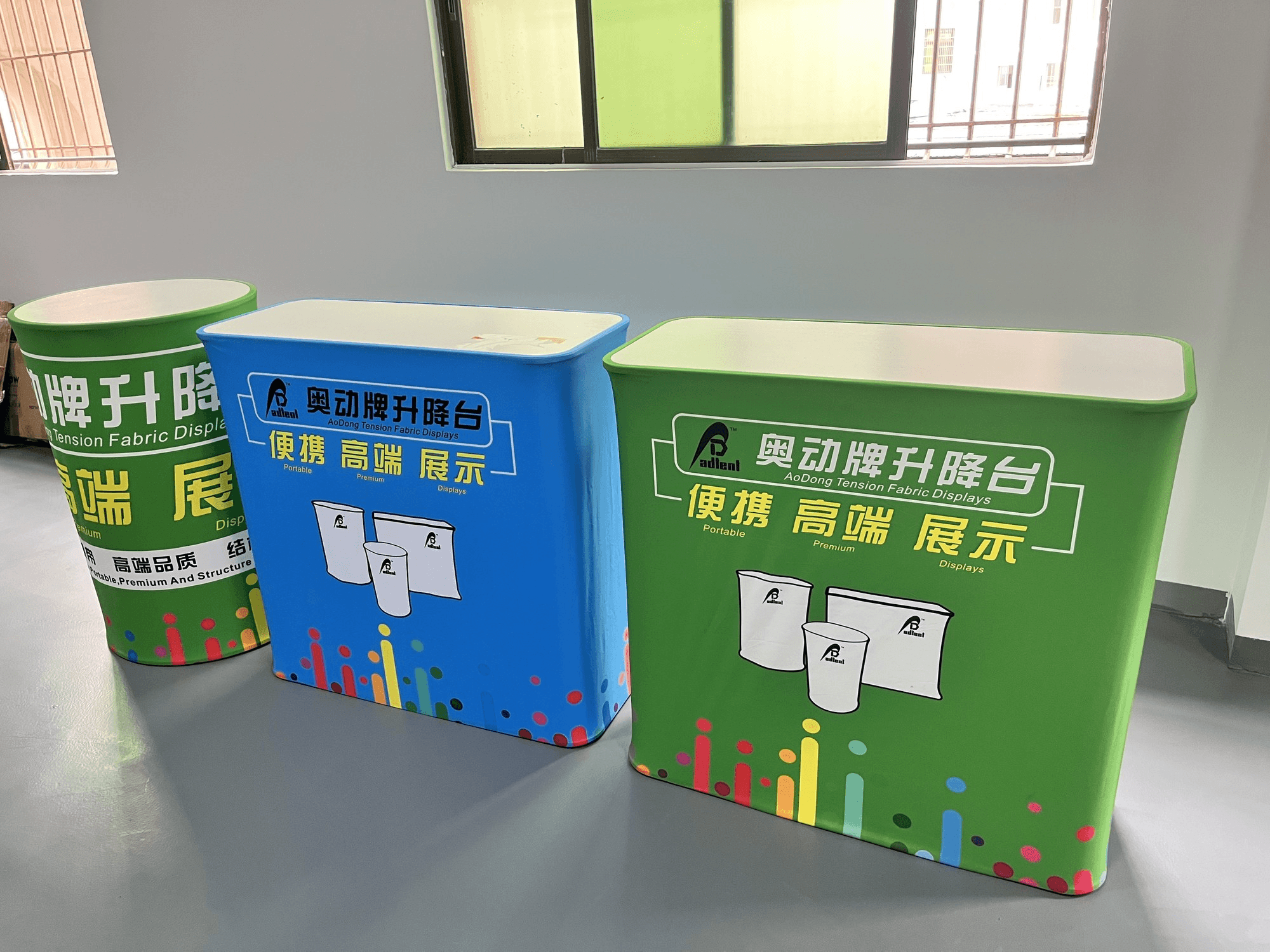
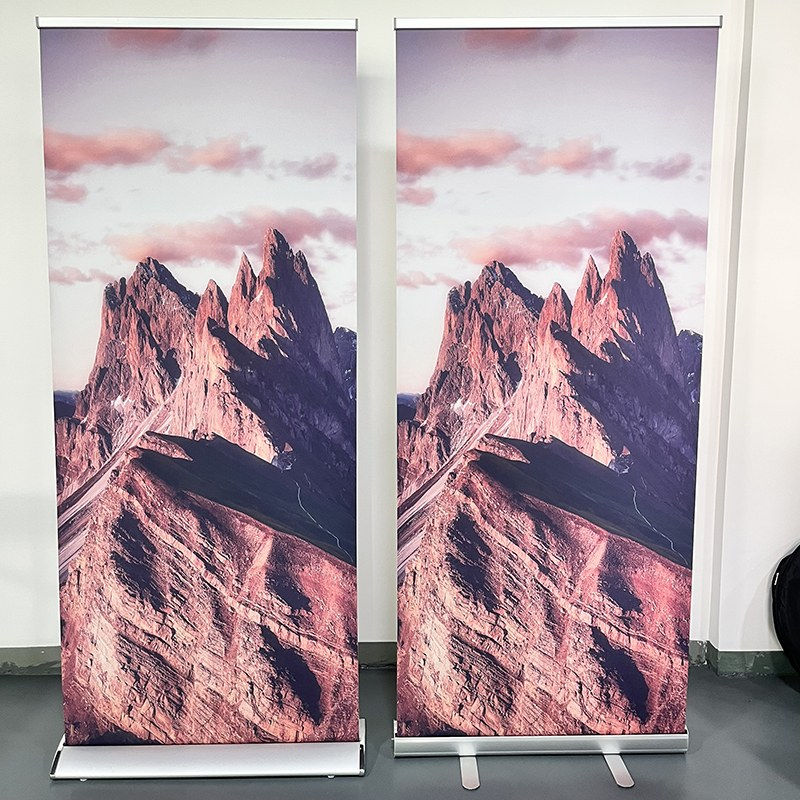
Where the cameras settle, a tension fabric display earns its place. For artist meet-and-greets, sponsor photo calls and the post-set selfie, a printed display with brand logos makes a clean, seamless backdrop. It prints flat, folds small and sets up in minutes — far easier to ship between London, Paris and Stradbally than built scenery, and a fraction of the cost of a custom build that gets struck after a single weekend.
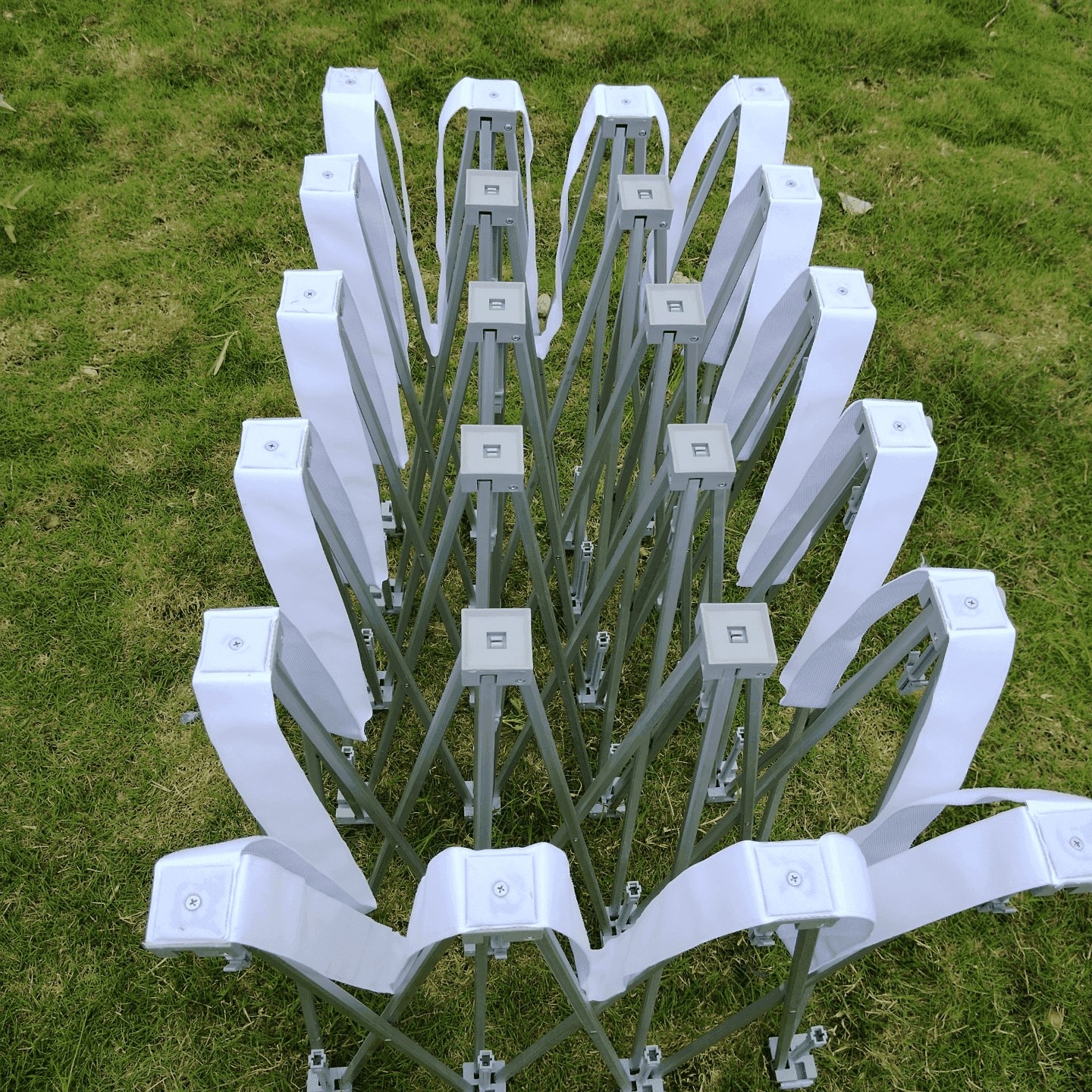
Figure: A tension fabric display serves as a clean sponsor backdrop for photo calls.
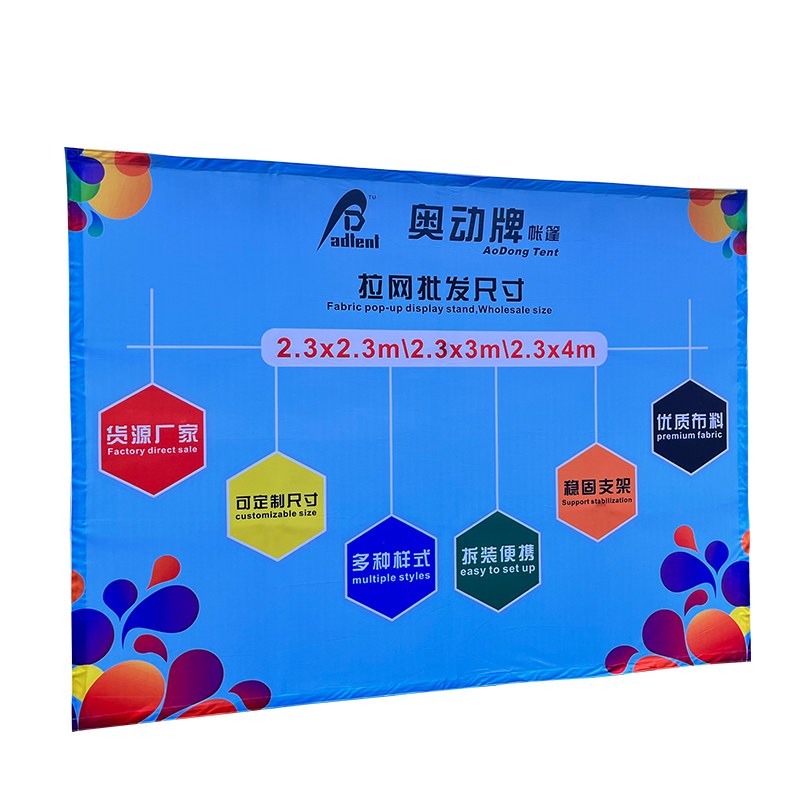
Against a perimeter fence or the side of a production tent, an advertising wall turns plain structure into a photo opportunity. An advertising wall with a bold logo becomes the natural backdrop for selfies and press shots, extending reach long after the crowd leaves. It packs into a single case and ships between events, which is why more festivals are choosing it over built scenery that has to be constructed and struck on site.
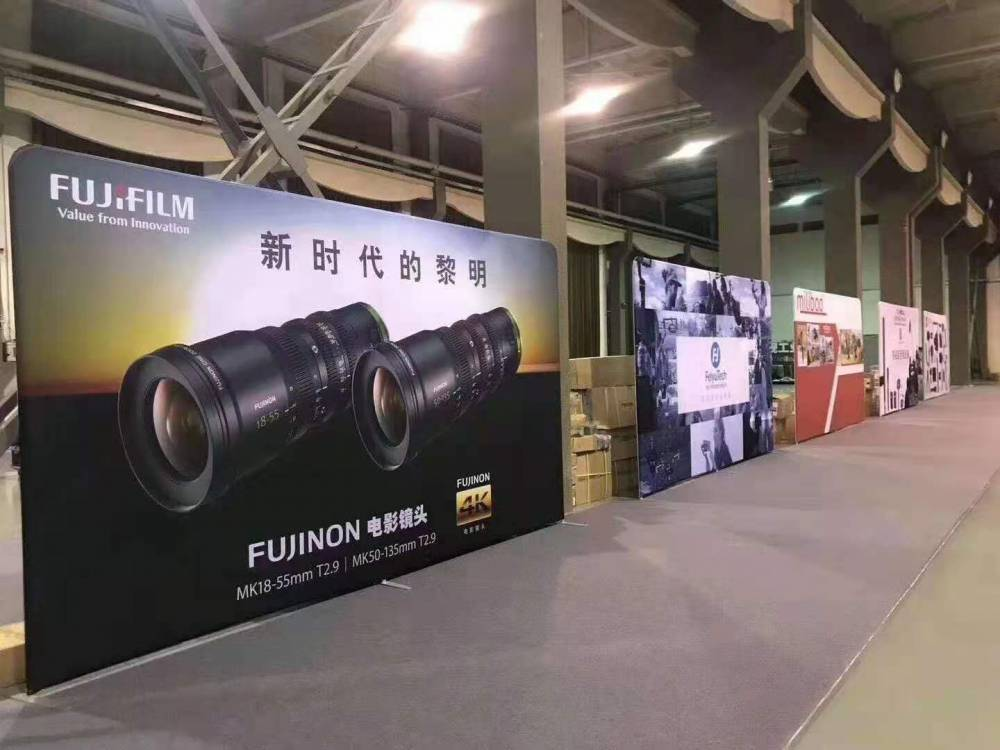
Figure: An advertising wall turns a perimeter fence into a press-ready backdrop.
For set times, stage changes and next-year early-bird passes, a roll-up banner stays the quiet workhorse. It weighs about four kilograms, unrolls in seconds and rolls away just as fast between stages. Stacked with the full modular kit — tents, flagpoles, walls and banners — it all fits in a festival-site pickup, so a small crew can reset the branding between the afternoon and evening programmes.
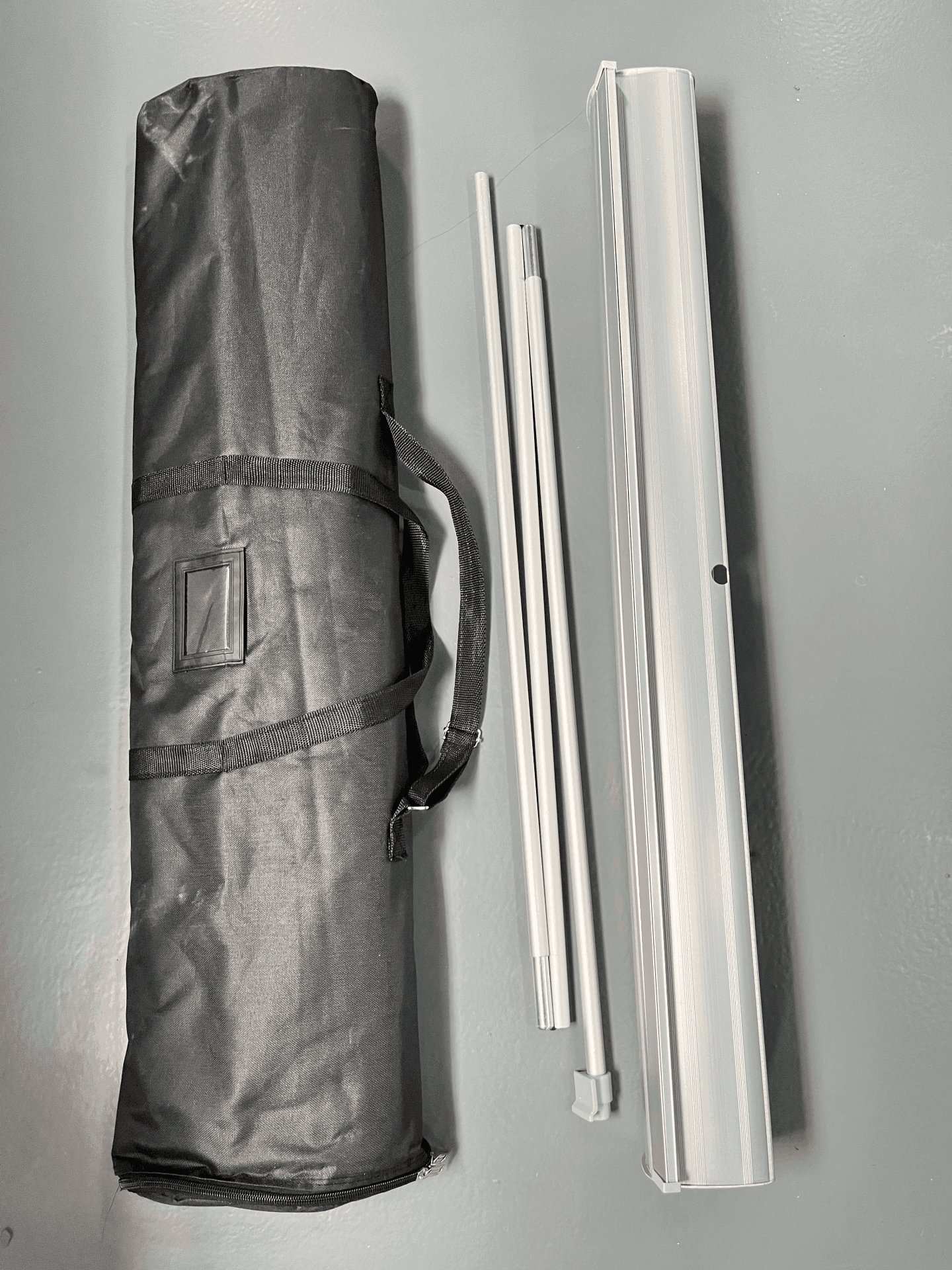
Figure: A roll-up banner shares set times and stage info near the entrance.
“The calendar stacks up and themes change fast, so the kit has to be light, durable and quick to swap,” said one activation supplier who builds festival and campus programmes across the UK and France. Modular pieces are replacing one-off carpentry: half an hour to open, fold-and-go at the end of the night, and ready to deploy at the next stop on the tour.
The same logic travels straight from the festival field to the campus. As universities open their autumn term, welcome weeks and freshers' fairs need the identical kit: a canopy tent for the society row, a flagpole and flag base for the union entrance, a handheld flag for the parade of new students, a tension fabric display behind the main stage, an advertising wall across the quad and a roll-up banner at every sign-in desk. The brands and clubs that book the kit early are the ones already set up when the first students arrive.
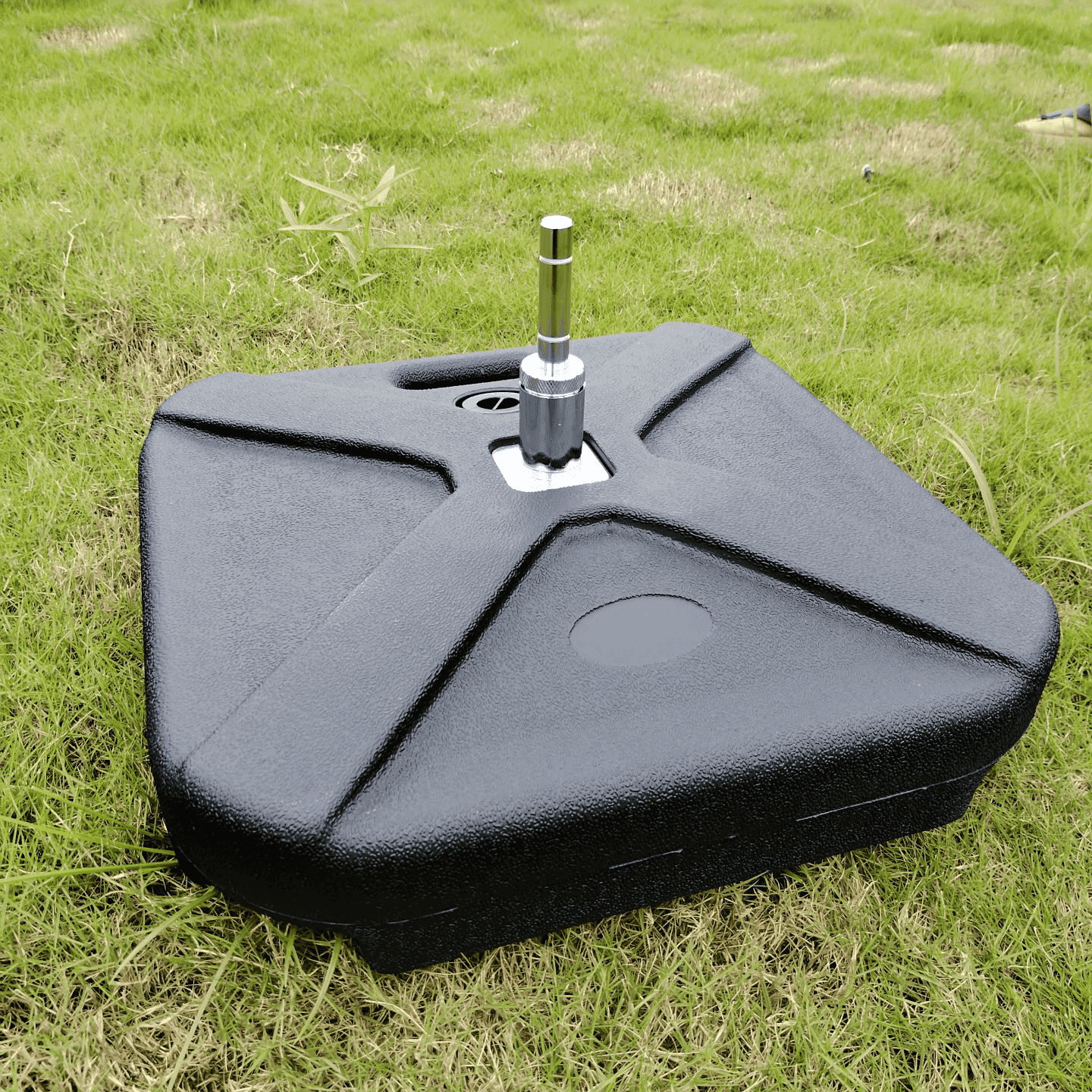
Figure: A flag base keeps a flagpole steady through a windy festival weekend.
For brands weighing their own late-summer programme, the takeaway is practical rather than promotional. A coordinated set built around the canopy tent, the flagpole and flag base, the handheld flag, the tension fabric display and the roll-up banner lowers cost per activation, steadies the visual identity from one city to the next, and speeds the response when the crowd suddenly arrives. The organisers who win the season are not the ones with the biggest build, but the ones who can raise a recognizable space before the first visitor does.
As summer crowds fill parks and showgrounds from London to Paris, the brands that raise their sign first are the ones that catch the attention first — and the ones most likely to be remembered after the last stage goes dark and the tents come down.
News reference photo set drawn from the supplier's in-house product library.