Leave Your Message
Here’s the thing: choosing a pop-up canopy can completely change how your business comes across. It’s not just about shade—though that’s a huge plus. It also keeps customers comfortable in bad weather and gives your brand a visible spot to shine, all without any permanent construction. And that first impression? Honestly, it matters more than you’d think.
Picture this: you're at a weekend market and a customer walks up to your spot. They're standing under a clean, branded canopy—it's got a solid frame, easy-to-read signage, and your products are safe from the sun. Honestly, the right Pop Up Canopy can make the whole space feel put-together and ready for business. Looks count, sure. But function? That matters just as much.
You know, Maya Chen—she’s an independent Pop Up Canopy consultant—put it pretty well: “A canopy should protect the customer experience, not merely cover the table.” That really hits home for anyone shopping around. It’s not just about shade; it’s about what that canopy does for your whole setup. So when business owners are comparing options, they should really look at frame strength, fabric quality, how quick it is to set up, whether it’s portable enough, and if it has solid anchoring. Sure, a lightweight model might be fine for indoor promos. But if you’re doing outdoor trade shows and using it again and again, you probably want a sturdier commercial-grade one. And here’s the thing: weather can flip in an instant. It’s the small details that make or break you.
Of course, the best choice really depends on how you'll handle transport and storage. A bulky, flashy canopy might look impressive, but honestly, when you're the one dragging it across a parking lot, it gets old fast. A compact case, a wheeled bag, and a simple locking system? That combo can save you a ton of time before every event. And don't overlook branding either — clear colors and durable print are what make people recognize your business from a distance.
Now, don't get me wrong—a pop-up canopy is great, but it's not a magic fix. It won't make up for poor planning, bad anchoring, or ignoring what the sky is doing. And honestly, that's something people tend to forget. If you're a thoughtful buyer, you'll look at how the canopy actually holds up in real conditions, not just how it looks in the catalog. When the style, practicality, and durability all click, though, it's more than just a temporary shade. It becomes part of your whole business experience.
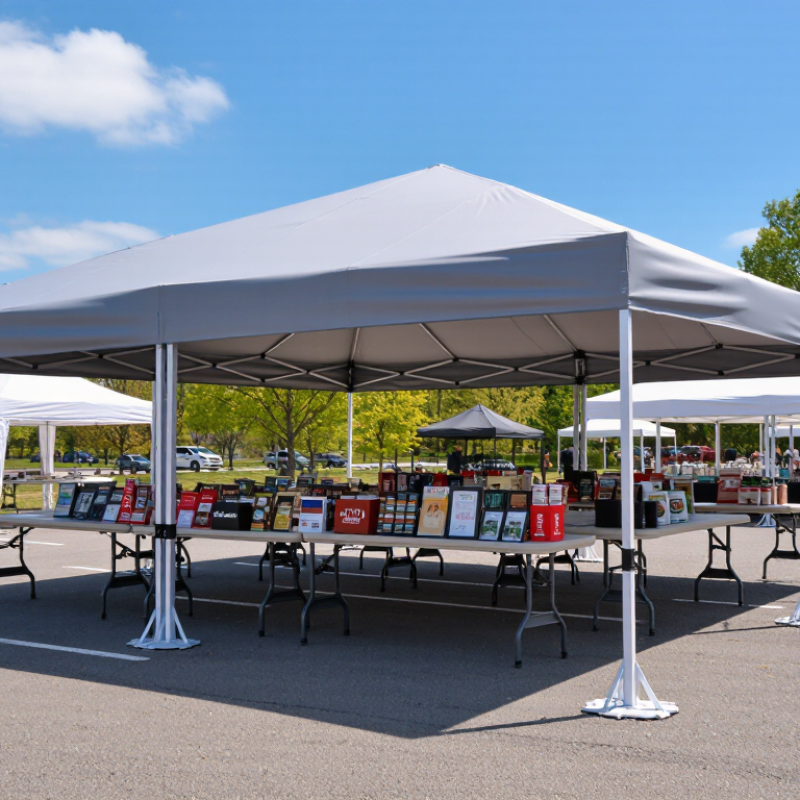
A Pop Up Tent Canopy is a portable shelter with a collapsible frame and a fitted fabric roof. Its frame usually uses hinged steel or aluminum bars. These bars expand when the canopy is opened. The roof then attaches with fasteners, creating a shaded, covered space within minutes.
The setup is practical for markets, outdoor demonstrations, reception areas, and temporary seating. Two people can usually extend the frame more safely than one person. After raising the legs, secure each corner with suitable weights or ground stakes. Do not rely on the canopy’s weight alone. Wind can lift it quickly.
I have found that placement affects comfort as much as the canopy itself. A level surface makes the legs steadier and reduces awkward movement around tables. The fabric may resist light rain, but seams and side openings can still allow water inside. It is not a permanent building. That distinction matters.
Check the frame joints before every use. Look for bent bars, loose fasteners, or torn fabric. Keep the roof fully extended, because partial opening can strain the structure. I once underestimated a sudden gust and had to remove the canopy immediately. That experience changed my setup routine. I now inspect the forecast, add heavier ballast, and leave clear space around each leg.
| Business Consideration | Typical Pop-Up Canopy Information | How It Works | Business Benefit |
|---|---|---|---|
| Basic Structure | A collapsible frame supports a removable fabric canopy top. Common commercial footprints include approximately 3 m × 3 m and 3 m × 6 m. | The frame folds for transport and expands into a freestanding shelter. The canopy top attaches to the frame using fasteners, pockets, or hook-and-loop connections. | Creates a temporary covered area without permanent construction, making it suitable for events, markets, outdoor service areas, and promotions. |
| Setup and Takedown | Most designs are intended for temporary installation and can generally be assembled by two people, depending on size and frame weight. | The frame is expanded, the top is secured, and adjustable legs are set to the required height. The process is reversed for storage. | Reduces labor and setup time compared with building a fixed temporary structure. |
| Usable Floor Area | A 3 m × 3 m canopy provides about 9 m² of covered floor space; a 3 m × 6 m canopy provides about 18 m². | The open-sided layout allows staff, customers, tables, displays, and equipment to share the sheltered footprint. | Helps businesses create a defined service, sales, demonstration, or waiting area outdoors. |
| Weather Protection | The fabric top can provide shade and protection from light rain. Performance varies according to fabric, seams, frame design, and anchoring. | The canopy top blocks direct sunlight and directs some rain away from the covered area. Sidewalls can provide additional wind and rain protection. | Improves customer comfort and can help maintain event operations during changing weather conditions. |
| Wind Safety | A pop-up canopy is not a permanent building and should not be treated as windproof. Wind resistance depends on the complete system and installation conditions. | Leg weights, stakes, guy lines, and correct positioning help increase stability. Anchoring must be selected for the surface, such as grass, asphalt, or concrete. | Supports safer temporary use when the shelter is properly secured and removed when conditions become unsafe. |
| Height Adjustment | Many models include telescoping legs with several height positions. Exact height ranges differ by frame design. | Leg sections lock into selected positions, allowing the roof clearance and usable interior height to be adjusted. | Accommodates different activities, display layouts, entrances, and site conditions. |
| Portability | When folded, the frame and fabric can usually be transported in a carry bag or wheeled storage case. Packed size and weight vary by materials and canopy dimensions. | The folding frame reduces the shelter’s storage footprint and allows it to be moved between locations. | Useful for businesses attending multiple markets, fairs, sporting events, site visits, or promotional activities. |
| Branding Surface | The roof, valances, and optional sidewalls provide visible fabric areas for printed graphics or business messaging. | Graphics are displayed at customer eye level or above the shelter, while removable panels can be changed for different campaigns. | Turns a functional shelter into a mobile marketing and wayfinding tool without requiring permanent signage. |
| Ventilation | Open-sided configurations allow substantial natural airflow. Enclosed sidewalls reduce airflow and should be used with attention to ventilation. | Air moves through the open sides; sidewalls can be added or removed according to weather, privacy, and operational needs. | Provides flexibility between an open promotional space and a more sheltered service or display area. |
| Durability Factors | Service life depends on frame material, fabric quality, stitching, joints, cleaning, storage, and exposure to weather. | Routine inspection identifies damaged connectors, bent legs, worn fabric, loose fasteners, or missing anchors before use. | Proper maintenance can reduce avoidable replacement costs and improve reliability during repeated events. |
| Storage Requirements | The canopy should be completely dry before packing. A clean, dry, ventilated storage location helps protect the fabric and frame. | Cleaning and drying reduce the risk of mildew, staining, corrosion, and material deterioration during storage. | Helps preserve appearance and readiness for the next business use. |
| Best-Fit Applications | Common uses include outdoor retail, food service support, exhibitions, information booths, sampling, registration areas, and temporary workspaces. | The modular shelter can be configured with open sides, walls, counters, tables, signage, lighting, or display equipment. | Offers one adaptable solution for multiple temporary business environments. |
| Key Limitation | It is designed for temporary use and is generally unsuitable as a substitute for a permanent, engineered building. | The structure must be installed, anchored, operated, and removed according to the product instructions and local site requirements. | Clarifies when a pop-up canopy is an appropriate business solution and when a permanent structure may be necessary. |
Note: Dimensions, weight limits, weather ratings, setup procedures, and anchoring requirements vary by canopy design. Always follow the manufacturer’s instructions and local event or site regulations.
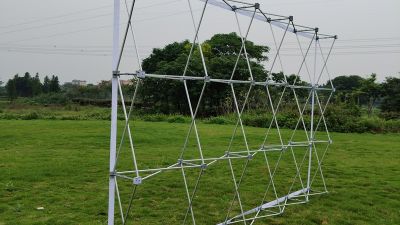
Trade shows are regaining momentum: the CEIR Index reported that U.S. B2B exhibition performance in 2023 recovered to roughly 97% of 2019 levels. In this competitive setting, a clear, high-impact backdrop can help visitors recognize your message quickly. A Fabric Pop Up Display creates a large visual presence without the complexity of a custom-built booth, making it a practical choice for exhibitors that need speed, consistency, and portability.
Its scissor-frame design springs open in one motion, while the velcro-backed fabric graphic wraps around the frame in seconds. The stretch fabric creates a smooth, low-glare surface for bold images, concise headlines, and well-spaced product information—visual principles that support fast communication in busy aisles. Once the event ends, the display collapses into itself for efficient transport and storage, reducing setup time for teams working with limited labor.
Choose the square-tube PO-01 for a structured appearance or the circular-tube PO-02 for a softer profile. Both models are available in 2*3, 3*3, and 4*3 formats, allowing exhibitors to match the wall size to their booth footprint. UFI’s Global Exhibition Barometer also continues to report positive expectations for exhibition activity, reinforcing the value of adaptable display systems that can be reused across multiple events.
It is a portable shelter with a folding frame and fabric roof. Hinged bars expand within minutes. The roof attaches with fasteners. It is temporary, not a permanent building.
Businesses can use one at markets, fairs, demonstrations, receptions, and outdoor meetings. It creates shade and a clear customer area. A table, samples, and signs can fit inside. Space may feel cramped if planned poorly.
Two people can usually open the frame more safely. Raise the legs evenly and attach the roof fully. One person may struggle with sudden movement. Slow setup is better.
Use suitable weights on every corner. Add ground stakes where the surface allows them. Never depend on the canopy’s weight alone. Wind changes everything. On concrete, use weighted feet instead of stakes.
The fabric may resist light rain. Seams and open sides can still let water inside. Keep electronics and paper materials away from exposed edges. It is not waterproof shelter in every condition.
Inspect frame joints, fasteners, legs, and fabric. Look for bent bars, loose parts, and tears. Keep exits and walking paths clear. Remove the canopy when weather becomes unsafe. Small defects can become larger problems.
Use one readable message with strong contrast. Keep the counter clean and leave room for customers to move. Place signs where people can see them from several steps away. More graphics do not always improve clarity.
Requirements vary by location and event type. Check permits, accessibility, insurance, fire safety, electrical use, and food-service rules. Ask the venue or local authority before setup. I would not assume a small canopy avoids regulation.
Record blocked paths, customer questions, weak lighting, and setup problems afterward. Review what worked and what failed. The first layout may look polished. Real use often reveals uncomfortable details.
A Pop Up Canopy is a portable shelter with a folding frame and fabric cover that can be opened and secured with minimal tools. For businesses, it can support outdoor sales, product demonstrations, trade events, community activities, temporary work areas, and customer service stations. Its quick setup and flexible use make it a practical way to create a visible, weather-protected space in different locations.
The main benefits include portability, reusable construction, improved customer comfort, and opportunities for professional branding. Businesses should select a suitable size, durable weather-resistant material, stable frame, and design that matches their purpose and visual identity. Setup and transport depend on the canopy’s weight, folding system, storage space, and ground conditions, while regular cleaning, drying, and inspections can extend its service life. Safe use also requires secure anchoring, careful placement, clear access, and attention to local event, property, and operating requirements.