Leave Your Message
0%

Picking the right Promotional Flag supplier? Yeah, it can actually shape how your brand shows up—whether that's on a busy street, a trade-show floor, or out on a sports field. China is still a huge sourcing hub, with tons of production capacity, competitive pricing, and plenty of customization options. But just going for the lowest cost? That's not enough.

The little details really matter. A good supplier should be able to walk you through fabric weight, dye-sublimation quality, stitching methods, pole strength, base options, and how the flag holds up outdoors. Ask for physical samples—don't just rely on digital previews. Colors can shift in sunlight, and small logo details might disappear from a distance. It's a common mistake, honestly.

Mark Graham, a well-known promotional-products industry exec, once said, “The best promotional product earns attention without demanding it.” That hits home for Promotional Flags too. A well-made flag should move clearly in the wind, show a sharp message, and stay stable through repeated use.

This guide looks at China Top Promotional Flag Suppliers for Global Buyers from a practical sourcing angle. We're talking communication, sample approval, minimum order quantities, production control, packaging, and delivery consistency. Suppliers like China Flag Makers, Yifang Flag, and Hunan Wanyuan might each have different strengths—but buyers should still verify every claim independently.

There's no perfect supplier.

A cheaper quote can hide thinner fabric, weaker poles, or limited after-sales support. Experienced buyers compare the full landed cost, not just unit price. They also check artwork rules, inspection procedures, and replacement policies before paying. These steps can feel slow, sure, but they help you avoid nasty surprises and keep international purchasing dependable.
China Top Promotional Flag Suppliers for Global Buyers

Promotional Flag Types Offered by Chinese Suppliers

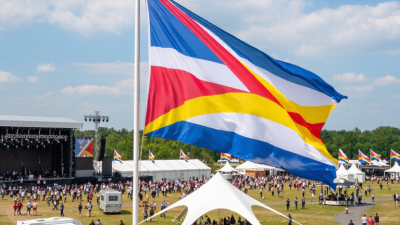
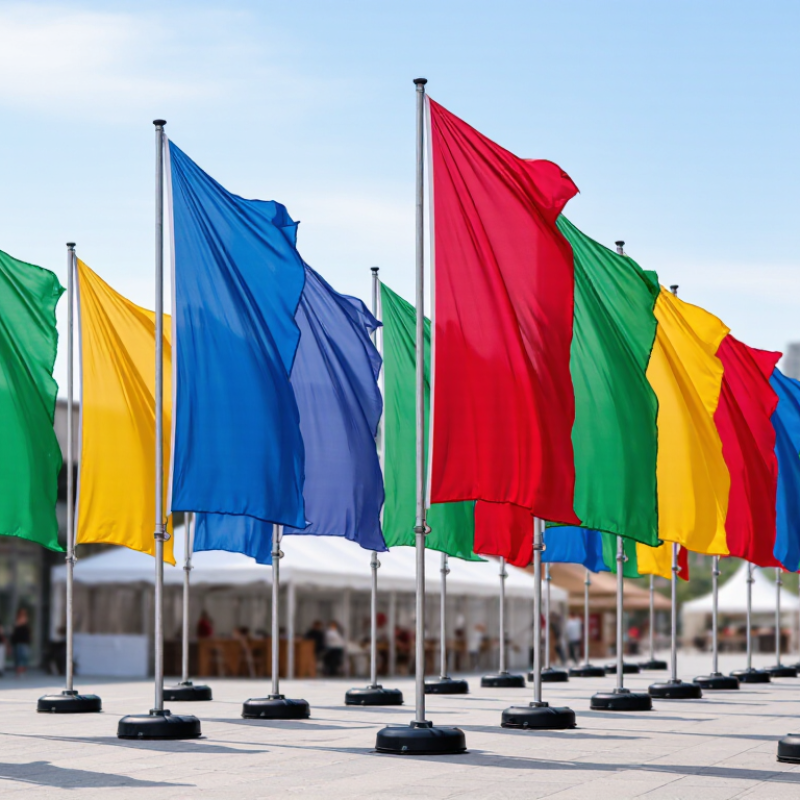
Chinese suppliers offer a broad range of promotional flag types for exhibitions, retail openings, sports events, and outdoor campaigns. Common options include feather flags, teardrop flags, rectangle flags, handheld flags, table flags, and custom-shaped banners. According to a 2024 North American promotional-products industry report, annual sales reached roughly US$26 billion in 2023. This figure shows why buyers increasingly compare fabric quality, printing accuracy, and delivery reliability.

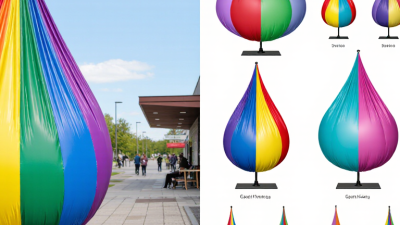
Feather and teardrop flags use flexible fiberglass poles and polyester fabric. Their curved edges remain visible near entrances, even when people move quickly. Rectangle flags provide a larger printing area for schedules, directions, or campaign messages. Table flags suit reception desks and indoor counters. Promotional Tent can extend the same visual system across a full booth, with matching flags, walls, and canopy panels.

Chinese factories commonly provide dye-sublimation printing, reinforced hems, ground spikes, cross bases, and water bags. Dye-sublimation usually produces sharp colors through the fabric, not only on its surface. The Advertising Specialty Institute has reported strong advertiser recall for promotional products, especially useful items seen repeatedly.

Still, performance depends on wind exposure, fabric weight, and installation. A cheap base may fail first. Buyers should request wash tests, color samples, pole measurements, and packaging photos before mass production. Specifications are often clear. Real outdoor testing is less consistent. That gap deserves attention.

Materials and Printing Methods Used in Promotional Flags

Promotional flags need materials that balance appearance, movement, and outdoor durability. Polyester remains a practical choice for most global buyers. Its lightweight structure allows flags to wave clearly in moderate wind. A 110–120 gsm fabric offers a useful balance between color visibility and shipping weight. Knitted polyester can reduce fraying along curved edges. Oxford fabric feels stronger, but it may appear less fluid on flagpoles. Choose recycled polyester when sustainability reporting matters, but verify the supplier’s documentation carefully.

Printing methods affect both color quality and service life. Dye sublimation pushes ink into polyester fibers, creating vivid, weather-resistant graphics on one or both sides. It works especially well for feather flags and teardrop displays. Screen printing suits simple designs with solid color blocks and larger quantities. Digital printing handles gradients, photographs, and detailed artwork with fewer setup limits. However, printed colors can appear different under warehouse lighting. I have found that physical samples reveal problems that digital proofs often hide.

Tips: Ask for fabric weight, edge-finishing details, and color references before production. Test one sample outdoors for several days. Review stitching, pole pockets, and ink coverage closely. A cheaper fabric may save money initially, but frequent replacement can become the costlier choice. Even experienced buyers sometimes overlook wind exposure. That deserves another review.

China Top Promotional Flag Suppliers for Global Buyers - Materials and Printing Methods Used in Promotional Flags

Material Typical Weight Common Printing Method Key Advantages Recommended Use Outdoor Performance Important Buyer Considerations
Knitted Polyester 100–120 g/m² Dye-sublimation or digital transfer Lightweight, quick-drying, economical, and allows airflow Advertising flags, event flags, feather flags, and national flags Good for regular outdoor campaigns; requires replacement as color fades over time Confirm fabric openness, edge strength, colorfastness, and finishing quality
Woven Polyester 110–150 g/m² Dye-sublimation, screen printing, or digital printing Stronger structure, smooth surface, and good image definition Ceremonial flags, institutional displays, and long-term promotional use Very good when reinforced with double-stitched hems and suitable webbing Heavier fabric may catch more wind; check pole and mounting compatibility
Nylon 70–100 g/m² Dye-sublimation, digital printing, or screen printing Very light, bright appearance, and excellent movement in low wind Handheld flags, parade flags, indoor displays, and short-term outdoor promotions Good, but generally less resistant to abrasion and prolonged sunlight than polyester Specify UV-resistant inks, reinforced corners, and a suitable pole sleeve
Polyester Satin 80–120 g/m² Dye-sublimation or digital printing Smooth, slightly glossy surface with strong color presentation Indoor exhibitions, award ceremonies, retail decoration, and premium events Suitable for limited outdoor use; not usually the first choice for continuous exposure Protect from rough surfaces and confirm whether the finish is washable and crease-resistant
Cotton 120–180 g/m² Screen printing, direct-to-fabric printing, or embroidery Natural texture, low-glare appearance, and strong vintage character Indoor décor, historical themes, craft markets, and short-term events Limited; absorbs moisture and may shrink, mildew, or fade outdoors Request pre-shrunk fabric, clear care instructions, and moisture protection for shipping

Printing and Finishing Options for Promotional Flags

Method or Feature How It Works Best-Suited Applications Buyer Evaluation Points
Dye-Sublimation Printing Heat transfers dye into polyester fibers, producing a durable printed image. Full-color graphics, gradients, photographs, and double-sided promotional flags Check color profiles, reverse-image visibility, ink quality, and wash testing
Digital Inkjet Printing Ink is applied directly to the fabric surface using programmable print heads. Short production runs, variable artwork, and detailed designs Confirm ink curing, outdoor rating, color consistency, and production proofing
Screen Printing Ink is pushed through a prepared mesh screen onto the fabric. Simple logos, solid-color designs, and larger repeat orders Ask about screen setup charges, number of colors, registration accuracy, and ink durability
Single-Sided Printing The artwork is printed on one face; the image may be visible in reverse from the back. Cost-sensitive outdoor advertising and short-term campaigns Confirm reverse readability and whether the fabric is sufficiently opaque
Double-Sided Construction Two printed layers are separated by a block-out or opaque inner layer. Premium displays requiring independent artwork on both sides Higher weight and cost are expected; verify side alignment and wind load
Reinforced Hems and Corners Edges are folded and stitched, with webbing, patches, or extra layers at stress points. Outdoor flags exposed to wind, repeated installation, and transport Specify stitch density, corner patches, sleeve dimensions, grommets, and rope options

Note: Actual performance depends on fabric construction, ink formulation, sewing quality, weather conditions, installation method, and maintenance. Buyers should approve a production sample before placing a large order.

Manufacturing Standards and Quality Control Practices

For global buyers, Promotional Banners should meet measurable manufacturing standards, not only attractive price targets. ISO’s 2022 Survey recorded more than 1.26 million ISO 9001 certificates worldwide, showing quality systems are widely established. However, certification alone cannot confirm every banner’s durability. Suppliers should document fabric weight, color tolerance, stitching density, pole strength, and ink adhesion. A reliable factory also uses ISO 2859-1 sampling procedures and records nonconformities before shipment. During production checks, inspectors should examine printed edges, metal eyelets, seams, and packaging. Small defects often become visible after repeated outdoor use.

Tips: Request a pre-production sample, a signed color standard, and test results for UV and water resistance. Ask for batch photos and carton counts before loading. Confirm whether measurements allow practical tolerances. A rigid zero-defect promise sounds impressive, but it may hide unrealistic inspection methods.

In supplier evaluations, traceability matters. Each order should connect raw fabric, ink batch, operator records, and final inspection results. Testing should reflect the buyer’s climate, display period, and installation method. For example, a lightweight flag used near the coast needs stronger stitching and corrosion-resistant fittings.

Reports from textile testing laboratories often emphasize repeatability, yet field conditions remain unpredictable. A clean inspection report is not proof of perfection. Wind, folding, and sunlight can expose weaknesses later. Suppliers should therefore review complaints, track corrective actions, and share revised procedures. Buyers can improve reliability by ordering a controlled pilot batch before scaling production.

Customization Options for Global Promotional Flag Buyers

Global buyers need promotional flags that fit their markets, spaces, and campaign goals. Customization should begin with the flag’s purpose, not only its appearance. Promotional Feather Flags can attract attention outside stores, at exhibitions, and near temporary events. Buyers can choose teardrop or feather shapes, single-sided or double-sided printing, and several height options.

Fabric weight affects color clarity and outdoor performance. Reinforced stitching helps reduce fraying around the edges. A stable ground base matters on concrete, grass, and compact soil. Suppliers should provide clear artwork guidelines, proof approval, production details, and packaging information. Experienced manufacturers also check color consistency, pole connection strength, and print alignment before shipment. Small details matter.

Tips: Request a physical sample when the order is large. Confirm the finished size, fabric type, base style, and wind conditions. Use vector artwork for sharper logos and text. Ask how replacement poles and carry bags are packed. Test the display at the actual location if possible.

Customization can include gradient backgrounds, seasonal graphics, QR codes, and matching table covers. However, too much information may weaken visibility from a distance. A short message often performs better. Buyers should also confirm whether the design remains readable on the reverse side. One issue deserves reflection: a visually perfect flag may still fail if its base is too light. Reliable sourcing requires practical testing, not only attractive digital previews.

Supplier Capabilities, Certifications, and Export Experience

Global buyers need more than attractive samples when sourcing Promotional Flags And Banners. Reliable suppliers should explain fabric choices, printing methods, stitching standards, and finishing options clearly. Experienced teams can recommend polyester weights for indoor displays or stronger materials for outdoor use. They should also provide sample images, production schedules, and realistic quality expectations.

Certifications help verify responsible manufacturing and consistent processes. Depending on the market, buyers may request quality management records, material safety documents, factory audits, or environmental certificates. A professional supplier should share valid documents and explain their scope. Certificates alone are not enough. Buyers should compare certificate dates, issuing bodies, and product coverage before placing large orders.

Export experience becomes visible in small details. Capable suppliers understand carton protection, moisture control, labeling, customs documents, and delivery terms. They can prepare artwork proofs and confirm color tolerances before production. Practical quality checks may include fabric inspection, seam testing, pole fitting, and random carton checks. Communication matters too. A responsive export team reduces costly misunderstandings across time zones. No supplier is flawless. Even experienced factories may miss a minor print variation or delay a shipment during peak seasons. Buyers should request corrective plans, inspection photos, and written approval records before release. That extra step feels slow, but it protects long-term purchasing decisions.

How Global Buyers Can Evaluate and Select a Supplier

China Top Promotional Flag Suppliers for Global Buyers

How Global Buyers Can Evaluate and Select a Supplier

Selecting a promotional flag supplier requires more than comparing quoted prices. Request physical samples before approving any bulk order. Examine the fabric under direct light. Check whether printed colors remain sharp after gentle washing and outdoor exposure. Inspect hems, corner pockets, eyelets, and stitching. Small defects often become expensive problems at scale.

Ask for measurable production details. Confirm fabric composition, weight, finished dimensions, printing method, packaging, and expected service life. A reliable supplier should explain quality-control checkpoints clearly. Request records for color consistency, needlework inspection, and pre-shipment checks. Relevant product documentation and testing should match the destination market’s requirements. Communication matters too. Replies should be specific, timely, and supported by photos or inspection reports.

Look beyond the first quotation. Compare material quality, replacement policies, lead times, and shipping terms. Ask how the factory handles urgent changes or damaged cartons. A video tour can help, but it is not proof of everything. Some suppliers present excellent samples while production teams later change materials. That risk deserves written confirmation. I would also order a small trial batch before a large campaign. It may feel slower, but it reveals packaging weaknesses, color variation, and missed instructions. No evaluation is perfect. Careful buyers leave room for rechecking.

FAQS

What types of promotional flags are commonly available?

Common types include feather, teardrop, rectangle, handheld, table, and custom-shaped flags. Each suits a different display space.

Which flag type works well near entrances?

Feather and teardrop flags stay visible near entrances. Their curved edges move in moderate wind and attract passing attention.

When should I choose a rectangle flag?

Choose a rectangle flag when you need more printing space. It can show schedules, directions, or campaign messages clearly.

What fabric is practical for most outdoor flags?

Polyester is a practical choice because it is light and moves clearly. Fabric around 110–120 gsm balances visibility and shipping weight.

Is recycled polyester always the better option?

Recycled polyester may support sustainability reporting. However, request reliable documentation before accepting environmental claims.

Which printing method suits detailed artwork?

Digital printing handles photographs, gradients, and complex designs. Dye sublimation also creates vivid graphics within polyester fibers.

What should I check before mass production?

Request a physical sample, color references, pole measurements, wash-test results, and packaging photos. Do not trust digital proofs alone.

How can I test a flag’s outdoor performance?

Install one sample outdoors for several days. Observe stitching, ink coverage, pole pockets, movement, and base stability.

What bases and accessories are usually available?

Suppliers commonly offer ground spikes, cross bases, water bags, fiberglass poles, and reinforced hems. Match the base to the surface and wind conditions.

Why can a cheaper flag become more expensive?

Cheaper fabric or bases may fail sooner. Frequent replacement, weak stitching, or poor installation can increase the real cost.

Conclusion

China’s promotional flag suppliers offer a wide range of products for exhibitions, sporting events, retail promotions, outdoor campaigns, and corporate activities. Common options include feather flags, teardrop flags, banner flags, handheld flags, table flags, and custom-shaped displays. Suppliers typically use polyester, knitted fabric, oxford cloth, or other durable materials, combined with dye-sublimation, screen printing, or digital printing to achieve vivid colors and clear graphics. Attention to fabric strength, color fastness, stitching, pole quality, and base stability helps ensure reliable performance in different environments.

Global buyers can request customized sizes, shapes, artwork, mounting systems, packaging, and production quantities. When evaluating a supplier, buyers should review manufacturing capacity, sample quality, inspection procedures, certifications, communication efficiency, lead times, and export experience. A dependable Promotional Flag supplier should provide transparent specifications, consistent quality control, secure packaging, and practical support from design approval through delivery. Comparing samples, quotations, customization capabilities, and service terms can help buyers select a suitable long-term manufacturing partner.

Elena

Elena

Elena is a dedicated marketing professional at a prominent Chinese manufacturing company, renowned for its specialization in premium indoor and outdoor commercial display equipment. With a strong expertise in the industry, she consistently updates the company’s professional blog, sharing insights......
Previous China Best Teardrop Banners Wholesale for Global Buyers?