Choosing the best Outdoor Flag for business in 2026 requires more than selecting bright colors and a low price. A flag must attract attention, withstand weather, and represent the brand consistently. The Outdoor Advertising Association of America reported that United States out-of-home advertising revenue reached approximately $9.1 billion in 2023. This figure shows that physical visibility remains commercially important, even as digital marketing expands.
Real-world performance depends on details. A roadside café may need a 7-ounce polyester flag with reinforced stitching, UV-resistant dye, and a flexible fiberglass pole. A coastal hotel may require corrosion-resistant hardware and a heavier base. Wind exposure changes everything. Grand View Research identifies durability, print quality, and installation flexibility as important factors in the global outdoor advertising market. However, a market report cannot predict every location. I may be overly cautious, but ignoring local wind patterns can turn a smart purchase into repeated replacement costs.
Color choice also deserves professional testing. The Pantone Color Institute emphasizes consistency across materials, while brand research from Nielsen indicates that distinctive visual assets can improve recognition. Businesses should compare fabric samples outdoors, not only on a bright computer screen. Check readability from thirty feet. Inspect seams after rain. Ask suppliers about fade testing, replacement parts, and documented material specifications. No flag lasts forever. A responsible choice balances visibility, safety, maintenance, and total ownership cost. That balance may look less exciting than chasing the cheapest quote, yet it usually protects both the investment and the customer’s first impression.
Define the Business Purpose and Location of Your Outdoor Flag
Before choosing an outdoor flag, define its business purpose and exact location. Purpose comes first. A roadside flag should attract attention quickly, while an entrance flag should guide visitors calmly. Promotional Outdoor Banners need short messages, strong contrast, and readable prices. Identity flags can use fewer words and larger symbols.
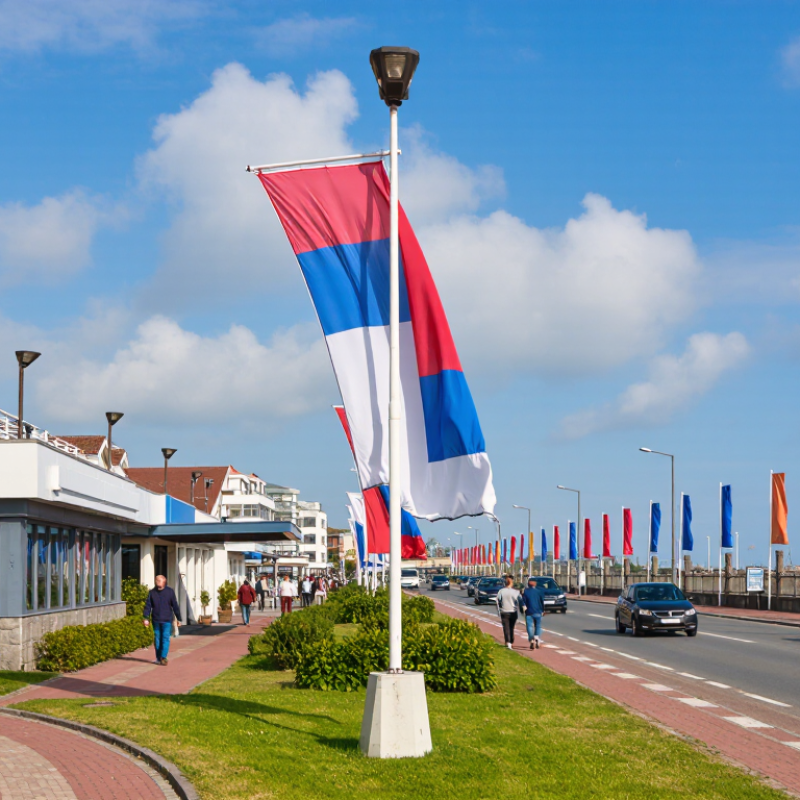
Location changes every design decision. Measure the viewing distance, walking speed, sunlight, wind exposure, and nearby visual clutter. A flag beside a busy road needs bold shapes and minimal text. A flag near a café entrance can carry more detail. The Out of Home Advertising Association of America reported $9.1 billion in U.S. out-of-home advertising revenue in 2024, showing strong demand for visible, place-based communication. However, visibility alone does not guarantee results.
Choose a base for the surface. Grass, concrete, pavement, and temporary event areas require different support systems. The Sign Research Foundation consistently identifies placement, legibility, and viewing conditions as critical sign-performance factors. A practical test helps: stand at the farthest customer viewpoint and read the flag in three seconds. If the message disappears, revise it. A mistake I still see is choosing a tall flag for a sheltered entrance, where it blocks windows and feels oversized. Keep it honest. Check local display requirements, inspect stitching, and replace faded fabric before customers notice the decline.
Compare Flag Materials for Weather, Durability, and Appearance
How to Choose the Best Outdoor Flag for Business in 2026?
Choosing an outdoor business flag starts with its environment, not its color. Polyester is often the strongest general-purpose option for exposed locations. Its tighter weave resists rain, wind, and repeated handling. Heavyweight polyester usually keeps a more formal shape outside. It also supports sharp graphics and strong color contrast. Still, it can fade after long ultraviolet exposure.
Nylon feels lighter and moves easily in gentle wind. Its surface can produce bright, eye-catching colors near entrances and sidewalks. However, lightweight fabric may flutter aggressively during storms. It may also wear faster when rubbing against poles or hardware. Canvas offers a substantial, classic appearance, but it absorbs moisture and dries slowly. That makes it less practical for humid or rainy sites.
I recommend comparing fabric weight, stitching, and edge finishing before appearance alone. A double-stitched hem can prevent early fraying around busy mounting points. Reinforced corners matter when gusts pull against the flag. Check whether the material has UV-resistant treatment and suitable water resistance. Test a sample outdoors for several weeks if the budget allows. Real conditions reveal problems catalog photos hide.
There is no perfect fabric.
A flag beside a sheltered doorway needs different protection than one beside an open road. Measure wind exposure, cleaning needs, and replacement frequency before ordering. I have seen attractive flags fail because their hardware was too weak. Material selection matters, but the complete display system matters more.
Choose the Right Flag Size, Shape, and Display Style
Choosing the right outdoor flag starts with scale. A flag should be visible without overwhelming the entrance. For a storefront, a 2-by-5-foot vertical flag often creates clear movement near the doorway. Larger sites may need a 3-by-8-foot flag for distance visibility. Measure the viewing area before ordering.
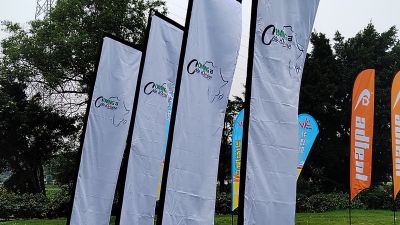
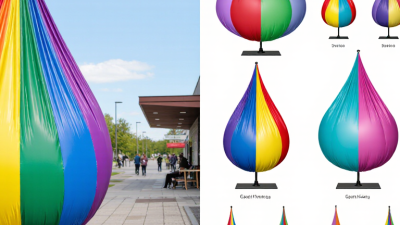
Shape changes the message. Feather-shaped flags feel energetic and attract attention from passing traffic. Teardrop designs look smoother and remain readable in moderate wind. Rectangular flags provide more space for business names and simple service details. Keep text short. Tiny lettering disappears quickly. I have found that bold contrast matters more than decorative graphics, although this can make a design feel less refined.
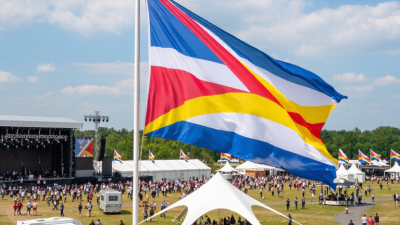
Tips: Match the display style to the location. Use a ground spike for grass, a weighted base for pavement, and a wall mount where space is limited. An Outdoor Shade Tent can work with matching flags during markets or outdoor promotions. Check the flag from twenty feet away. If the message takes longer than three seconds to understand, revise it. Weather changes everything. A lightweight flag moves better, but heavy exposure may shorten its useful life. Perfect placement is rarely achieved on the first attempt. Test the angle, height, and wind direction, then adjust.
How to Choose the Best Outdoor Flag for Business in 2026?
Compare common outdoor flag formats by approximate display height and visible width.
Choose a compact rectangular flag for entrances and limited spaces, a medium rectangular flag for storefront visibility, or a large rectangular flag for roadside exposure. Feather and teardrop flags create strong movement and are useful for promotions, events, and pedestrian areas. Always check local wind, mounting, and permit requirements before installation.
Evaluate Printing Quality, Color Visibility, and Brand Accuracy
Choosing an outdoor flag in 2026 starts with evidence, not a glossy product photo. Request a physical print sample before approving a large order. Inspect fine lettering, edge sharpness, and small logo details at arm’s length. Dye-sublimated polyester often produces strong color penetration, but fabric texture can soften thin lines. Ask for the fabric weight, print method, and color-management process. A reliable supplier should explain how artwork is converted for fabric, rather than promise perfect color without qualification.
Color visibility depends on daylight, distance, and movement. View the sample outdoors at noon, under cloud cover, and near dusk. Bright yellow may look vivid in sunlight, then lose contrast against a pale sky. Dark text can perform better than a fashionable low-contrast palette. Check both sides. The reverse image may appear muted or mirrored. Wind also changes perception; a moving flag can hide details for half a second. That matters near roads, entrances, and busy pedestrian areas.
Brand accuracy deserves a separate approval step. Compare the printed proof with an approved physical color reference, not a phone screen. Screens glow. Fabric does not. Check logo spacing, letter shapes, and exact placement. I once treated a small color shift as harmless, but it became obvious beside fixed building signage. That was an avoidable mistake. Leave enough fabric allowance for seams and pole sleeves, since trimming can alter visual balance. Keep the final proof, material specification, and inspection notes together for repeat orders.
Select a Safe and Stable Outdoor Flag Mounting System
How to Choose the Best Outdoor Flag for Business in 2026?
A safe outdoor flag begins with its mounting system, not the fabric. In field checks, I inspect the ground, nearby traffic, and expected wind exposure first. ASCE 7-22 provides a useful engineering reference for wind pressure. At 50 mph, basic pressure reaches about 6.4 pounds per square foot before exposure adjustments. That force can twist a narrow base or lift an unsecured flag. Choose a low, wide ballast system for pavement. Use ground stakes only when soil depth and density are suitable. Loose gravel is not reliable.
Keep the flag away from doors, vehicle lanes, and an Outdoor Event Tent. Its ropes and edges can create hazards during crowd movement. The National Weather Service advises seeking shelter when thunderstorms approach, so a flag should be lowered before severe weather arrives. Check the pole joints, fasteners, ballast, and fabric every morning. Look for cracked plastic, bent metal, or a base that rocks by hand. Small movement becomes serious movement.
Do not trust a printed wind rating without checking its test conditions. Actual performance depends on pole height, flag size, gusts, and installation surface. I have seen teams add weight but ignore a loose connector. That was a mistake. I still recheck every connection after rain, because wet soil can reduce holding strength. A stable system is adjustable, inspectable, and easy to remove quickly.
Review Maintenance Needs, Regulations, and Long-Term Costs
Choosing an outdoor business flag in 2026 requires more than attractive colors and a low purchase price. Start by checking local rules for height, placement, sign dimensions, and sidewalk clearance. Some locations also require permits or specific flame-resistant materials. Requirements may differ between a shopping center, roadside property, and public event. Ask the property manager for written guidance before ordering.
Maintenance affects both appearance and safety. Inspect the pole, stitching, clips, and ground base every week during busy seasons. Look for fading, loose seams, bent hardware, and water trapped inside the base. A dusty flag can be washed with mild soap, then dried completely before storage. Never fold it while damp. Wind ratings deserve careful attention. A heavier base may be necessary near vehicle traffic or on uneven pavement. The same rule applies when displaying an Outdoor Pop Up Tent beside the flag.
Track long-term costs, not only the first invoice. Replacement fabric, transport, storage space, cleaning labor, and permit fees can change the real budget. A cheaper flag may fade after one summer and require earlier replacement. That is not always obvious. However, an expensive system can also be wasteful if its parts are difficult to repair. Choose replaceable components and keep spare clips on site. Review the setup after heavy rain or strong wind. Small failures often appear before serious damage, but teams sometimes ignore them.
Square Flag Pole (Fiberglass): A Practical Guide to Choosing, Installing, and Using It
The Square Flag Pole (Fiberglass) is designed for promotions that must remain visible and readable throughout the day. The Outdoor Advertising Association of America reported that U.S. out-of-home advertising revenue reached approximately $9.1 billion in 2023, demonstrating the continued value of physical visibility in busy public spaces. With a full fiberglass sectional pole and an arm piece that keeps the square flag flat, this system offers a practical option for storefronts, exhibitions, roadside advertising, and temporary campaigns.
Choosing the correct model depends on viewing distance, available space, and required message area. WK-F10A stands 2.1 m high and supports a 165 × 70 cm flag, while WK-F10B reaches 3.0 m with a 245 × 70 cm flag. For stronger roadside presence, WK-F10C measures 4.2 m and accommodates a 345 × 70 cm flag. Fiberglass keeps the structure lightweight, flexible, and easier to transport than many metal alternatives, reducing handling effort during repeated setup and removal.
For installation, assemble each pole section firmly, connect the arm piece, and secure the base on stable, level ground. In exposed locations, use suitable weights or ground anchors and check local wind conditions before use. The World Out-of-Home Organization’s industry guidance emphasizes visibility, placement, and regular maintenance as key factors in effective outdoor communication. Inspect joints, arm connections, and fabric tension regularly, and clean the flag when dust or moisture begins to affect readability.
FAQS
Polyester is a strong general-purpose choice for rain, wind, and frequent handling. Heavyweight polyester holds a more formal shape. It can still fade under long ultraviolet exposure.
Choose nylon for bright colors and lively movement near entrances or sidewalks. It feels light. However, storms may cause aggressive fluttering and faster wear.
Canvas creates a substantial, classic appearance. It absorbs moisture and dries slowly. It may perform poorly at humid or rainy sites.
Look for double-stitched hems and reinforced corners. These details reduce fraying and stress damage. Strong fabric cannot fully fix weak stitching.
Measure the viewing area before ordering. A 2-by-5-foot vertical flag suits many storefront entrances. Larger sites may need a 3-by-8-foot flag for distance visibility.
Feather shapes feel energetic and attract passing attention. Teardrop shapes look smoother in moderate wind. Rectangular flags offer more space for short text.
Use bold contrast and limited wording. Check the flag from twenty feet away. If reading takes over three seconds, simplify it. Tiny lettering disappears.
Use a ground spike on grass and a weighted base on pavement. A wall mount helps where ground space is limited. Weak hardware can ruin a good flag.
If possible, test one sample outdoors for several weeks. Observe fading, rubbing, moisture, and movement. Catalog images hide real problems. Perfect choices are rare.
Conclusion
Choosing the best Outdoor Flag for your business in 2026 begins with a clear understanding of its purpose and location. Consider whether the flag will attract roadside attention, guide visitors, promote an event, or strengthen brand recognition. The surrounding environment should influence your choice of fabric, as different materials offer varying levels of weather resistance, durability, texture, and visual appeal. Size, shape, and display style should also match the available space while remaining easy to see from the intended viewing distance.
A high-quality Outdoor Flag should feature sharp printing, strong color visibility, and accurate brand details. Its mounting system must be stable, safe, and suitable for wind and ground conditions. Before purchasing, review cleaning, storage, and replacement requirements, along with local display rules and the total long-term cost. Evaluating these factors together will help you select a reliable flag that remains attractive, functional, and cost-effective throughout changing outdoor conditions.