So, is China the best place to buy Teardrop Banners wholesale for global buyers? Well, it's not just about getting the lowest quote. Global buyers need printing that stays consistent, frames that hold up, clear communication, and delivery you can actually count on. And teardrop banners? They need to look sharp from far away and stay stable next to busy roads, exhibition halls, or outdoor entrances.
When buyers with some experience evaluate suppliers, they often ask for physical samples before placing a big order. Makes sense. A sample tells you a lot: fabric density, color accuracy, stitching quality, how flexible the poles are, and how the base performs. A banner might look great online, but feel totally different in your hands. That matters.
A good Chinese manufacturer should give you practical specs—banner dimensions, fabric options, hardware materials, package size, and estimated production time. The stronger suppliers also explain artwork requirements and inspection procedures without hiding the limitations. They should handle common global shipping arrangements and provide accurate commercial documents. Clear answers? That's what builds trust.
Small details matter, too.
For example, a water-filled base might be great on grass or pavement, while a ground spike could work better in soft soil. Use the wrong base and you'll lose stability—and probably spend more on replacements. Buyers should also confirm whether replacement poles, carry bags, and printed sleeves are available.
No supplier is perfect. Even a reliable production team can run into color variation or seasonal delays. Honest communication matters more than big promises. So before choosing a wholesale partner, compare samples, factory experience, quality controls, and after-sales support. A careful decision helps your brand show up better and leaves fewer surprises across international campaigns.
Teardrop Banners Explained: Shapes, Sizes, and 115–120 g/m² Fabrics
Teardrop Banners Explained: Shapes, Sizes, and 115–120 g/m² Fabrics
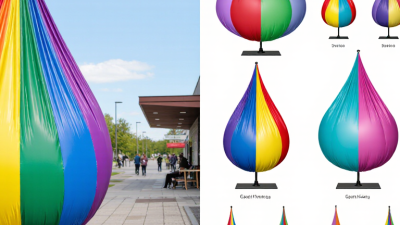
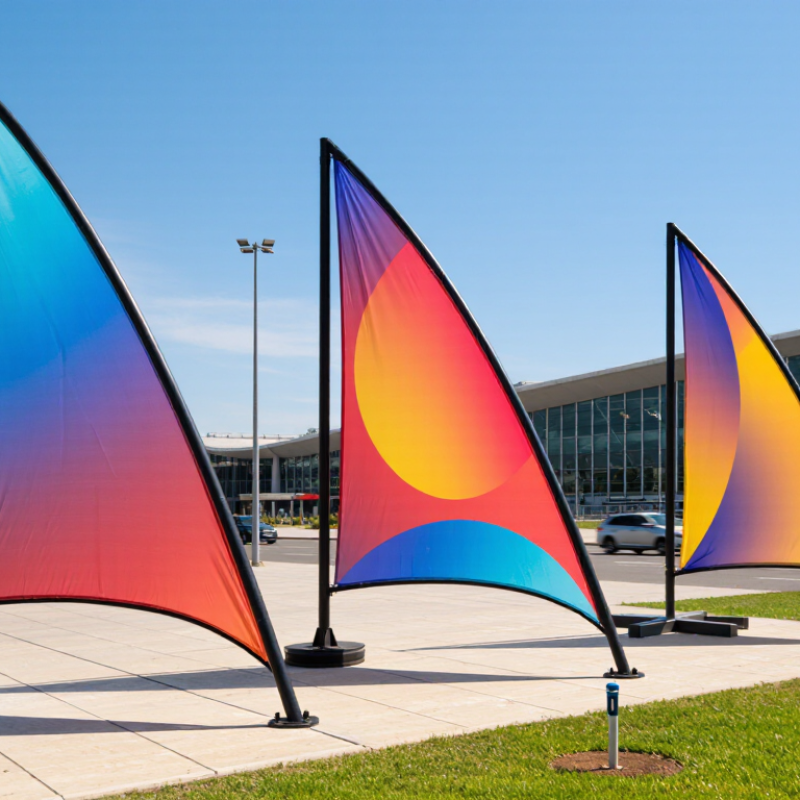
Teardrop banners use curved poles and tensioned fabric to create a rounded, water-drop profile. Their shape keeps the message visible when wind changes direction. Common heights range from 2.4 to 5.5 metres, while compact models suit entrances and indoor displays. The Outdoor Advertising Association of America reports that out-of-home advertising remains a strong visual channel, supporting demand for reusable event graphics. In practice, Teardrop Flags And Banners work best when the logo sits above waist level. Small text often disappears at a distance.
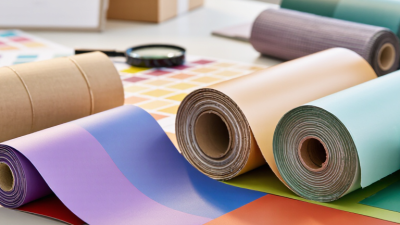
Fabric choice affects movement, colour, and service life. Polyester weighing 115–120 g/m² offers a practical balance between lightness and strength. It folds easily, dries quickly, and allows airflow through the weave. Industry textile data from Smithers shows continued growth in digitally printed textiles, driven partly by short-run, customised graphics. However, higher fabric weight does not automatically mean better outdoor performance. Stitching, dye quality, pole flexibility, and base stability matter too. I have seen lightweight fabric perform well in calm weather, but struggle beside busy roads. That detail is easy to overlook.
Tips: Select the banner height from the viewing distance, not the supplier catalogue. Request a fabric swatch and check colour under daylight. For repeated outdoor use, compare sleeve seams, carry bags, and replacement-pole availability. A washable fabric may reduce operating costs, although washing instructions should be tested before bulk orders. Price still matters. It should not be the only measure.
How to Compare Chinese Suppliers by MOQ, Lead Time, and FOB Pricing
China Best Teardrop Banners Wholesale for Global Buyers?
When comparing Chinese Teardrop Flag suppliers, begin with MOQ, not the lowest unit price. Ask whether the MOQ applies per design, size, or total order. A quote for 100 pieces may hide separate minimums for each printed artwork. Request a sample with the same polyester, stitching, pole, and base. Small details matter.
Lead time needs two numbers: sample production and bulk production. Put approval dates in writing. A supplier promising seven days may exclude artwork confirmation or packaging. The World Bank’s 2023 Logistics Performance Index gave China a score of 3.7 out of 5, ranking it 19th among 139 economies. Logistics are capable, but factory scheduling still varies. Build a buffer of three to five working days. I learned this the hard way.
FOB pricing should compare identical specifications. Check fabric weight, print method, carry bags, cartons, and port location. Also confirm whether inspection fees and export documentation are included. UNCTAD’s Review of Maritime Transport 2023 highlights how easily freight markets react to disruptions. Therefore, record the quotation date and validity period. A low FOB price can lose value when packaging is weak or production slips. Compare total cost per usable flag, not just the number on the spreadsheet. That sounds obvious. It is not.
Fabric Quality Testing: ISO 105-B02 Lightfastness and ISO 4892-3 UV Exposure
For global buyers, Teardrop Banner Flags must survive bright streets, trade shows, and repeated handling. Fabric selection should begin with measured lightfastness, not appearance alone. ISO 105-B02 evaluates colour change under artificial light, commonly using a xenon arc source. Test results are compared with blue wool reference standards. Higher ratings generally indicate better resistance to fading.
UV testing adds another layer of evidence. ISO 4892-3 exposes fabric to fluorescent ultraviolet lamps under controlled cycles. These cycles can include light, temperature, and moisture conditions. Technicians inspect fading, surface damage, and fibre weakness after exposure. A flag may look vivid after printing, yet lose strength around the stitched sleeve. Small details matter.
Our early checks relied too heavily on visual samples. That was not enough. A reliable wholesale process records fabric weight, dye method, test duration, and colour change results. It also compares printed panels with unprinted controls. Results should match the intended outdoor use, because laboratory exposure cannot recreate every climate. Heat, salt air, dust, and folding may accelerate wear. Buyers should request current test reports and inspect production samples before large orders. Testing reduces uncertainty, but it does not remove it.
Hardware Selection: Base Types, Pole Materials, and Wind-Speed Safety Limits
For global buyers comparing teardrop banners from China, hardware selection deserves more attention than printed fabric. A banner can look excellent and still fail when its base is unsuitable. Cross feet work well indoors or on calm pavement, especially with water bags. Weighted plate bases provide better stability on concrete, exhibition floors, and shopping areas. Ground spikes suit soil, grass, and other soft surfaces. Auger bases grip more firmly, but they need suitable ground and careful installation.
Pole material also affects daily performance.
Fiberglass poles are flexible, lightweight, and less likely to bend during transport. They can absorb moderate movement but may crack after repeated impact. Aluminum poles offer a firmer structure and cleaner alignment. However, they can dent if dropped or overloaded. Check pole joints, connectors, and locking points before every event. Small parts matter.
Wind-speed limits should never be guessed from appearance.
Ask for tested operating limits, maximum gust guidance, and recommended base combinations. A water-filled cross base may be acceptable in light wind, but stronger gusts require a heavier solution or removal. Local ground conditions change the result. I once underestimated wind near an open coastal site. The banner moved far more than expected. Now, I check forecasts, inspect the surface, and secure or dismantle banners before gusts approach the stated limit. Even reliable hardware has limits.
Wholesale Compliance: REACH, RoHS, CPSIA, and Packaging Requirements
China Best Teardrop Banners Wholesale for Global Buyers? Compliance starts before artwork approval. A strong Teardrop Banner Design needs a documented material trail, not attractive mockups alone. Ask suppliers for fabric composition, ink declarations, coating details, and laboratory reports linked to the production batch. ECHA’s Candidate List contained 247 substances in June 2024. Check fabrics, plastics, inks, and metal fittings against current REACH obligations. Articles containing SVHCs above 0.1% may require communication duties. RoHS restricts ten substances in electrical and electronic equipment. Ordinary banners are usually outside its scope. Do not claim RoHS compliance without confirming the product category.
CPSIA matters when a banner is designed, packaged, or promoted as a children’s product in the United States. The law limits lead in accessible components to 100 parts per million. Certain phthalates must remain below 0.1%. Children’s products may also require third-party testing and certification. A banner is not automatically a children’s product. Intended use still matters. That point is often missed.
Packaging deserves equal attention. Eurostat reported 186.5 kilograms of packaging waste per EU resident in 2022. Use right-sized cartons, recyclable materials, and clear material identification where practical. Avoid unnecessary plastic sleeves. Adhesive labels can complicate recycling claims. Packaging records should show dimensions, weight, materials, and country of origin. Supplier paperwork is helpful, but batch-level testing remains stronger evidence. A polished file can still hide a weak assumption. Recheck regulations before each shipment.
China Best Teardrop Banners Wholesale for Global Buyers
Wholesale Compliance: REACH, RoHS, CPSIA, and Packaging Requirements
The chart compares selected substance limits expressed in parts per million (ppm). CPSIA sets a 90 ppm lead limit for paint and surface coatings, while the commonly applied CPSIA accessible-component limit is 100 ppm. REACH restricts lead in certain accessible parts of articles supplied to the public at 0.05% by weight, equivalent to 500 ppm. RoHS generally limits restricted substances to 0.1% (1,000 ppm), with cadmium limited to 0.01% (100 ppm). The EU Packaging Directive sets a combined limit of 100 ppm for lead, mercury, cadmium, and hexavalent chromium in packaging. Requirements depend on product construction, market, intended use, and test scope.
Global Purchasing Terms: Samples, Defect Rates, and Incoterms 2020
For global buyers, wholesale teardrop banners need more than an attractive quotation. A paid sample should show the real fabric, stitching, pole fit, base stability, and printed colors. Ask for one complete unit, not only a fabric swatch. Check it under outdoor light and after assembly. Small problems often appear at the pole sleeve or bottom seam.
Write the defect standard before placing a bulk order. Define acceptable color variation, crooked printing, loose threads, scratches, missing parts, and damaged packaging. A practical agreement may separate critical, major, and minor defects. It should also state the inspection method and the permitted defect rate. Third-party inspection can provide useful evidence, including carton counts and dated photographs. However, inspection is not perfect. I once focused too much on print quality and overlooked weak base connections.
Incoterms 2020 must match the buyer’s actual purchasing ability. EXW may leave export handling and inland transport unclear. FOB can suit buyers managing ocean freight, but the named port must be precise. CIF includes insurance and freight to the destination port, not final delivery. DAP may simplify delivery planning, while import clearance usually remains the buyer’s responsibility. Confirm the named place, transfer of risk, insurance scope, packing requirements, and payment milestones in writing. Samples, bulk goods, and replacement units may require different shipping terms.
Choosing the Best Supplier Through Quality, Cost, Capacity, and Service Data
China Best Teardrop Banners Wholesale for Global Buyers?
Choosing a supplier requires measurable evidence, not attractive photographs. PPAI’s 2023 Promotional Products Sales Volume Study reported US industry sales above 26 billion dollars. This scale reflects steady demand for portable advertising products. Buyers should request fabric weight, color-difference results, pole material, base dimensions, and packing photographs. A practical benchmark is 110–130 GSM polyester, reinforced pole sleeves, and tested outdoor stability. However, fabric weight alone cannot prove durability.
Cost needs a complete landed-price worksheet. Include product price, sampling, packaging, freight, customs, replacement units, and payment terms. Ask for prices at three quantities, such as 100, 500, and 1,000 pieces. Compare the same specifications. Otherwise, the cheapest offer may simply omit important components. FESPA’s 2023 Print Census reported continuing investment in customized print production, which supports flexible sampling and shorter production runs. That matters when campaigns change quickly.
Capacity data should show monthly output, peak-season staffing, inspection records, and realistic lead times. Request a dated production schedule, not a promise. Service quality appears in response time, artwork checking, spare-part availability, and documented claims handling. ISO 9001 certification can indicate controlled processes, but it does not guarantee perfect banners. I would still order a pre-production sample and inspect stitching, pole fit, print alignment, and base balance. Small defects often become expensive at scale.
China Best Teardrop Banners Wholesale for Global Buyers? - Choosing the Best Supplier Through Quality, Cost, Capacity, and Service Data
| Supplier Profile |
Typical Wholesale Order |
Unit Price Range
(USD) |
Fabric & Print Quality |
Standard Production Capacity |
Typical Lead Time |
Quality-Control Indicators |
Service & Export Capability |
Best Fit for Buyers |
Profile A
Best Overall Balance
|
100–499 complete banner sets |
$18–$32
per set |
110–120 g/m² knitted polyester; dye-sublimation printing; double-sided options available |
3,000–8,000 sets per month |
7–12 working days after artwork approval |
Pre-production sample; fabric-weight check; color and dimension inspection; final random inspection |
English-language order support; carton packing; commercial invoice and packing-list support; common international shipping options |
Importers seeking a dependable balance of price, quality, and delivery consistency |
Profile B
Lowest Cost Focus
|
300–999 complete banner sets |
$13–$22
per set |
90–110 g/m² polyester; standard single-sided printing; limited finishing choices |
5,000–12,000 sets per month |
8–15 working days after artwork approval |
Basic production inspection; buyer approval generally required for custom samples |
Standard export cartons; basic order communication; freight quotation usually handled separately |
Large-volume campaigns where the lowest landed cost is the primary objective |
Profile C
Premium Quality
|
50–299 complete banner sets |
$28–$48
per set |
115–140 g/m² knitted polyester; higher-density color reproduction; reinforced edges and premium hardware options |
1,500–4,000 sets per month |
10–18 working days after artwork approval |
Detailed pre-shipment report; fabric and stitching inspection; dimensional tolerance commonly checked against approved sample |
Artwork review; sample coordination; replacement discussion for verified defects; support for retail-ready packaging |
Exhibitions, retail displays, and buyers prioritizing appearance and longer service life |
Profile D
Fast Replenishment
|
100–799 complete banner sets |
$20–$36
per set |
100–120 g/m² polyester; standard dye-sublimation printing; commonly stocked poles and bases |
4,000–10,000 sets per month |
5–9 working days for repeat designs |
Incoming-material check; production checklist; repeat-order color comparison against retained sample |
Fast quotation response; repeat-order artwork files retained; support for consolidated shipments |
Distributors and event companies requiring frequent repeat orders |
Profile E
Small-Batch Customization
|
20–99 complete banner sets |
$32–$65
per set |
100–130 g/m² polyester; custom shapes, bases, accessories, and packaging available |
500–2,000 sets per month |
12–20 working days after artwork approval |
Prototype or pre-production sample; manual sewing inspection; custom specification confirmation |
More flexible communication for artwork and specifications; higher per-unit logistics and setup costs |
Start-ups, agencies, and buyers testing new designs with smaller quantities |
Data basis: The figures are practical wholesale benchmark ranges for standard teardrop banner sets, normally including printed polyester fabric, a carrying bag, poles, and a base. Actual quotations vary according to banner size, base type, fabric weight, printing method, accessories, packaging, order quantity, shipping terms, and seasonal production load. Buyers should confirm the final specifications with a pre-production sample and a written quality standard.
FAQS
It uses a curved pole and tensioned fabric. The result is a rounded, water-drop profile. Its shape keeps graphics visible as wind changes direction.
Choose height from viewing distance, not only from a catalogue. Common heights range from 2.4 to 5.5 metres. Compact versions suit entrances and indoor displays.
Place the logo above waist level for better visibility. Small text often disappears across a busy walkway. Keep important details large and clear.
This fabric balances lightness and strength. It folds easily, dries quickly, and allows some airflow. Fabric weight alone does not guarantee outdoor durability.
Stitching, dye quality, pole flexibility, and base stability all matter. A lightweight fabric may perform well in calm weather. Busy roads can expose its weakness.
Cross feet suit indoor floors and calm pavement, especially with water bags. Weighted plates work well on concrete and exhibition floors. Ground spikes suit grass and soil.
Fiberglass is flexible and light for transport. It may crack after repeated impacts. Aluminum creates firmer alignment but can dent when dropped. Check connectors carefully.
Ask for tested operating limits and maximum gust guidance. Use the recommended base combination. Remove or secure the banner before strong gusts arrive. Wind changes everything.
Check pole joints, locking points, sleeve seams, and base condition. Inspect the ground surface too. Small parts matter.
Compare washable fabric, replacement poles, and carry bags before ordering. Test washing instructions on one sample first. I would not trust assumptions.
Conclusion
Teardrop Banners are a practical and highly visible solution for exhibitions, retail promotions, outdoor events, and wayfinding. This guide explains common teardrop shapes, size options, and the advantages of durable 115–120 g/m² fabrics. It also shows global buyers how to compare Chinese suppliers by minimum order quantity, production lead time, FOB pricing, capacity, and service quality. Fabric evaluation should include colorfastness and weather-resistance testing, such as ISO 105-B02 lightfastness and ISO 4892-3 UV exposure procedures.
The guide also covers hardware choices, including cross, water, ground-spike, and weighted bases, as well as pole materials and safe wind-speed limits. Buyers will learn how to review REACH, RoHS, CPSIA, and packaging requirements, while clarifying samples, acceptable defect rates, inspection procedures, and Incoterms 2020 before placing an order. By balancing quality, cost, production reliability, compliance, and communication, purchasers can select a dependable supplier and reduce risks throughout the wholesale process.